Aloe Vera, Vision, and Cancer Prevention: What This Popular Home Remedy Can—and Cannot—Do
Aloe vera has been used for centuries in traditional health practices, and today it remains one of the most recognizable medicinal plants in the world. Its thick green leaves contain a clear inner gel that is widely used in skincare, drinks, supplements, and home remedies.
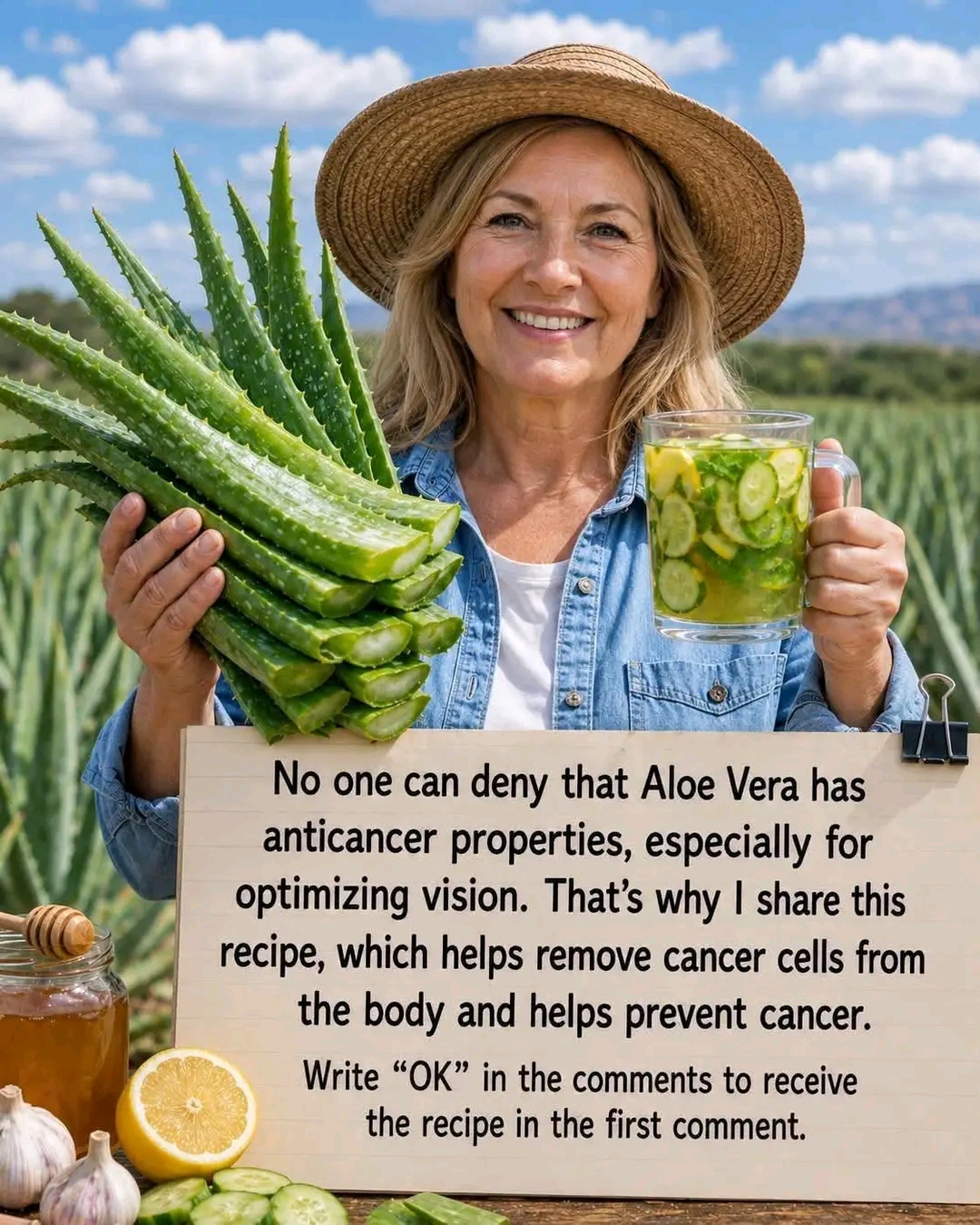
A popular social-media claim suggests that aloe vera, especially when combined with ingredients such as lemon, cucumber, honey, or garlic, can “remove cancer cells from the body,” prevent cancer, and improve vision. These claims are appealing because aloe vera contains a variety of biologically active compounds and has a long history of traditional use.
But there is an important distinction between a plant having interesting biological properties and a home remedy being proven to treat or prevent cancer.
Current evidence does not establish aloe vera as a cancer cure, a treatment that removes cancer cells from the body, or a proven way to prevent cancer. The National Cancer Institute states that no food, herb, vitamin, supplement, or dietary trend has been proven to cure cancer or prevent it from returning.
That does not mean aloe vera has no value. Aloe gel has been studied for several purposes, particularly topical applications for certain skin problems and burns. However, oral aloe products are more complicated because different parts of the aloe leaf have different chemical compositions and safety profiles.
This article takes a closer look at aloe vera, the popular drink shown in viral recipes, possible nutritional benefits of its ingredients, the connection between aloe and cancer research, eye health, preparation considerations, and important safety precautions.
The Story Behind Aloe Vera
Aloe vera is a succulent plant that grows well in hot, dry climates. Its fleshy leaves store water, allowing the plant to survive conditions in which many other plants would struggle.
Aloe has a long history of traditional use. According to the National Center for Complementary and Integrative Health, aloe was used historically in ancient Greece, Rome, Babylonia, and China. Today, aloe products are used both externally and orally.
The inside of an aloe leaf contains a clear, soft gel. Around the outer part of the leaf is a yellowish substance known as aloe latex. These are not interchangeable.
This distinction is extremely important.
Aloe gel comes primarily from the inner leaf.
Aloe latex comes from the outer layer and contains compounds known as anthraquinones, including aloin.
Whole-leaf preparations may contain both gel and latex.
Because these components have different effects, simply saying “aloe vera is healthy” is too broad. The exact preparation matters.
What Is Actually in Aloe Vera Gel?
Aloe vera gel contains water and various naturally occurring compounds. The National Cancer Institute describes aloe vera gel as containing carbohydrate polymers such as glucomannans and pectic acid, along with vitamins, amino acids, and other organic and inorganic compounds.
Researchers have investigated aloe for its potential effects on inflammation, wound healing, skin health, blood sugar, and other conditions.
Some studies have produced interesting findings, but many areas still require stronger human research.
This is one of the most important lessons when reading health claims online:
Laboratory evidence is not the same as clinical evidence.
A substance can affect cancer cells in a laboratory dish without being able to treat cancer in a human being. A compound can have antioxidant activity in a test tube without preventing cancer when consumed as a drink.
The human body is far more complicated than a laboratory experiment.
Can Aloe Vera Remove Cancer Cells?
This is where viral health claims need to be corrected.
There is currently no reliable clinical evidence showing that drinking aloe vera juice removes cancer cells from the human body.
The National Cancer Institute states that no food, vitamin, mineral, dietary supplement, herb, or nutritional trend has been proven to slow, cure, or prevent cancer from returning.
The National Center for Complementary and Integrative Health similarly warns that complementary approaches should not be used instead of proven cancer treatment. No complementary health approach has been shown to prevent or cure cancer.
This is especially important for someone who has already been diagnosed with cancer.
Cancer is not a single disease. There are many different types, stages, genetic characteristics, and treatment approaches. Depending on the cancer, treatment may include surgery, radiation therapy, chemotherapy, hormone therapy, targeted therapy, immunotherapy, or combinations of these.
A homemade aloe drink cannot substitute for these treatments.
A person who delays proven treatment while relying on an unproven remedy may lose valuable time.
What About “Anticancer” Research?
There is a reason some aloe claims sound scientific.
Aloe contains biologically active substances that have been investigated in laboratory and animal research. Some compounds have demonstrated interesting antioxidant, anti-inflammatory, or cellular effects under experimental conditions.
But laboratory research is only an early stage of scientific investigation.
Imagine scientists place a particular compound directly onto cancer cells in a controlled laboratory environment. If the cells stop growing, that is interesting.
But it does not automatically mean that drinking a glass of aloe juice will produce the same effect inside a human body.
The compound may be poorly absorbed.
It may be broken down during digestion.
The concentration reaching the tissues may be far too low.
The body may process it differently.
It may have unwanted effects at higher doses.
Other medicines may alter its effects.
These are some of the reasons clinical trials in humans are essential before a treatment can be recommended.
The NCI notes that laboratory studies may identify substances with potential anticancer activity, but results from laboratory or animal research cannot automatically establish that a dietary component protects people against cancer.
Aloe Vera and Eye Health
The image associated with this topic also makes a claim about “optimizing vision.”
Aloe vera should not be presented as a proven treatment for poor eyesight, cataracts, glaucoma, macular degeneration, diabetic eye disease, or other eye disorders.
Good vision depends on many factors, including the health of the cornea, lens, retina, optic nerve, blood vessels, and other structures of the eye.
Some nutrients are important for normal eye function, but that does not mean a particular plant drink can restore vision.
For people experiencing blurry vision, flashes, new floaters, eye pain, sudden vision loss, or other significant changes, proper eye evaluation is much more important than experimenting with homemade remedies.
Eye problems can sometimes be symptoms of conditions that require prompt medical attention.
Instead of thinking about one “miracle” ingredient, a more realistic approach to eye health is to focus on overall nutrition, blood-pressure management, blood-sugar management when relevant, avoiding tobacco, protecting the eyes from excessive ultraviolet exposure, and receiving recommended eye examinations.
What About Cucumber?
Cucumber is a much simpler ingredient in a homemade wellness drink.
Cucumbers contain a high percentage of water, making them refreshing and hydrating. They also provide small amounts of vitamins and minerals.
Adding cucumber slices to water can make plain water more appealing, which may encourage someone to drink more.
That is a perfectly reasonable benefit.
However, cucumber water should not be described as a cancer treatment or as a drink that “flushes cancer cells” from the body.
Hydration supports normal body functions, but the kidneys and liver already perform the body’s major waste-processing functions.
What About Lemon?
Lemon adds flavor and provides vitamin C.
Vitamin C is an essential nutrient involved in normal immune function, collagen formation, wound healing, and antioxidant activity.
Eating fruit and vegetables as part of a balanced diet is generally a sensible strategy for overall health.
However, lemon water is not a cancer cure.
The vitamin C naturally present in a lemon does not mean that lemon water can destroy tumors.
There is also an important difference between obtaining vitamin C from food and taking very high doses of vitamin C supplements. People should not assume that “more” automatically means “better.”
What About Honey?
Honey is often added to traditional wellness drinks because it improves flavor and sweetness.
Honey can be part of a balanced diet, but it is still a source of sugar and calories.
For people trying to control blood glucose, the quantity matters.
Honey should therefore be viewed primarily as a food and sweetener—not as an anticancer medication.
A small amount can make an otherwise unpleasant beverage easier to drink, but there is no reason to believe that adding honey transforms aloe juice into a cancer-fighting treatment.
What About Garlic?
Garlic has received considerable scientific interest because it contains sulfur-containing compounds and other biologically active substances.
Research has investigated garlic and its components in relation to cardiovascular health, inflammation, infections, and cancer.
However, the existence of research interest does not mean that eating garlic or drinking a garlic-based beverage can cure cancer.
Garlic can certainly be included in a healthy diet, especially because it can add flavor to vegetables, legumes, fish, meat, and whole grains without requiring large amounts of salt.
But dietary garlic should remain part of an overall healthy eating pattern rather than being promoted as a replacement for medical care.
A Safer Way to Think About an Aloe Drink
If someone enjoys aloe as a food or beverage, the goal should be refreshment and nutrition—not cancer treatment.
A simple wellness drink might contain:
- Water
- Cucumber slices
- A small amount of lemon
- Fresh mint
- A small amount of honey, if desired
- A commercially prepared aloe beverage specifically intended for oral consumption, if appropriate
The important point is that the drink should not be presented as medicine.
It is also safer to avoid casually scooping large amounts of raw aloe directly from a leaf and drinking it.
Fresh aloe leaves contain latex and other substances that may cause unwanted effects.
Important: Aloe Latex Is Not the Same as Aloe Gel
This distinction deserves special attention.
Aloe latex can cause abdominal pain, cramping, and diarrhea when taken orally. NCCIH also notes reports linking oral consumption of aloe leaf extracts with acute hepatitis.
Historically, aloe latex was used as a laxative.
Because of safety concerns and insufficient safety data, the U.S. Food and Drug Administration required manufacturers to remove aloe latex from over-the-counter laxative products in 2002.
Therefore, someone should not assume that because aloe gel is found in commercial drinks and topical products, every part of a fresh aloe leaf is suitable for consumption.
A Surprising Safety Issue: Whole-Leaf Aloe
There is another reason not to casually consume homemade whole-leaf aloe preparations.
NCCIH reports that the International Agency for Research on Cancer has classified non-decolorized whole-leaf aloe vera extract as possibly carcinogenic to humans. This classification concerns particular whole-leaf preparations containing anthraquinone components and should not be confused with purified inner-leaf gel products.
Animal research has also raised safety concerns about non-decolorized whole-leaf aloe extracts.
This is an excellent example of why “natural” does not automatically mean “safe.”
The chemistry of a plant can be beneficial in one preparation and problematic in another.
How to Prepare Aloe More Carefully
If you decide to consume an aloe product, commercially prepared products designed for oral consumption are generally preferable to improvising with an entire raw leaf.
If handling fresh aloe, the outer latex-containing portions should not simply be blended into a drink.
However, even careful preparation does not turn aloe into a proven cancer treatment.
For someone who wants a refreshing homemade drink, cucumber, lemon, mint, and water are simple ingredients that do not require making medical claims.
Aloe can be left out entirely.
Who Should Be Especially Careful With Aloe?
People taking medications should speak with a healthcare professional before using oral aloe products.
NCCIH notes that herbal products can interact with medicines, and aloe may have particular concerns involving certain drugs. Overuse of aloe latex may increase the risk of adverse effects associated with cardiac glycosides such as digoxin.
People who are pregnant or breastfeeding should also avoid oral aloe unless their healthcare professional specifically advises otherwise.
People with existing health conditions should be cautious about concentrated herbal products as well.
The safest approach is to tell your doctor or pharmacist about supplements, herbal drinks, and other complementary products you use.
What Aloe Vera May Actually Be Useful For
Aloe does have legitimate uses.
Topical aloe gel has been investigated for several skin-related applications.
According to NCCIH, clinical research suggests topical aloe gel may help speed burn healing and reduce burn-related pain, although the evidence varies by condition and application. Small studies have also explored its use for certain skin and mouth conditions.
This is quite different from saying that drinking aloe cures cancer.
In other words, aloe vera should not be dismissed entirely. It should simply be used for purposes supported by appropriate evidence.
Aloe Vera and General Wellness
A healthy lifestyle does not require miracle ingredients.
In fact, the most powerful health habits are often surprisingly ordinary:
Eat More Plant Foods
Vegetables, fruits, legumes, whole grains, nuts, and seeds provide fiber, vitamins, minerals, and numerous plant compounds.
A colorful plate is usually more valuable than a single “superfood.”
Maintain a Healthy Weight
Excess body weight is associated with increased risk for several types of cancer and other chronic diseases.
Healthy eating and regular physical activity can support weight management.
Stay Physically Active
Walking, cycling, swimming, resistance training, gardening, dancing, and other activities can contribute to physical fitness.
You do not need an expensive program to become more active.
Avoid Tobacco
Not smoking and avoiding tobacco exposure remain among the most important ways to reduce cancer risk.
Limit Alcohol
Alcohol consumption is associated with increased risk for several cancers. Reducing consumption can therefore be an important part of a cancer-risk reduction strategy.
Get Recommended Screenings
Cancer screening can identify certain cancers earlier, when treatment may be more successful.
Screening recommendations depend on age, sex, family history, risk factors, and location.
Protect Your Skin
Excessive ultraviolet exposure contributes to skin cancer risk.
Use appropriate sun protection rather than relying on aloe vera as a sunscreen. NCCIH notes that there is no evidence that aloe vera or other homemade “natural sunscreen” recipes provide adequate sun protection.
Why “Natural Cancer Cure” Posts Become Viral
Health misinformation often spreads because it combines a few true statements with a much larger unsupported conclusion.
For example:
“Aloe contains biologically active compounds.”
That can be true.
“Aloe has been studied in laboratory experiments.”
Also true.
“Therefore, drinking aloe removes cancer cells from your body.”
That conclusion does not follow.
The same problem occurs with many foods, herbs, juices, teas, and supplements.
A substance can be nutritious without being a medicine.
A food can contain antioxidants without curing disease.
A plant can have promising laboratory properties without becoming an effective human treatment.
Understanding this distinction helps people make safer decisions.
What Should Someone With Cancer Do?
If you or someone you love has cancer, the most important step is to work with qualified healthcare professionals.
Ask questions.
Understand the diagnosis.
Learn the stage of the disease.
Discuss available treatment options.
Ask about side effects.
Tell your medical team about every supplement and herbal product you are considering.
The NCCIH specifically advises people with cancer not to use unproven products instead of conventional cancer treatment or delay treatment while trying complementary approaches.
Some complementary approaches may help with symptoms, relaxation, stress, or general well-being when used alongside appropriate medical care.
The word complementary is important.
Complementary means used alongside conventional care—not instead of it.
Can a Healthy Diet Help Reduce Cancer Risk?
Diet is important, but it is not a guarantee.
The NCI explains that scientists have studied relationships between dietary factors and cancer risk for many years. Some dietary patterns and lifestyle choices are associated with lower cancer risk, but individual foods should not be treated as magical cancer-prevention agents.
A sensible eating pattern can include:
- Plenty of vegetables
- A variety of fruits
- Beans and lentils
- Whole grains
- Nuts and seeds
- Fish or other protein sources
- Appropriate amounts of dairy or alternatives
- Healthy fats
- Limited highly processed foods
- Limited processed meats
- Moderate amounts of added sugar
The goal is not perfection.
The goal is consistency.
A Simple Aloe-Inspired Refreshing Drink
For people who enjoy the flavor and tradition surrounding aloe, a refreshing drink can be made without claiming that it treats disease.
Ingredients
- 2 cups cold water
- ½ cucumber, thinly sliced
- 2–3 lemon slices
- A few fresh mint leaves
- 1 teaspoon honey, optional
- A small amount of commercially prepared, food-grade aloe beverage, only if the product is clearly labeled for oral consumption and appropriate for you
Instructions
Add the cucumber, lemon, and mint to a large glass or pitcher.
Pour in the cold water.
If desired, add a small amount of honey and stir until dissolved.
If using an aloe beverage, follow the product’s label instructions rather than guessing an amount from a raw aloe leaf.
Chill for 20–30 minutes so the flavors can infuse.
Serve cold.
This drink can be refreshing and flavorful.
But it should be understood as a beverage—not as a cancer treatment.
Why This Distinction Matters
It may be tempting to read a statement such as “this recipe prevents cancer” and think that trying it cannot hurt.
Unfortunately, that is not always true.
A person may stop taking prescribed medication.
Someone may delay seeing a doctor about a suspicious symptom.
Another person may consume excessive amounts of an herbal product and develop side effects.
Someone taking several medications may experience an interaction.
This is why responsible health information needs to be enthusiastic about healthy habits without promising impossible results.
The Bigger Picture: Health Is More Than One Ingredient
There is no single drink that can guarantee freedom from cancer.
There is no single food that can restore everyone’s eyesight.
There is no single herb that can replace medical treatment.
But there are hundreds of small choices that can support better health.
Drinking enough water.
Eating vegetables.
Moving your body.
Getting enough sleep.
Avoiding tobacco.
Managing stress.
Keeping medical appointments.
Following screening recommendations.
Maintaining healthy blood pressure and blood sugar.
Following prescribed treatments.
These habits may not sound as exciting as a miracle recipe, but they are much more meaningful.
Frequently Asked Questions
Can aloe vera cure cancer?
No. There is currently no reliable clinical evidence that aloe vera cures cancer or removes cancer cells from the human body. The NCI and NCCIH advise against replacing proven cancer treatment with unproven complementary products.
Can aloe vera prevent cancer?
Aloe vera has not been proven to prevent cancer in humans. Cancer prevention is better approached through established lifestyle measures, appropriate vaccination, avoidance of tobacco, healthy weight management, and recommended screening.
Can aloe vera improve eyesight?
There is not sufficient evidence to recommend oral aloe vera as a treatment for vision problems.
Is drinking aloe vera always safe?
No. Safety depends on the preparation. Aloe latex and certain whole-leaf extracts can cause adverse effects, and oral aloe may interact with medicines.
Can I eat aloe directly from my garden?
It is better not to assume that a raw aloe leaf is safe to consume. The leaf contains latex and other compounds that require careful separation and processing. Commercial products intended for oral consumption provide clearer information about their formulation.
Is aloe vera useful for the skin?
Topical aloe gel has been studied for several skin applications, including burns, and some evidence suggests it may help with burn healing and pain.
Is cucumber-lemon water healthy?
For most people, cucumber and lemon water can be a refreshing, low-calorie beverage. Its main practical advantage may be helping make water more enjoyable to drink.
Should people with cancer drink aloe vera?
Anyone undergoing cancer treatment should discuss aloe or any herbal supplement with their healthcare team before using it. Herbal products can have side effects and may interact with medications.
Final Thoughts
Aloe vera is an interesting plant with a long history of traditional use and legitimate modern applications. Its inner gel has been studied for skin-related purposes, and researchers continue to investigate various compounds found in the plant.
However, viral claims that aloe vera drinks remove cancer cells, cure cancer, prevent all cancers, or dramatically restore vision are not supported by current clinical evidence.
The most responsible way to enjoy aloe vera is to understand what it can and cannot do.
If you enjoy a refreshing drink made with cucumber, lemon, mint, and a properly prepared commercial aloe product, it can be part of an enjoyable diet for appropriate individuals. Just don’t give the beverage medical powers it has not been shown to possess.
For cancer prevention, focus on the bigger picture: don’t smoke, maintain a healthy weight, stay active, eat a varied diet rich in plant foods, limit alcohol, follow recommended vaccination and screening guidance, and seek medical attention for concerning symptoms.
And if cancer has already been diagnosed, remember one crucial principle:
A healthy food or herbal drink may complement a healthy lifestyle, but it should never replace proven cancer treatment.
Natural does not automatically mean harmless, and promising laboratory research does not automatically become a cure.
The best health decisions combine curiosity about traditional remedies with respect for strong scientific evidence. That approach allows us to appreciate plants such as aloe vera while avoiding dangerous promises—and ultimately gives us a much more realistic path toward long-term health.
Medical disclaimer: This article is for educational purposes only and is not a substitute for professional medical advice, diagnosis, or treatment. Anyone with cancer, vision problems, a chronic medical condition, or questions about herbal products should consult an appropriately qualified healthcare professional before making changes to treatment or taking oral aloe products.