6 Foods That May Support Male Vitality and Reproductive Wellness After 50
Introduction
Getting older does not mean that a man has to give up on energy, strength, intimacy, or reproductive wellness. After 50, however, the body naturally changes. Muscle mass can become harder to maintain, cardiovascular health becomes increasingly important, metabolism may slow, and hormone levels can change gradually.
That is why nutrition becomes especially valuable.
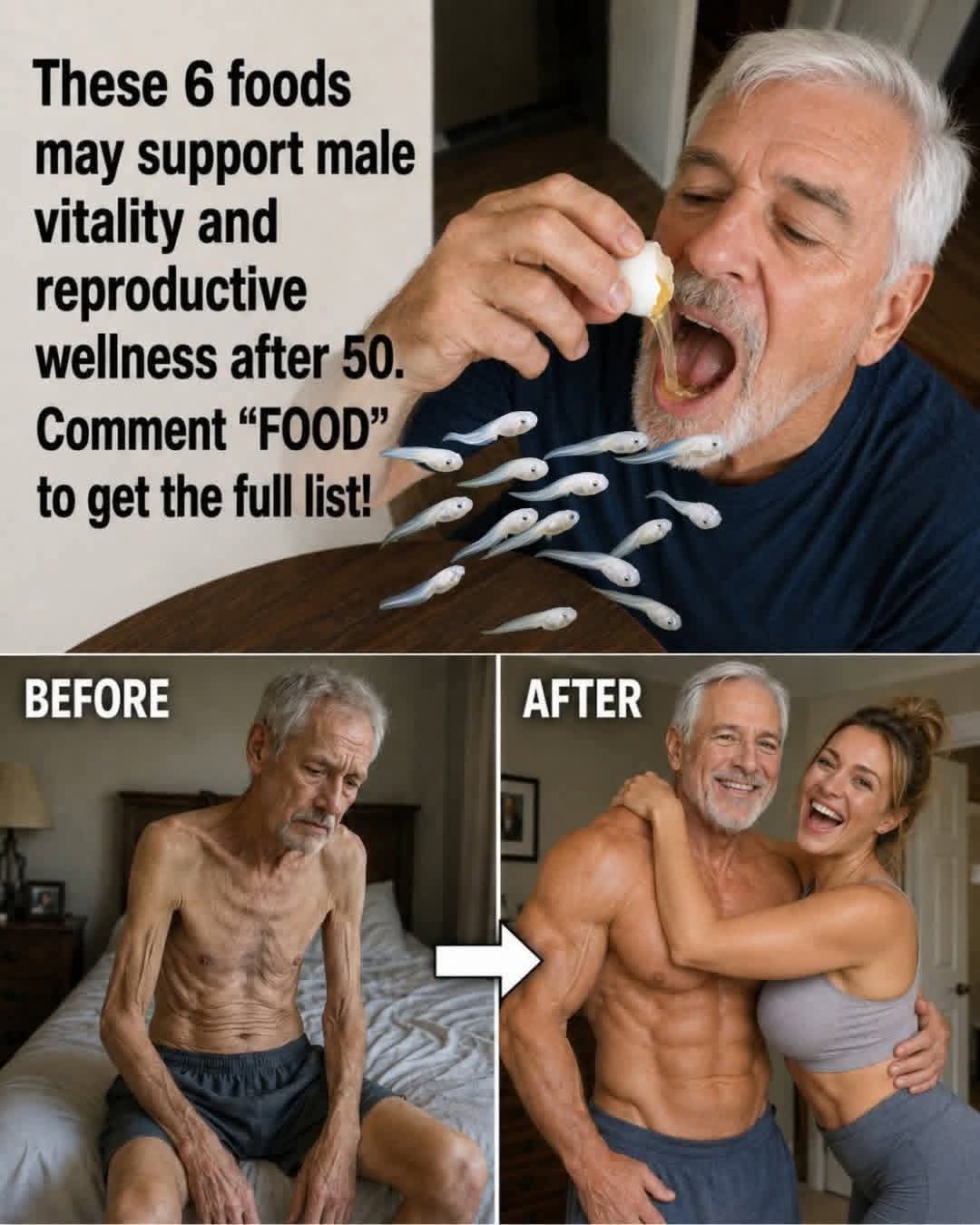
The viral image accompanying this article claims that six foods can support “male vitality and reproductive wellness after 50.” The message has a useful idea behind it—but it is important to separate realistic nutrition advice from exaggerated promises. No single food can transform an older man’s body overnight, restore youth, dramatically raise testosterone, or guarantee better sexual performance.
Instead, the strongest evidence points toward an overall healthy eating pattern, particularly one rich in vegetables, fruits, whole grains, legumes, nuts, seeds, fish, and other minimally processed foods. Research has associated Mediterranean-style eating patterns with a lower risk of erectile dysfunction, while healthy dietary patterns are also linked with cardiovascular and metabolic health.
So, rather than looking for a magical “male enhancement food,” it makes more sense to build meals around foods that provide protein, healthy fats, fiber, vitamins, minerals, and antioxidant compounds.
Here are six excellent choices to include regularly.
- Fatty Fish: Salmon, Sardines, Mackerel and Trout
Fatty fish is one of the best foods to consider when building a diet for healthy aging.
Salmon, sardines, mackerel, trout and similar fish provide high-quality protein along with omega-3 fatty acids. These fats are particularly interesting because cardiovascular and sexual health are closely connected.
Healthy blood vessels are important for normal erectile function. Erectile difficulties can sometimes be associated with cardiovascular risk factors such as high blood pressure, diabetes, obesity, abnormal cholesterol levels and physical inactivity. A healthy diet can therefore support sexual wellness indirectly by supporting the systems that make normal sexual function possible.
Why fatty fish can be useful after 50
Protein becomes particularly important as people age because maintaining muscle mass and physical strength becomes more challenging.
A serving of fish can provide:
- High-quality protein
- Omega-3 fatty acids
- Vitamin B12
- Selenium
- Other essential nutrients
Omega-3 fats are also being studied in relation to male reproductive health. Research involving supplementation has reported improvements in several sperm parameters, although supplements and whole-food dietary patterns should not be treated as interchangeable, and evidence does not mean that eating fish will automatically solve infertility.
How to eat more fish
Try baked salmon with vegetables, sardines on whole-grain toast, grilled trout with a large salad, or mackerel with beans and vegetables.
Avoid turning a naturally healthy food into an unhealthy meal by deep-frying it or covering it with large amounts of refined sauces.
A simple combination of fish, vegetables, olive oil and whole grains fits beautifully into a Mediterranean-style eating pattern.
- Eggs: Convenient Protein and Important Nutrients
Eggs are another practical food for men over 50.
They are inexpensive, versatile and provide complete protein. Protein is important for maintaining muscle, supporting recovery from exercise and helping older adults preserve physical function.
Eggs also provide nutrients including vitamin B12, selenium, choline and some zinc.
Zinc is particularly relevant because it is an essential mineral involved in numerous biological processes, including DNA and protein synthesis. Eggs contain some zinc, although foods such as oysters and other seafood are considerably richer sources.
Does eating eggs boost testosterone?
This is where online health claims often go too far.
Eating eggs is not the same thing as taking a testosterone-boosting drug. There is no good reason to describe eggs as a guaranteed testosterone booster.
What eggs can do is contribute valuable protein and micronutrients to a balanced diet.
That distinction matters.
A man who replaces a highly processed breakfast with eggs, vegetables and whole-grain toast may improve the nutritional quality of his overall diet. But that does not mean the eggs themselves will suddenly restore youthful hormone levels.
A balanced egg breakfast
Try:
- 2 eggs
- Spinach or other leafy greens
- Tomatoes
- Whole-grain toast
- A small amount of avocado or olive oil
- Fresh fruit
This provides protein, fiber, healthy fats and plant nutrients rather than relying on a single “superfood.”
- Nuts and Seeds: Small Foods With Big Nutritional Value
Nuts and seeds deserve a place on the list because they provide healthy fats, plant protein, minerals, fiber and various antioxidant compounds.
Good choices include:
- Walnuts
- Almonds
- Pistachios
- Hazelnuts
- Pumpkin seeds
- Sunflower seeds
- Chia seeds
- Flaxseeds
Nuts are particularly interesting in male reproductive nutrition. A systematic review and meta-analysis found that nut consumption has been investigated for potential effects on reproductive health, with their omega-3 fats, fiber, vitamins, minerals and polyphenols providing plausible nutritional mechanisms.
That does not mean eating a handful of almonds will automatically increase fertility or sexual performance. Instead, nuts are one useful component of a nutrient-dense eating pattern.
Why nuts may be helpful
Nuts can contribute:
Healthy fats:
These can replace less desirable sources of saturated and trans fats in the diet.
Magnesium:
Important for normal muscle and nerve function.
Zinc:
Important for many cellular processes.
Vitamin E:
An antioxidant nutrient.
Fiber:
Helpful for digestive and metabolic health.
Plant compounds:
Nuts contain various polyphenols and other bioactive compounds.
How much?
A small handful is generally enough for a snack.
The important point is portion control because nuts are calorie-dense.
Choose unsalted or lightly salted nuts when possible. Avoid varieties heavily coated with sugar, caramel or highly processed flavorings.
Try adding walnuts to oatmeal, almonds to yogurt, pumpkin seeds to salads, or ground flaxseed to a smoothie.
- Leafy Greens and Beets: Foods for a Healthy Circulation-Focused Diet
Leafy greens such as spinach, kale, arugula, Swiss chard and collard greens are nutritional powerhouses.
Beets are another interesting addition.
These foods fit naturally into the kind of dietary pattern recommended for cardiovascular and metabolic health. The U.S. National Institute of Diabetes and Digestive and Kidney Diseases specifically lists vegetables such as leafy greens and beets among healthy food choices for reducing the risk of erectile dysfunction.
Why circulation matters
An erection depends on healthy blood flow.
That means eating for sexual health cannot be separated from eating for cardiovascular health.
A diet high in vegetables, fruits, legumes, whole grains, nuts and fish may help support a healthier overall cardiovascular profile than a diet dominated by processed meats, refined grains, sugary drinks and heavily processed foods.
Leafy greens provide
- Folate
- Vitamin K
- Vitamin C
- Carotenoids
- Fiber
- Potassium
- Magnesium
They are also naturally low in calories.
Easy ways to eat them
Add spinach to eggs.
Use arugula in sandwiches.
Make a large salad with leafy greens, beans, tomatoes, olive oil and walnuts.
Roast beets and serve them with fish.
Blend spinach into a fruit-and-yogurt smoothie if you enjoy smoothies.
The goal is not to drink a special “male vitality juice.” The goal is simply to consume more nutrient-dense plants.
- Berries and Citrus Fruits
Fruit is sometimes unfairly criticized in online discussions about men’s health because of its natural sugar content.
For most people, whole fruit can be an excellent part of a balanced diet.
Berries, oranges, grapefruit, kiwi, apples and other fruits provide vitamins, minerals, fiber and plant compounds.
Berries are especially rich in colorful compounds called flavonoids.
Research examining more than 25,000 men found associations between higher intake of certain flavonoid subclasses and lower incidence of erectile dysfunction. Fruit intake overall was also associated with lower ED incidence in that observational study.
Importantly, this type of research shows an association rather than proving that a particular fruit prevents erectile dysfunction.
Great choices include:
Blueberries
Rich in anthocyanins and other plant compounds.
Strawberries
Provide vitamin C and polyphenols.
Oranges
Provide vitamin C and flavonoids.
Apples
Provide fiber and various plant compounds.
Kiwi
Provides vitamin C and fiber.
Whole fruit is better than sugary juice
Eating an orange gives you fiber and requires chewing.
Drinking a large glass of fruit juice can deliver much more sugar with considerably less fiber.
For everyday nutrition, choose whole fruit most of the time.
Try berries with plain yogurt, an orange with breakfast, or sliced apple with a small amount of nut butter.
- Beans, Lentils and Other Legumes
The sixth food category is actually a group of foods: beans, lentils, chickpeas and peas.
Legumes are inexpensive, filling and highly nutritious.
They provide:
- Plant protein
- Fiber
- Folate
- Magnesium
- Potassium
- Iron
- Various plant compounds
They also fit extremely well into a Mediterranean-style eating pattern.
Research on diet and erectile function consistently points toward dietary patterns emphasizing vegetables, fruits, legumes, nuts, whole grains and fish rather than diets dominated by processed meat and refined carbohydrates.
Why fiber matters
Fiber helps support digestive health and can contribute to healthier blood sugar and cholesterol patterns.
Those factors matter because metabolic health and cardiovascular health are closely connected with sexual function.
Instead of thinking about sexual wellness as an isolated issue, think about the whole body.
A heart-healthy, metabolically healthy body is also a better foundation for maintaining sexual function.
Easy ways to use legumes
Make lentil soup.
Add chickpeas to salads.
Prepare bean chili.
Mix black beans with vegetables and brown rice.
Make hummus with chickpeas and tahini.
Use lentils as a partial replacement for red meat in some meals.
The Bigger Picture: Why These Foods Work Better as a Pattern
One of the biggest mistakes people make when reading viral nutrition posts is focusing on a single food.
A healthy diet does not work like a magic pill.
Eating salmon once does not transform circulation.
Eating walnuts once does not improve fertility.
Eating spinach for one week does not reverse aging.
Instead, benefits are more likely to come from consistent habits maintained for months and years.
This is why the Mediterranean diet receives so much attention.
It emphasizes:
- Vegetables
- Fruits
- Beans and lentils
- Whole grains
- Nuts and seeds
- Fish
- Olive oil
- Moderate amounts of dairy and poultry
- Limited processed meat
- Limited highly refined foods
Evidence summarized by NIDDK indicates that healthy dietary patterns, including Mediterranean-style eating, can lower the risk of erectile dysfunction and may improve symptoms in some people.
A large cohort study involving more than 21,000 men also found that greater adherence to healthy dietary patterns was associated with a lower risk of developing erectile dysfunction, including among older age groups.
What About Testosterone After 50?
Testosterone naturally changes with age, but the internet often exaggerates what food can accomplish.
There is no single food that reliably “restarts” testosterone production.
Maintaining a healthy body weight, exercising regularly, getting adequate sleep, managing chronic health conditions and eating a nutritious diet are much more sensible strategies.
If a man has symptoms such as persistent loss of libido, erectile difficulties, reduced strength, unusual fatigue or other concerns, it is better to speak with a healthcare professional rather than relying on foods marketed as testosterone boosters.
Hormone problems can have many causes.
Food should support health—not replace appropriate medical evaluation.
Six Foods at a Glance
Food| Useful Nutritional Features| How to Enjoy It
Fatty fish| Protein, omega-3 fats, B12, selenium| Baked, grilled or steamed
Eggs| Complete protein, choline, B12, selenium, zinc| Breakfast, salads or dinner
Nuts & seeds| Healthy fats, fiber, magnesium, zinc| Snack, oatmeal, salads
Leafy greens & beets| Folate, potassium, magnesium, plant compounds| Salads, roasted or cooked
Berries & citrus| Vitamin C, fiber, flavonoids| Whole fruit, yogurt or oatmeal
Beans & lentils| Fiber, plant protein, folate, minerals| Soups, salads, stews
A Simple One-Day Meal Plan
You do not need an expensive “men’s vitality program.”
A simple day could look like this:
Breakfast
Two eggs cooked with spinach and tomatoes, served with whole-grain toast and a piece of fruit.
Mid-Morning Snack
A small handful of walnuts or almonds.
Lunch
Lentil and vegetable soup with a large leafy-green salad dressed with olive oil and lemon.
Afternoon Snack
Plain yogurt with blueberries and ground flaxseed.
Dinner
Grilled salmon with roasted vegetables and a small serving of brown rice or quinoa.
Evening
If hungry, choose a small piece of fruit or plain yogurt rather than a highly processed dessert.
This type of eating pattern provides protein throughout the day, plenty of plant foods, fiber and healthy fats.
Foods to Limit
Adding healthy foods is only half the story.
It is also helpful to reduce foods that can make maintaining a healthy weight and metabolic profile more difficult.
Limit:
- Processed meats
- Excessively fatty fried foods
- Sugary drinks
- Highly refined carbohydrates
- Frequent sweets
- Excessive alcohol
- Highly processed snack foods
- Excessive sodium
- Large portions of ultra-processed foods
Research on erectile function generally supports dietary patterns emphasizing whole plant foods, fish, nuts and whole grains while reducing processed and red meats and refined grains.
This does not mean that a man can never eat steak, dessert or another favorite food.
Balance matters more than perfection.
Exercise Is Just as Important
Nutrition works best when combined with movement.
Regular physical activity helps support:
- Cardiovascular fitness
- Muscle strength
- Healthy body weight
- Metabolic health
- Mood
- Energy
- Functional independence
A recent systematic review and meta-analysis found that combined diet and exercise interventions were associated with a lower likelihood of erectile dysfunction and improved erectile-function scores.
For men over 50, a balanced exercise program can include walking, resistance training, cycling, swimming or other activities that are appropriate for their fitness level.
Resistance training is particularly useful for maintaining muscle and strength as the body ages.
Sleep Matters Too
It is easy to focus on food while ignoring sleep.
Poor sleep can affect energy, mood, appetite and overall health.
A man who eats perfectly but regularly sleeps only a few hours is not following a complete wellness strategy.
A consistent sleep schedule, a comfortable sleeping environment and treatment of persistent sleep problems can all be important parts of healthy aging.
If loud snoring, breathing pauses during sleep, severe daytime sleepiness or chronic insomnia are present, discussing these symptoms with a healthcare professional may be worthwhile.
Don’t Ignore Erectile Dysfunction
This is perhaps the most important message behind the viral image.
Erectile dysfunction should not automatically be dismissed as “just getting older.”
Mayo Clinic notes that many older men continue to have satisfying sex lives and emphasizes lifestyle factors such as exercise, healthy eating, maintaining a healthy waistline, sleeping well and not smoking.
Erectile problems can sometimes be related to underlying vascular or metabolic problems.
That means persistent erectile dysfunction deserves attention rather than being hidden or treated solely with internet remedies.
A healthcare professional can evaluate possible causes such as:
- High blood pressure
- Diabetes
- High cholesterol
- Medication side effects
- Hormonal problems
- Cardiovascular disease
- Psychological stress
- Depression or anxiety
- Sleep problems
- Nerve or vascular disorders
Getting the underlying issue evaluated can be much more valuable than purchasing an unproven supplement.
What About Fertility After 50?
Sexual function and fertility are not the same thing.
A man can have normal sexual function and still have fertility problems, or he can have erectile dysfunction without having a sperm-production problem.
Male reproductive health includes many factors, including sperm production, sperm movement, reproductive anatomy, hormones and sexual function.
Age can also influence reproductive health.
If a couple is trying to conceive and pregnancy is not occurring, both partners may need appropriate evaluation.
Nutrition can provide the foundation for general health, but it should not be presented as a guaranteed fertility treatment.
For example, a large NIH-supported clinical trial found that zinc and folic-acid supplementation did not improve pregnancy rates, sperm counts or sperm function in the studied population.
That is an important reminder: a nutrient being important to the body does not automatically mean that taking extra amounts of it will improve fertility.
Are Supplements Necessary?
Not necessarily.
For most people, food should be the starting point.
Zinc, for example, is an essential nutrient, and adult men generally need about 11 mg per day. Foods including seafood, meat, eggs, dairy products, beans, nuts and whole grains can contribute zinc.
But more is not always better.
Excessive zinc supplementation can cause problems, including interfering with copper absorption.
The same principle applies to many supplements advertised for men’s health.
Be especially cautious with products claiming to:
- “Restore youth”
- “Triple testosterone”
- “Reverse erectile dysfunction naturally”
- “Increase penis size”
- “Guarantee fertility”
- “Replace prescription ED medication”
These promises are often much stronger than the scientific evidence.
A Practical Shopping List
For a healthier weekly diet, consider keeping these foods available:
Protein foods
- Salmon
- Sardines
- Trout
- Eggs
- Plain yogurt
- Beans
- Lentils
- Chickpeas
Nuts and seeds
- Walnuts
- Almonds
- Pumpkin seeds
- Flaxseed
- Chia seeds
Vegetables
- Spinach
- Kale
- Arugula
- Broccoli
- Tomatoes
- Beets
- Peppers
Fruits
- Blueberries
- Strawberries
- Oranges
- Apples
- Kiwi
- Other seasonal fruits
Whole grains
- Oats
- Brown rice
- Quinoa
- Whole-grain bread
Healthy fats
- Extra-virgin olive oil
- Avocado
- Nuts
- Seeds
- Fatty fish
This grocery list is much more useful than searching for one miracle ingredient.
A 7-Day Rotation
You can also rotate these foods through the week.
Monday: Salmon + spinach + brown rice
Tuesday: Eggs + vegetables + whole-grain toast
Wednesday: Lentil soup + leafy-green salad + fruit
Thursday: Sardines + roasted vegetables + quinoa
Friday: Chickpea salad + walnuts + fruit
Saturday: Trout + beets + green vegetables
Sunday: Eggs, beans, avocado and whole-grain toast
Use nuts, seeds and fruit as snacks throughout the week.
This approach provides variety and reduces the temptation to depend on a single food.
The Bottom Line
The viral image is right about one important concept: food can play a meaningful role in healthy aging and male wellness.
But the most accurate message is not that six foods will magically restore sexual vitality after 50.
Instead, the evidence supports a broader strategy.
Eat more vegetables.
Eat more fruit.
Choose whole grains.
Include beans and lentils.
Eat nuts and seeds in sensible portions.
Choose fish regularly.
Use healthy unsaturated fats such as olive oil.
Maintain a healthy body weight.
Exercise consistently.
Sleep well.
Do not smoke.
Limit excessive alcohol.
And take persistent sexual or reproductive symptoms seriously.
The six foods highlighted in this article—fatty fish, eggs, nuts and seeds, leafy greens and beets, berries and citrus, and beans and lentils—can all fit into that strategy.
A healthy diet is not about becoming young again. It is about giving the body the nutrients and lifestyle support it needs to function as well as possible at every age.
And after 50, that can mean supporting the heart, muscles, metabolism, circulation, brain, sexual health and overall quality of life at the same time.
Important note: This article is for general education and does not diagnose or treat erectile dysfunction, infertility, low testosterone, prostate disease or any other medical condition. Persistent erectile problems, sudden changes in sexual function, infertility concerns, or symptoms suggesting a hormonal or cardiovascular problem should be discussed with a qualified healthcare professional.
Sources and Evidence
The National Institute of Diabetes and Digestive and Kidney Diseases notes that healthy dietary choices—including vegetables, fruits, legumes, nuts, seeds, fish and whole grains—can help reduce the risk of erectile dysfunction.
Research involving more than 21,000 men found that healthier dietary patterns were associated with lower risk of developing erectile dysfunction, including among older men.
A systematic review and meta-analysis also found associations between healthy dietary patterns, fruit and vegetable intake, nuts and improved erectile-function outcomes, while combined diet and exercise interventions showed additional benefits.
NIH nutrition information confirms that zinc is an essential nutrient and that foods such as seafood, eggs, beans, nuts and whole grains can contribute to dietary zinc intake.
The important lesson is simple: there is no single miracle food—but there is a powerful combination of healthy foods and healthy habits.