Small White Bumps on the Scalp: What They May Mean, Common Causes, Treatment, and When to See a Doctor
Introduction
A sudden cluster of small white, yellowish, or crusty bumps along the scalp or hairline can be alarming. At first glance, the spots may look like acne, an allergic reaction, insect bites, or simply irritated skin. However, bumps that develop around individual hairs can sometimes be related to inflammation or infection of the hair follicles.
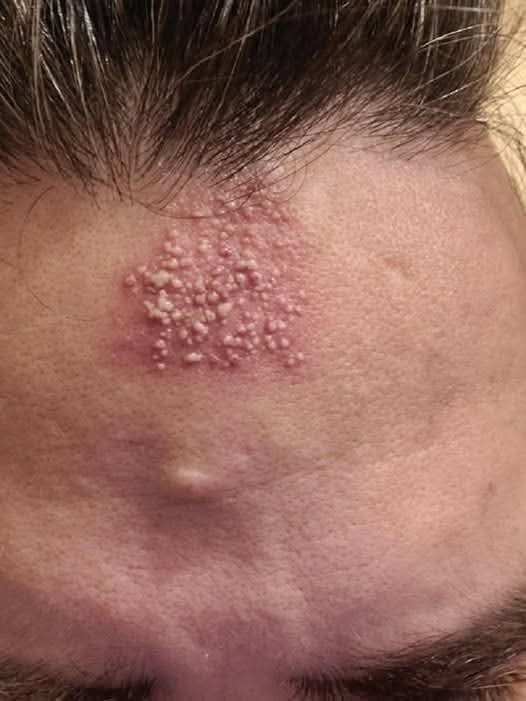
The photograph accompanying this article shows a localized area near the hairline with numerous small raised bumps containing whitish material, together with surrounding redness and irritation. A photograph alone cannot establish a diagnosis, because several different scalp conditions can produce similar-looking bumps.
One possibility is folliculitis, a common condition in which hair follicles become inflamed. Folliculitis can produce clusters of small pimples or pus-filled bumps, itching, tenderness, burning, and sometimes crusting. Bacteria are a common cause, although fungi, yeast, viruses, medications, friction, and other forms of follicle damage can also be involved.
Other conditions can resemble folliculitis, including certain fungal infections, dermatitis, acne-like eruptions, boils, and bacterial skin infections. This is why it is important not to assume that every white bump on the scalp requires the same treatment.
The good news is that many mild cases of follicle inflammation are manageable. The important part is identifying possible triggers, protecting the irritated skin, avoiding unnecessary picking or squeezing, and knowing when professional evaluation is appropriate.
This article explains what these bumps may represent, why they happen, what you can safely do at home, what treatments doctors may recommend, and which warning signs should never be ignored.
What Does the Image Appear to Show?
The image appears to show a concentrated group of small whitish bumps or pustule-like lesions close to the hairline. The surrounding skin appears red and irritated.
This appearance can be consistent with an inflammatory condition involving hair follicles, but it is not possible to confirm folliculitis from an image alone.
Folliculitis often appears as clusters of small bumps centered around hair follicles. Some lesions may contain pus and later break open or form crusts. The area may be itchy, painful, tender, burning, or simply noticeable without significant discomfort.
The location near the hairline is also relevant because the scalp is exposed to several potential irritants, including sweat, hair products, oils, styling products, hats, friction, hair removal, and frequent touching.
However, the appearance of white material does not automatically mean that the problem is bacterial. Different causes can look similar, and treatment depends on the underlying cause.
What Is Folliculitis?
Folliculitis is inflammation of a hair follicle. A hair follicle is the tiny structure in the skin from which a hair grows.
When a follicle becomes irritated or damaged, microorganisms can sometimes enter it. Bacteria, including Staphylococcus aureus, are a common cause of bacterial folliculitis, but other organisms and noninfectious factors can also be responsible.
The condition can be superficial or deeper.
Mild superficial folliculitis may look like tiny pimples or pustules. More significant inflammation can produce larger, painful bumps and may eventually lead to boils or connected areas of infection.
Typical signs can include:
- Small red bumps around hairs
- White- or yellow-topped pustules
- Itching
- Burning
- Tenderness
- Mild pain
- Crusting after bumps open
- Localized redness
- Recurrent eruptions in the same area
Not every person experiences all of these symptoms.
Some mild cases improve by themselves, particularly when the factor causing irritation is removed. More severe, recurrent, widespread, or persistent cases may require medical treatment.
Why Can Folliculitis Develop Near the Hairline?
There are many possible triggers.
- Sweat and Heat
Sweat and prolonged moisture can irritate the skin and create an environment in which microorganisms can multiply.
People who exercise frequently, work in hot environments, wear hats for long periods, or have naturally oily skin may notice scalp bumps more often.
Keeping the scalp clean and allowing it to dry after sweating can help reduce irritation.
- Hair Products
Some oils, pomades, gels, waxes, conditioners, and styling products can irritate the scalp or contribute to blocked follicles in susceptible individuals.
This does not mean that hair products are inherently harmful. The problem may simply be that a particular product does not agree with an individual’s skin.
If bumps began after introducing a new product, consider stopping that product temporarily and observing whether the skin improves.
- Friction
Repeated rubbing can damage follicles.
Possible sources include:
- Tight hats
- Helmets
- Headbands
- Hair accessories
- Rough fabrics
- Frequent scratching
- Tight hairstyles
The American Academy of Dermatology notes that friction, shaving, and other forms of follicle damage can contribute to folliculitis.
- Scratching
Scratching can create tiny breaks in the skin. Once the protective skin barrier is damaged, irritation and infection can become more likely.
Even if the bumps are itchy, repeatedly scratching them can make the situation worse.
- Hair Removal
Shaving or other hair-removal practices can irritate follicles and create small injuries.
Although shaving-related folliculitis is particularly common in certain areas of the body, follicle irritation can occur anywhere hair grows.
Could It Be a Fungal Infection?
Yes, fungal conditions can sometimes affect the scalp, although they may look different from classic bacterial folliculitis.
One important example is tinea capitis, a fungal infection of the scalp. Ringworm is not caused by a worm; it is caused by fungi. Scalp ringworm can cause itching, scaling, broken hairs, patches of hair loss, and inflammation.
Some fungal scalp infections can become quite inflamed and may produce pustules or tender swollen areas.
This distinction matters because antibacterial treatments do not treat fungal infections. Treatment may require an antifungal medication, and scalp fungal infections can sometimes require prescription therapy.
If the bumps are accompanied by:
- Significant scaling
- Broken hairs
- Circular patches
- Hair loss
- Persistent itching
- Swollen areas
- Similar symptoms in other household members
medical evaluation is especially important.
Could It Be a Bacterial Skin Infection?
Another possibility is a bacterial skin infection.
Staphylococcal bacteria can cause several types of skin problems. Folliculitis can produce pus-filled bumps around hair follicles, while deeper infections may develop into boils or carbuncles. Some bacterial infections can also form crusted sores.
The presence of pus or a white head does not prove that bacteria are responsible. A clinician may need to examine the area and, in persistent cases, take a sample for laboratory testing.
That is one reason why repeatedly trying different creams without knowing the cause is not always a good strategy.
Is It Acne?
Scalp folliculitis can be mistaken for acne because both conditions can produce red and white bumps.
However, acne and folliculitis are not identical.
Folliculitis is centered around hair follicles and can be caused by infection or irritation. Acne involves a more complex process involving oil production, clogged pores, inflammation, and other factors.
Because the treatments can differ, persistent acne-like bumps on the scalp are worth discussing with a healthcare professional.
The American Academy of Dermatology specifically notes that folliculitis can resemble an acne breakout.
Should You Pop or Squeeze the Bumps?
It is best to avoid squeezing, popping, scratching, or picking scalp pustules.
There are several reasons.
First, squeezing can traumatize the surrounding skin.
Second, it may push inflammatory material deeper into the tissue.
Third, hands and fingernails can introduce additional bacteria.
Fourth, repeated manipulation increases the possibility of irritation, prolonged inflammation, discoloration, and scarring.
If a bump naturally opens, gently clean the area and avoid repeatedly touching it.
Do not use needles or other sharp objects to drain lesions at home.
Large, painful boils or carbuncles sometimes require professional drainage, which should be performed by an appropriate healthcare professional.
Simple Home Care for Mild Irritation
If the area is small, symptoms are mild, and there are no warning signs of a serious infection, gentle care may be reasonable while monitoring the skin.
Keep the Area Clean
Wash the scalp gently with a mild cleanser or shampoo.
Avoid vigorous scrubbing.
The goal is to remove sweat, oil, and product buildup without further irritating the skin.
Use a Clean Towel
Use a clean towel to dry the scalp.
Avoid sharing towels, washcloths, combs, brushes, hats, or other personal items when an infection is possible.
Regularly washing towels and other items that come into contact with the affected area can help reduce contamination.
Avoid Scratching
If the area itches, scratching may provide temporary relief but can damage the skin.
Try to keep fingernails short and avoid repeatedly touching the affected area.
Reduce Friction
For a while, avoid tight hats, headbands, helmets when they are not necessary, and hairstyles that place pressure or tension on the affected region.
Stop New Hair Products Temporarily
If the problem appeared after using a new styling product, oil, dye, conditioner, or treatment, consider discontinuing it until the cause is clearer.
If symptoms improve after stopping a particular product, discuss the reaction with a dermatologist before trying it again.
Warm Compresses May Help Some Mild Cases
A warm, moist compress can sometimes provide comfort for irritated hair follicles.
The American Academy of Dermatology recommends warm compresses for folliculitis, with applications lasting approximately 15 to 20 minutes several times a day.
The compress should be comfortably warm rather than hot.
Do not burn the skin.
Use a clean cloth each time and avoid aggressively rubbing the affected area.
A warm compress may help relieve discomfort, but it does not determine what caused the condition. If the eruption continues to worsen, professional evaluation is needed.
Be Careful With Home Remedies
The internet contains many recommendations involving vinegar, baking soda, lemon juice, essential oils, alcohol, toothpaste, garlic, or other household ingredients.
These remedies can sometimes cause more irritation than benefit.
Inflamed scalp skin has a weakened barrier. Applying strong acidic, alkaline, fragranced, or concentrated substances may increase redness, burning, or dermatitis.
Natural does not automatically mean safe for irritated skin.
If the scalp contains pustules, open sores, significant redness, or crusting, it is particularly important to avoid experimenting with harsh substances.
What About Antibiotic Creams?
Antibiotics are not appropriate for every scalp eruption.
If a condition is caused by bacteria, a healthcare professional may sometimes recommend a topical or oral antibiotic depending on the severity and location.
But antibiotics do not treat fungal infections, and unnecessary antibiotic use can contribute to resistance and side effects.
Mayo Clinic notes that treatment depends on the type and severity of folliculitis. Mild bacterial cases may sometimes receive topical therapy, while severe or recurrent infections may require additional treatment. Fungal causes require antifungal therapy rather than antibiotics.
For this reason, it is better not to assume that every pustule requires an antibiotic.
When Should You See a Dermatologist?
Consider arranging a medical evaluation if:
- The bumps are spreading
- The area becomes increasingly painful
- The eruption repeatedly returns
- There is significant swelling
- There is hair loss
- The scalp becomes very itchy or scaly
- Lesions are large or deep
- Pus continues to drain
- The condition does not improve
- Several people in the household develop similar symptoms
- You are unsure what caused the eruption
A dermatologist can often diagnose folliculitis by examining the skin. If the diagnosis is uncertain or treatment does not work, testing may include a skin scraping, swab for culture, or occasionally another diagnostic procedure.
Warning Signs That Need Prompt Medical Attention
Some symptoms suggest that an infection may be spreading.
Seek prompt medical care if you develop:
- Rapidly increasing redness
- Rapidly increasing pain
- Fever
- Chills
- Feeling unusually unwell
- Significant swelling
- Redness spreading outward
- Severe tenderness
- A rapidly enlarging boil
- Extensive drainage
Mayo Clinic recommends immediate medical attention when folliculitis is accompanied by signs of a spreading infection such as a sudden increase in redness or pain, fever, chills, or feeling unwell.
Do not wait for a home remedy to work when a skin infection appears to be progressing rapidly.
Can Folliculitis Cause Hair Loss?
Mild folliculitis generally does not cause permanent hair loss.
However, severe or deep inflammation can damage hair follicles. When follicles are destroyed, scarring and permanent hair loss can occur.
This is one reason persistent or severe scalp inflammation should not be ignored.
If you notice a bald patch developing around an inflamed area, particularly if the skin is swollen, crusted, painful, or draining, arrange an evaluation with a dermatologist.
The goal is not simply to make the bumps disappear. It is also to identify the cause and prevent lasting damage.
How Doctors Determine the Cause
A doctor will usually start by examining the scalp and asking questions.
You may be asked:
- When did the bumps first appear?
- Did they develop suddenly?
- Are they itchy or painful?
- Have they become larger?
- Have you recently changed shampoo or hair products?
- Do you wear a hat or helmet frequently?
- Have you recently shaved the area?
- Have you experienced excessive sweating?
- Have you had similar eruptions before?
- Is there hair loss?
- Are there other skin lesions elsewhere?
If the appearance suggests infection and the condition does not respond to initial treatment, testing can help identify the organism.
A bacterial culture can sometimes determine which bacteria are present. A scraping may be used when a fungal infection is suspected.
This approach is much more reliable than guessing based solely on appearance.
How to Prevent Future Scalp Bumps
Prevention depends on the cause, but several habits can help protect the scalp.
- Wash Regularly
Keep the scalp reasonably clean, especially after heavy sweating.
- Wash Hats and Headbands
Items that touch the scalp can accumulate sweat, oil, and microorganisms.
Clean them regularly.
- Do Not Share Personal Items
Avoid sharing:
- Towels
- Brushes
- Combs
- Razors
- Hats
- Hair accessories
This is especially important when a contagious infection is possible.
- Clean Hair Tools
Regularly clean combs, brushes, clippers, and other tools.
- Avoid Excessive Product Buildup
Use hair products in moderation if they seem to contribute to clogged or irritated follicles.
- Avoid Aggressive Scratching
Treat persistent itching rather than repeatedly scratching the scalp.
- Give the Scalp a Break From Tight Hairstyles
Constant pulling and friction can irritate follicles.
- Change Out of Sweaty Clothing and Headwear
Keeping the skin dry after sweating can reduce prolonged moisture and friction.
The American Academy of Dermatology and Mayo Clinic both emphasize reducing follicle irritation, avoiding unnecessary friction, maintaining hygiene, and addressing triggers as part of folliculitis prevention.
What You Should Not Assume From a Photograph
It is tempting to look at an image online and immediately decide that a particular condition is responsible.
That can be dangerous.
A cluster of white bumps could represent follicular inflammation, bacterial infection, fungal disease, an inflammatory skin condition, an allergic reaction, or another problem.
Even medical professionals sometimes need a physical examination or laboratory testing to distinguish similar conditions.
Therefore, the image in this article should be considered an educational example rather than a diagnosis.
If this is your scalp and the eruption is painful, spreading, recurrent, associated with hair loss, or accompanied by fever or significant swelling, arrange an in-person medical evaluation.
Common Questions
Are white bumps on the scalp always an infection?
No. White or yellow-looking bumps can occur for several reasons. Infection is one possibility, but irritation, inflammation, acne-like conditions, and other skin disorders can look similar.
Can folliculitis disappear on its own?
Some mild cases can improve without prescription treatment, especially when the trigger is removed. Persistent or severe cases may need medical treatment.
Can I use ordinary shampoo?
A gentle shampoo may be appropriate for routine cleansing, but the ideal treatment depends on the cause. Avoid aggressive scrubbing and products that clearly worsen irritation.
Should I scratch the bumps if they itch?
No. Scratching can damage the skin and potentially make irritation or infection worse.
Can stress cause scalp bumps?
Stress can influence many skin conditions, but it should not automatically be assumed to be the direct cause of a pustular eruption. Other factors should be considered.
Can fungal infections affect the scalp?
Yes. Tinea capitis is a fungal infection of the scalp. It may produce scaling, itching, broken hairs, hair loss, or inflammation.
When should I worry about hair loss?
Hair loss around an inflamed, crusted, swollen, or painful area deserves medical evaluation, particularly if it is progressing.
Final Thoughts
The cluster of small white bumps shown in the photograph may resemble folliculitis because the lesions appear concentrated around the hairline and have a pustule-like appearance. However, the image alone cannot confirm the diagnosis.
Folliculitis is a common condition involving inflammation of hair follicles and can result from bacteria, fungi, yeast, physical irritation, friction, shaving, sweating, and other factors. It can produce small red bumps, pus-filled spots, itching, tenderness, and crusting.
The safest first steps for a mild eruption are gentle cleansing, avoiding scratching and squeezing, reducing friction, stopping potentially irritating new hair products, and keeping towels and personal grooming items clean.
Warm compresses may provide comfort in some mild cases.
However, do not rely on home remedies when the condition is spreading, increasingly painful, associated with fever or chills, producing significant swelling, or causing hair loss. Those symptoms can indicate a more significant infection or another scalp disorder that requires professional assessment.
Most importantly, do not try to diagnose or drain a scalp infection solely from an online photograph. A healthcare professional can examine the skin, determine whether the problem is bacterial, fungal, inflammatory, or something else, and recommend the appropriate treatment.
Healthy scalp care is not about using the strongest possible product. It is about protecting the skin barrier, identifying the trigger, treating the actual cause, and seeking medical attention when the symptoms indicate that home care is not enough.
Medical Disclaimer
This article is for general educational purposes and is not a diagnosis or a substitute for professional medical care. The photograph cannot be used to definitively identify a skin condition. If the affected area is worsening, painful, spreading, repeatedly returning, associated with fever or chills, or causing hair loss, consult a qualified healthcare professional or dermatologist.