Kidney Cleanse in 7 Days? What You Should Know About “Kidney Detox” Drinks, Foods, and Viral Claims
Introduction
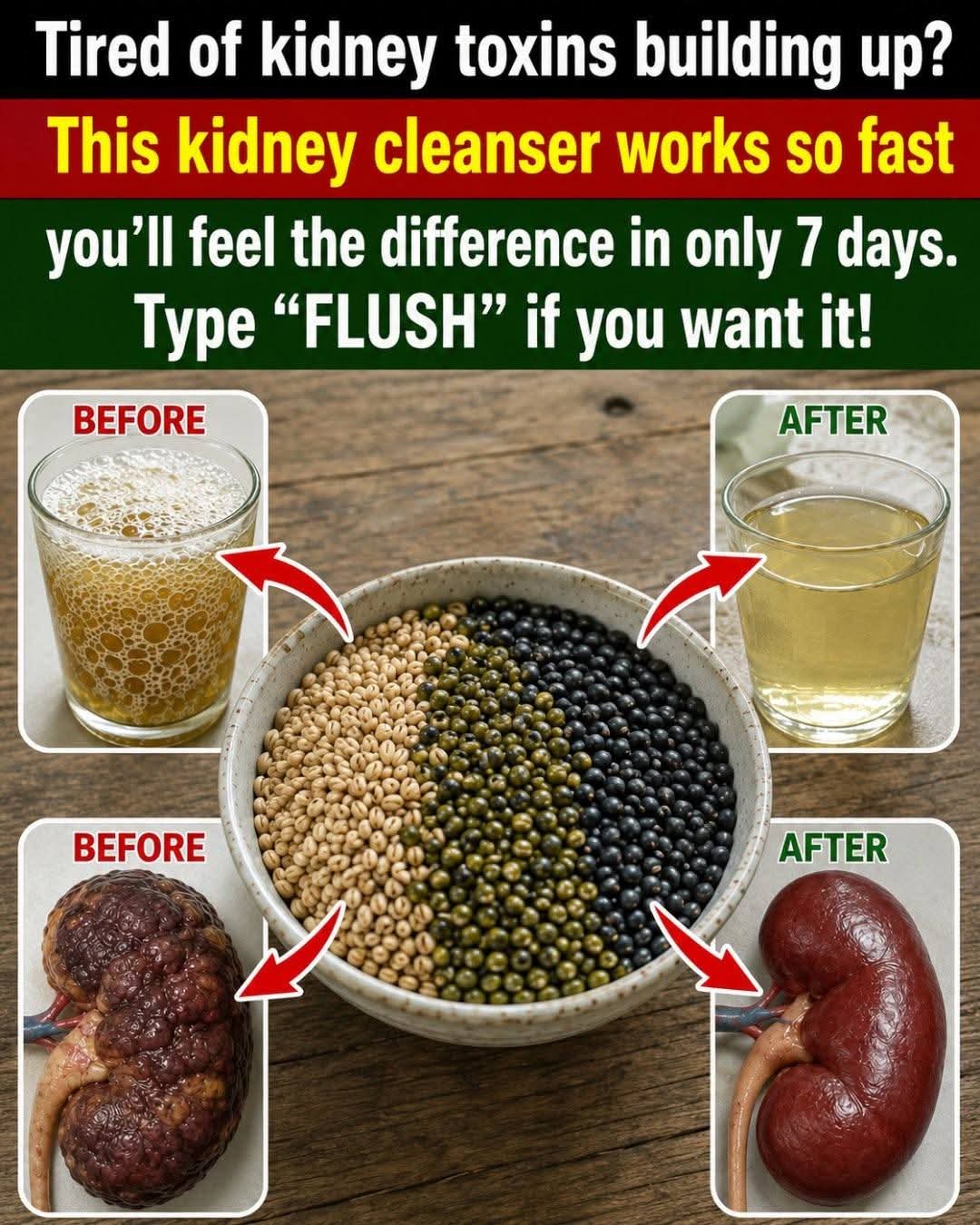
If you have recently seen a social-media post claiming that a simple food or drink can “flush kidney toxins” in only seven days, you are not alone. These posts often use dramatic before-and-after pictures, promises of rapid results, and instructions such as “type FLUSH if you want it.” The image accompanying this article makes a particularly strong promise: that a certain mixture can transform unhealthy-looking kidneys and produce visibly cleaner urine in just one week.
The idea sounds appealing. After all, the kidneys are responsible for filtering waste from the blood, producing urine, balancing fluids and minerals, and performing several other essential jobs. But there is an important distinction between supporting normal kidney health and detoxifying or cleansing the kidneys with a special recipe.
Healthy kidneys already have a sophisticated filtration system. Each kidney contains roughly a million nephrons, and together the kidneys continuously filter blood, return substances the body needs, and send excess water and waste into the urine.
That means there is no need to “wash” healthy kidneys with a special seven-day cleanse. More importantly, a drink or food mixture should not be presented as a treatment for kidney disease, kidney failure, infection, or kidney stones.
This does not mean food is unimportant. Quite the opposite. Everyday habits—including hydration, sodium intake, blood-pressure management, blood-sugar control, physical activity, maintaining a healthy weight, and taking prescribed medicines correctly—can play an important role in protecting kidney function.
So, what should you make of the viral “kidney cleanser” pictured above? This detailed guide explains what the kidneys actually do, what “detox” claims mean, which habits genuinely support kidney health, and when kidney symptoms require professional medical attention.
What Do the Kidneys Actually Do?
The kidneys are two bean-shaped organs located toward the middle of the back, below the rib cage. Although they are relatively small compared with many other organs, they perform several essential functions.
Their best-known job is filtering the blood.
Blood constantly travels through the kidneys. Inside each kidney are microscopic filtering structures called nephrons. The glomerulus initially filters fluid and small substances from the blood, while the tubules carefully reabsorb water, minerals, and other substances the body still needs.
The remaining fluid becomes urine.
According to the National Institute of Diabetes and Digestive and Kidney Diseases, the kidneys also help maintain the balance of water, salts, and minerals in the blood. They remove acid produced by cells and produce hormones involved in blood-pressure regulation, red blood cell production, and bone health.
This is why the phrase “kidney toxins building up” can be misleading when used in advertisements for cleanses.
Waste products can indeed accumulate when kidney function is seriously impaired. But that is a medical problem—not simply a condition that can be reversed by drinking a particular homemade beverage for seven days.
Can You Really “Flush” Your Kidneys?
The word “flush” is frequently used in wellness marketing because it creates a powerful mental picture: something dirty is supposedly inside the kidneys, and drinking a special liquid will wash it away.
The reality is more complicated.
Your kidneys continuously filter your blood. They do not wait for you to consume a cleanse before beginning their work.
Drinking an appropriate amount of fluid supports normal urine production, but that is different from “flushing toxins” out of damaged kidneys.
The National Center for Complementary and Integrative Health notes that there is limited evidence supporting detoxification or cleansing programs for eliminating toxins from the body. Some cleansing programs can also be unsafe, especially when they involve fasting, severe dietary restriction, excessive fluid intake, laxatives, or untested supplements.
Therefore, it is better to think in terms of kidney support rather than a magical kidney reset.
What About the Seven-Day Promise?
The image suggests that people will “feel the difference in only seven days.”
That is a major claim.
There is no reliable evidence that a particular food-and-drink cleanse can repair damaged kidneys or remove accumulated kidney “toxins” within seven days.
A person might feel different after changing their diet for a week, but that does not automatically mean the kidneys have been cleansed.
For example, someone who normally consumes a lot of salty processed foods and then begins eating more fruits, vegetables, whole foods, and appropriate amounts of fluid may notice changes in bloating, digestion, thirst, or energy. Those changes can be real.
However, they should not be interpreted as proof that toxins have been removed from the kidneys.
Kidney function is assessed medically through tests. Blood testing can evaluate filtration, while urine testing can detect substances such as albumin that may indicate kidney damage.
A dramatic picture of a “before” kidney and an attractive “after” kidney is not a medical test.
What Is Wrong With the Before-and-After Kidney Pictures?
One of the most persuasive parts of viral health posts is the visual comparison.
The image shows a dark, irregular kidney labeled “BEFORE” and a smooth red kidney labeled “AFTER.” This presentation strongly implies that something inside the kidney has been physically cleaned.
But images like these should not be treated as diagnostic evidence.
A kidney does not normally become visibly “dirty” because a person has eaten unhealthy food for a few days. Kidney disease can involve structural and functional changes, but those changes cannot be reliably evaluated by looking at a social-media illustration.
A real diagnosis may involve medical history, blood pressure measurement, blood tests, urine tests, and sometimes imaging.
This distinction is extremely important because a person with kidney disease may have few or no obvious symptoms for a long time. Some kidney disorders progress slowly and can remain unnoticed until kidney function has significantly changed.
Therefore, someone should never postpone medical testing because a viral cleanse makes them feel temporarily better.
Is There a Special “Kidney-Cleansing Food”?
There is no single food that can cleanse or repair every person’s kidneys.
Healthy eating can certainly support overall health, but kidney nutrition is highly individual.
For someone with normal kidney function, a balanced diet rich in minimally processed foods can be an excellent foundation.
For someone with chronic kidney disease, however, nutritional needs can be different.
Depending on kidney function and other medical conditions, a healthcare professional may recommend adjustments involving sodium, protein, potassium, phosphorus, fluids, or other nutrients.
That is why generic “kidney detox” recipes can sometimes be inappropriate for people who already have kidney problems.
A food that is nutritious for one person may need to be limited by another person because of a particular medical condition.
What About Beans, Grains, and Lentils?
The photograph accompanying the viral claim appears to feature a mixture of grains and legumes, including small beans or lentil-like foods.
Legumes and whole grains can be nutritious components of many diets. They may provide protein, fiber, vitamins, minerals, and other beneficial nutrients.
But calling a mixture of these ingredients a “kidney cleanser” goes beyond what the evidence supports.
Their nutritional value should be discussed honestly.
Rather than saying, “This mixture removes kidney toxins,” a more accurate statement would be:
“A balanced diet containing appropriate portions of whole grains and legumes may contribute to overall dietary quality, but it is not a proven kidney detoxification treatment.”
That wording matters because it separates nutrition from unsupported medical promises.
Hydration: Helpful, But Not a Miracle Cure
Adequate hydration is important for normal body function and urine production.
However, more water is not automatically better.
The correct amount of fluid varies between individuals. A healthy person may generally drink according to thirst and normal daily needs, while people with certain kidney, heart, or liver conditions may have specific fluid recommendations from their healthcare professional.
Drinking enormous quantities of water in an attempt to “flush” the kidneys can actually be dangerous because excessive water intake can disturb the body’s electrolyte balance.
The National Center for Complementary and Integrative Health specifically warns that drinking large quantities of water or herbal tea while eating little or no food can lead to dangerous electrolyte imbalances.
So the goal is not to force huge amounts of liquid into the body.
The goal is appropriate hydration.
The Importance of Limiting Excess Sodium
One of the most practical dietary steps for kidney health is paying attention to sodium intake.
Excess sodium can contribute to high blood pressure, and high blood pressure can damage the blood vessels in the kidneys over time.
The kidneys and blood pressure are closely connected. When kidney blood vessels are damaged, kidney function can decline, while worsening kidney function can make blood-pressure control more difficult.
Reducing heavily salted processed foods may therefore be much more meaningful for long-term kidney health than completing a short “detox.”
Common sources of excess sodium include:
- Processed meats
- Instant noodles
- Packaged soups
- Salty snacks
- Fast food
- Many canned foods
- Highly processed frozen meals
- Some sauces and condiments
- Large amounts of added table salt
Reading nutrition labels and cooking more meals at home can make it easier to control sodium intake.
Blood Pressure and Kidney Health
If there is one topic that deserves much more attention than most viral kidney cleanses, it is blood pressure.
High blood pressure can damage blood vessels throughout the body, including those supplying the kidneys.
Over time, this damage can reduce the kidneys’ ability to filter blood properly.
For this reason, managing blood pressure is an important part of protecting kidney health.
Healthy lifestyle habits can include:
- Regular physical activity
- Eating a balanced diet
- Limiting excess sodium
- Maintaining a healthy weight
- Avoiding tobacco
- Taking prescribed medication correctly
- Attending recommended health checks
The goal is not a seven-day “flush.”
The goal is protecting kidney function over months and years.
Blood Sugar Matters Too
Diabetes is another major risk factor for kidney disease.
Persistently high blood glucose can damage small blood vessels, including those in the kidneys. Over time, this may affect the kidneys’ filtering ability.
People with diabetes should therefore focus on good long-term blood-glucose management and regular medical monitoring rather than relying on detox drinks.
The same principle applies to people with high blood pressure, heart disease, or other conditions that increase the risk of kidney problems.
Kidney disease can sometimes be silent, so people at higher risk should discuss appropriate testing with their healthcare professional.
Can a Detox Cure Kidney Disease?
No.
A detox drink should never be promoted as a cure for chronic kidney disease.
Chronic kidney disease involves damage or reduced kidney function that may develop over time. Treatment depends on the underlying cause and the stage of disease.
Management may include controlling blood pressure, controlling blood glucose, adjusting diet, treating underlying conditions, and taking prescribed medicines.
In advanced cases, specialized treatments may be required.
The kidneys are complex organs. They cannot simply be “scrubbed clean” with a beverage.
If someone has abnormal kidney tests, swelling, persistent changes in urination, blood in the urine, or other concerning symptoms, the appropriate response is medical evaluation—not a social-media cleanse.
What About Kidney Stones?
Kidney stones are another reason people search for “kidney flush” recipes.
Fluid intake can be important for people who are prone to kidney stones, but prevention depends on the type of stone and the person’s individual circumstances.
There is no universal seven-day recipe that safely prevents every type of kidney stone.
Dietary recommendations may differ depending on whether stones are made from calcium oxalate, uric acid, or another substance.
Some “detox” diets can even create problems. The NCCIH warns that certain juices and foods used in cleansing programs can be high in oxalate, which may be relevant to people susceptible to particular kidney stones.
This is another reason why a generic cleanse should not replace individualized advice.
Herbal Kidney Cleanses Require Caution
“Natural” does not automatically mean “safe.”
Many kidney-cleanse products contain mixtures of herbs, concentrated extracts, laxatives, or other ingredients.
The problem is that the dose, purity, interactions, and effects of these products can vary.
Some supplements may interact with medications. Others may be inappropriate for people with reduced kidney function.
A person who already has kidney disease may be particularly vulnerable to substances that the kidneys cannot eliminate efficiently.
Before using a concentrated herbal product marketed for kidney detoxification, it is wise to discuss it with a qualified healthcare professional.
Signs That Your Kidneys May Need Medical Attention
One of the biggest dangers of viral detox claims is that they can distract people from real symptoms.
Seek medical advice if you experience persistent or concerning symptoms such as:
- Blood in the urine
- Significant or persistent changes in urination
- Pain in the side or back
- Swelling around the feet, ankles, legs, hands, or face
- Persistent nausea or vomiting
- Unexplained severe fatigue
- Shortness of breath
- Persistent high blood pressure
- Fever with urinary symptoms
- Severe pain that could indicate a kidney stone
- Symptoms that are rapidly worsening
Some kidney diseases cause few symptoms in their early stages, so people at higher risk may need routine testing even when they feel perfectly well.
NIDDK notes that kidney disease may not cause noticeable symptoms and that testing can be particularly important for people with risk factors such as diabetes and high blood pressure.
A Better Seven-Day Kidney-Support Challenge
Instead of attempting an unproven kidney cleanse, consider using seven days as the beginning of healthier habits.
Day 1: Check Your Sodium
Look at the foods you eat regularly.
Identify highly processed foods that contain large amounts of sodium and begin replacing some of them with less processed alternatives.
Day 2: Drink Appropriately
Pay attention to thirst and your normal fluid needs.
Do not force huge quantities of water in an attempt to “flush toxins.”
If a healthcare professional has prescribed a specific fluid restriction or fluid target, follow that guidance.
Day 3: Add More Whole Foods
Build meals around vegetables, fruits, whole grains, and appropriate protein sources.
Remember that people with kidney disease may require individualized dietary advice.
Day 4: Move Your Body
Take a walk, stretch, cycle, swim, or perform another activity appropriate for your fitness level.
Regular physical activity supports cardiovascular health, which is closely connected to kidney health.
Day 5: Review Your Blood Pressure
If you have access to a reliable blood-pressure monitor, discuss your readings with your healthcare professional when appropriate.
Do not stop or change prescribed blood-pressure medication simply because you begin a new diet or drink.
Day 6: Review Your Medicines and Supplements
Make a list of your prescription medicines, over-the-counter products, vitamins, and supplements.
Ask a healthcare professional or pharmacist whether any products could affect your kidneys or interact with your medications.
Day 7: Make It Sustainable
The greatest benefit comes from habits you can continue.
A seven-day challenge is useful only if it becomes the beginning of a healthier long-term routine.
What a Kidney-Friendly Lifestyle Really Looks Like
There is no secret ingredient.
Kidney health is influenced by many factors working together.
A practical lifestyle may include:
Balanced nutrition: Choose a variety of minimally processed foods while adjusting nutrients according to individual medical needs.
Appropriate hydration: Drink enough fluid for your body and circumstances rather than forcing excessive amounts.
Moderate sodium: Reduce heavily salted and highly processed foods.
Blood-pressure control: Monitor and manage blood pressure when appropriate.
Blood-sugar control: If you have diabetes, follow your healthcare team’s recommendations.
Healthy weight: Avoid extreme diets and rapid weight-loss programs.
Physical activity: Stay active according to your abilities and health status.
Avoid smoking: Tobacco use damages blood vessels and contributes to cardiovascular risk.
Use medicines responsibly: Follow prescribed instructions and discuss over-the-counter medicines and supplements with a professional when appropriate.
Get medical testing when needed: Especially if you have risk factors for kidney disease.
These habits may sound less exciting than a miracle cleanse, but they are much more meaningful for long-term health.
Why Viral Kidney-Cleanse Claims Are So Persuasive
There is a reason these posts receive attention.
They use a simple story:
- Toxins supposedly accumulate.
- A special food or drink supposedly removes them.
- The kidneys supposedly become clean.
- The person supposedly feels better within days.
It is easy to understand and emotionally appealing.
The problem is that human physiology is not that simple.
Kidney function involves millions of microscopic filtering units, blood vessels, hormones, electrolyte regulation, and complex interactions with other organs.
A picture cannot demonstrate that a particular drink repaired kidney tissue.
A before-and-after image cannot replace laboratory testing.
And feeling better after changing one’s diet does not prove that toxins have been removed from the kidneys.
What You Can Safely Take Away From the Viral Image
The viral image does highlight one legitimate idea: taking care of your kidneys matters.
But the message should be reframed.
Instead of:
“This kidney cleanser removes toxins in seven days.”
A healthier message would be:
“Support your kidneys with sustainable habits, and seek medical care when kidney problems are suspected.”
That is less sensational, but it is much more responsible.
Healthy kidneys are already excellent filtration organs. Their job is to continuously remove waste and excess fluid from the blood.
When kidney function becomes impaired, the solution depends on the cause and severity of the problem.
That is why medical evaluation is so important.
Frequently Asked Questions
Can drinking lemon water cleanse the kidneys?
Lemon water can be a pleasant way to drink fluid, but it should not be described as a universal kidney detox or treatment for kidney disease.
Does urine color prove that toxins are leaving the body?
No. Urine color can be influenced by hydration, foods, medications, supplements, and other factors. It is not a reliable measure of whether a “cleanse” has removed toxins.
Can beans clean the kidneys?
Beans can be nutritious foods for many people, but there is no good reason to describe them as a kidney-cleaning treatment.
People with kidney disease may need individualized advice about potassium, phosphorus, protein, and other nutrients.
Can a kidney cleanse repair damaged kidneys?
There is no evidence that a generic seven-day cleanse can repair damaged kidneys.
Kidney disease requires appropriate diagnosis and management.
Is drinking more water always better?
No. Appropriate hydration is important, but excessive water consumption can be dangerous and may cause electrolyte problems.
How can I know whether my kidneys are healthy?
A healthcare professional can evaluate kidney health using your medical history, blood pressure, blood tests, urine tests, and other investigations when necessary. Blood tests can assess filtration, while urine testing can identify albumin and other signs of kidney damage.
Final Thoughts
The promise of a “kidney cleanser that works in seven days” may sound attractive, especially when accompanied by dramatic before-and-after photographs. But healthy kidneys do not need to be periodically washed clean with a special drink.
Your kidneys are already working around the clock to filter blood, remove waste, regulate fluid and minerals, and perform other essential functions.
There is also limited evidence supporting detox and cleanse programs as a method of eliminating toxins, and some extreme cleansing practices can create genuine health risks.
The better approach is not a quick “flush.” It is consistent kidney care.
Eat a balanced diet appropriate for your health needs. Keep sodium intake under control. Stay appropriately hydrated. Stay physically active. Manage blood pressure and blood sugar. Avoid smoking. Use medications and supplements responsibly. And, importantly, get medical advice if you have symptoms or risk factors for kidney disease.
Most of all, do not allow a viral health post to replace professional medical care.
A seven-day cleanse may make a compelling headline, but kidney health is a long-term project. The best “kidney detox” is not a miracle recipe—it is taking care of the organs that are already doing the detoxification work for you every day.
Important Health Disclaimer
This article is for general educational purposes and does not diagnose, treat, cure, or prevent kidney disease. The information in viral images or social-media posts should not be considered medical advice. If you have kidney disease, kidney stones, diabetes, high blood pressure, swelling, blood in your urine, significant changes in urination, or another health condition, speak with a qualified healthcare professional before making major dietary or fluid changes. People with reduced kidney function may have dietary and fluid requirements that differ substantially from those of healthy adults.