If You’re Over 60, Is Eating a Banana Every Day Good or Bad for You? The Truth About This Popular Fruit
A banana is one of the simplest foods you can add to your daily routine. It requires no cooking, is naturally sweet, is easy to carry, and provides several important nutrients. But a viral claim often makes people wonder: “If you’re over 60, does eating a banana every day cause problems?”
The short answer is no—not for most healthy adults.
There is no general rule saying that people over 60 should stop eating bananas or that one banana a day is harmful simply because of age. In fact, bananas can be a nutritious part of a balanced diet for older adults. They provide carbohydrates for energy, fiber for digestive health, vitamin B6, and potassium. One medium banana contains about 422 mg of potassium, according to the U.S. National Institutes of Health.
However, there are situations in which the amount of banana—or any potassium-rich food—may need to be considered carefully. People with certain kidney problems, some heart conditions, or specific medical conditions may be advised to control their potassium intake. Some medications can also affect potassium levels.
So rather than believing a dramatic headline claiming that a banana a day is dangerous after 60, it is better to understand what bananas actually do, who can benefit from them, and when caution may be appropriate.
The Viral Claim: What Does Eating a Banana Every Day Actually Cause?
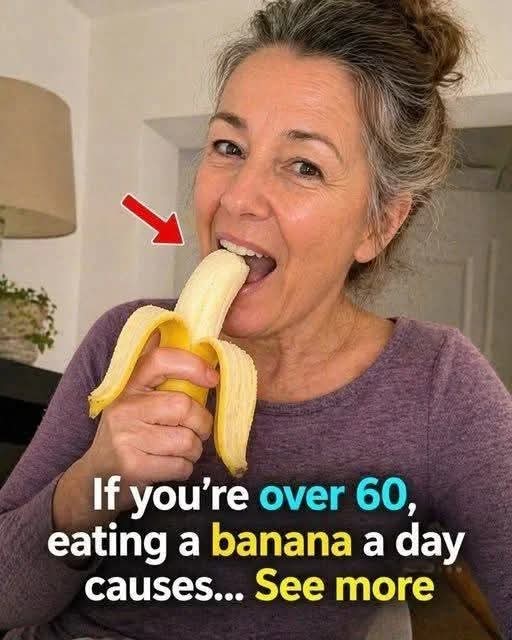
The image accompanying this article suggests that people over 60 who eat a banana every day may experience some unspecified harmful effect.
That type of statement can be misleading because it does not explain what condition is supposedly caused by bananas, how much banana is being eaten, or what a person’s overall health looks like.
Food rarely works in such a simple way.
A person’s health is influenced by their complete diet, physical activity, sleep, medications, genetics, existing medical conditions, hydration, and many other factors. A single fruit cannot automatically determine whether someone will develop a disease.
For most people, eating one banana as part of a balanced diet is completely reasonable.
The important question isn’t:
“Are bananas bad after 60?”
A better question is:
“Does eating bananas fit my individual nutritional and medical needs?”
For most healthy older adults, the answer can be yes.
Why Bananas Can Be Valuable After 60
As people get older, nutrition becomes increasingly important. Maintaining muscle, supporting bone health, protecting cardiovascular health, staying physically active, and maintaining regular digestion all depend partly on adequate nutrition.
Bananas can contribute to several of these goals.
They are not a miracle food, but they are a convenient source of useful nutrients.
- Bananas Provide Potassium
Potassium is an essential mineral involved in normal nerve function, muscle contraction, and fluid balance.
A medium banana contains approximately 422 mg of potassium.
This makes bananas a convenient way to add potassium to the diet.
Potassium is found in many foods, including potatoes, beans, leafy vegetables, dairy products, fruits, and other vegetables. Therefore, bananas are not the only way to obtain this mineral.
For healthy people, potassium from foods is an important component of a nutritious eating pattern.
However, potassium is also the main reason some people may need individualized advice about bananas.
People with impaired kidney function may have difficulty removing excess potassium from the blood. In that situation, eating large amounts of potassium-rich foods without guidance may be inappropriate.
That does not mean bananas are dangerous for everyone over 60.
It means that people with certain medical conditions should follow their healthcare professional’s dietary recommendations.
- Bananas Contain Dietary Fiber
Fiber becomes particularly useful when maintaining regular bowel habits.
A banana contributes dietary fiber, and whole fruits are generally preferable to fruit juice because they retain their natural fiber.
Fiber can contribute to digestive health and can also help make meals and snacks more satisfying.
Older adults sometimes consume less fiber than recommended because their diets may contain fewer fruits, vegetables, legumes, and whole grains.
Adding a banana can be one small way to increase fruit intake.
However, a banana should not be considered a complete solution for constipation. Adequate fluids, vegetables, whole grains, legumes, physical activity, and an overall fiber-rich diet are also important.
If constipation is persistent or accompanied by pain, bleeding, vomiting, unexplained weight loss, or another concerning symptom, medical advice is appropriate.
- Bananas Provide Vitamin B6
Bananas contain vitamin B6, a nutrient involved in numerous processes in the body, including normal metabolism and nervous-system function.
Older adults need a varied diet containing many vitamins and minerals. Instead of relying heavily on supplements, it is generally beneficial to obtain nutrients from a wide range of foods whenever possible.
A banana can contribute to that variety.
But again, the goal isn’t to eat bananas because they are a “superfood.” The goal is to include different fruits, vegetables, whole grains, protein foods, nuts, seeds, and other nutrient-dense foods throughout the week.
- Bananas Are a Convenient Source of Energy
A medium banana provides carbohydrates, which the body uses as an important source of energy.
This can make a banana a useful snack before physical activity or between meals.
For an older adult who enjoys walking, gardening, cycling, swimming, dancing, or strength training, a banana can be an easy food to eat before or after activity.
It is also convenient for people who don’t want to prepare complicated snacks.
A banana can be especially useful when combined with another food that provides protein or healthy fat.
For example:
- Banana with plain Greek yogurt
- Banana with a small amount of peanut or almond butter
- Banana with oatmeal
- Banana with unsalted nuts
- Banana sliced over plain yogurt
- Banana blended into a smoothie without added sugar
Combining foods can create a more balanced snack than eating large amounts of fruit alone.
- Bananas Can Be Part of a Heart-Friendly Eating Pattern
Many people become increasingly concerned about cardiovascular health as they age.
No single fruit prevents heart disease. However, bananas can fit comfortably into an overall eating pattern centered on fruits, vegetables, whole grains, legumes, nuts, seeds, fish or other healthy protein sources, and limited highly processed foods.
Potassium is also relevant to normal cardiovascular and muscle function.
But it is important not to turn this fact into an exaggerated claim that bananas “clean arteries,” “reverse heart disease,” or “prevent heart attacks.”
There is no single food that can replace medical treatment or a balanced diet.
The strength of nutrition comes from the overall pattern.
Does Eating One Banana Every Day Cause High Blood Sugar?
This is another common concern, especially for older adults with diabetes or prediabetes.
Bananas contain carbohydrates, so they can raise blood glucose. The American Diabetes Association recognizes fruit as a carbohydrate-containing food, but it also includes whole fruit as part of healthy eating patterns.
Therefore, having diabetes does not automatically mean you must eliminate bananas.
The more important considerations include:
- Portion size
- The ripeness of the banana
- What else you eat with it
- Your total carbohydrate intake
- Your medication or treatment plan
- Your individual blood-glucose response
A small banana may be a more appropriate portion for some people than a very large banana.
If you have diabetes and notice that bananas consistently cause larger-than-desired glucose increases, discuss your portions and meal plan with your healthcare professional or dietitian.
Whole fruit is generally a more nutritious choice than sugary fruit drinks or desserts because it provides fiber and other nutrients. The ADA specifically recommends fresh fruit and other forms without added sugar as healthy choices.
Should People With Diabetes Avoid Bananas After 60?
Not automatically.
This is an important distinction.
Someone who has diabetes may need to account for the carbohydrate in a banana, but that is different from saying bananas are forbidden.
The American Diabetes Association explains that fruit contains carbohydrates and can affect blood glucose, while still recognizing fruit as part of a healthy eating pattern.
A practical approach is portion awareness.
Instead of eating a very large banana alongside a carbohydrate-heavy breakfast, someone might choose a smaller portion and pair it with protein or other nutritious foods.
For example:
Breakfast idea:
- ½ to 1 small banana
- Plain Greek yogurt
- A small portion of walnuts
- Oatmeal
- Cinnamon
This creates a meal containing carbohydrates, protein, fiber, and healthy fats.
Individual needs vary, so people taking glucose-lowering medication should not make major dietary changes without considering their treatment plan.
What About Kidney Disease?
This is where the banana conversation becomes more important.
Bananas are relatively rich in potassium. The kidneys help regulate potassium levels in the body.
When kidney function is significantly reduced, the body may not be able to remove potassium efficiently. Some people with kidney disease therefore need to limit or carefully manage potassium-containing foods.
That means a person with kidney disease should not assume that because bananas are healthy for most people, they are automatically appropriate in unlimited quantities.
The correct amount depends on the individual’s kidney function, blood potassium levels, medications, and dietary plan.
If your doctor or dietitian has prescribed a low-potassium diet, follow that guidance rather than a generic internet recommendation.
This is one reason health advice should never be based solely on age.
Being 60, 65, 70, or 80 does not automatically determine whether you should eat a particular food.
Your medical history matters much more.
Can Bananas Cause Too Much Potassium?
For a healthy person with normally functioning kidneys, eating a normal amount of potassium-rich foods is generally not a reason for alarm.
The problem is more relevant to people with certain medical conditions or those taking medications that can increase potassium.
Some blood-pressure and heart medications can affect potassium levels. Because medication combinations differ from person to person, anyone who has been told they have high potassium—or who has kidney or heart disease—should ask their healthcare professional about appropriate fruit portions.
Do not stop prescribed medication simply because you are concerned about potassium.
Instead, discuss your diet and medications with your doctor or pharmacist.
Is a Green Banana Better Than a Ripe Banana?
Bananas change as they ripen.
A greener banana contains more resistant starch, while the starch becomes increasingly converted into sugars as the fruit ripens.
This means ripe bananas tend to taste sweeter and softer.
For people monitoring carbohydrate intake, portion size remains important regardless of ripeness.
Green bananas may also be less pleasant to digest for some people, particularly if eaten in larger quantities.
There is no universal rule that everyone over 60 should eat green bananas.
Choose the ripeness that you enjoy and that fits your dietary needs.
What Happens If You Eat a Banana Every Day?
If you are a generally healthy adult, eating one banana every day can simply become one way of meeting your fruit intake.
You may get:
- Potassium
- Fiber
- Vitamin B6
- Carbohydrates for energy
- A convenient snack
- A naturally sweet alternative to some processed desserts
But the benefits depend on what the banana replaces.
If eating a banana means replacing a candy bar, pastry, or sugary snack, that may be a positive change.
If eating a banana means adding a large amount of extra food to an already excessive-calorie diet, the effect may be different.
Nutrition is always about context.
Can Bananas Help With Muscle Function?
Potassium is involved in normal muscle and nerve function, while carbohydrates provide energy for physical activity.
This makes bananas a popular snack among active people.
For older adults, maintaining physical activity is especially valuable. Walking, resistance exercises, balance exercises, and other appropriate forms of movement can support independence and physical function.
A banana does not build muscle by itself.
Muscle maintenance requires adequate protein, regular physical activity—especially resistance training when appropriate—and sufficient overall nutrition.
For a more balanced post-exercise snack, consider combining a banana with a protein-rich food such as yogurt, milk, cottage cheese, or a small serving of nuts or nut butter.
Are Bananas Good for Digestion?
They can be.
Bananas contain fiber, and fiber can support normal bowel function.
However, individual responses differ.
Some people find bananas easy to digest, while others may experience bloating or changes in bowel habits depending on the amount eaten and their overall diet.
If you suddenly increase your fiber intake, digestive discomfort can occur.
A better strategy is to increase fiber gradually and drink enough fluids unless you have been instructed to restrict fluids.
If you have unexplained or persistent digestive symptoms, don’t assume that bananas—or any other single food—are the cause.
The Best Way to Eat a Banana After 60
There is no special “60-plus banana method.”
Instead, focus on balance.
Morning
Slice a banana over oatmeal and add a small amount of nuts or seeds.
This can create a satisfying breakfast containing carbohydrates, fiber, and healthy fats.
Midday Snack
Have a small banana with plain yogurt.
This adds protein to the fruit and can make the snack more filling.
Before Exercise
A banana can provide convenient carbohydrates before walking or another activity.
Dessert
Instead of reaching for a highly processed sweet, try banana slices with plain yogurt and cinnamon.
Smoothie
Blend a small banana with plain yogurt, milk or an unsweetened alternative, and berries.
Avoid turning the smoothie into a high-sugar dessert by adding large quantities of sweetened syrups, sugar, or juice.
How Many Bananas Should You Eat?
There is no universal number that applies to every person over 60.
For many people, one banana a day can fit easily into a healthy eating pattern.
But more is not necessarily better.
If bananas are your favorite fruit, remember that variety is valuable. Apples, oranges, berries, pears, peaches, kiwi, melon, and other fruits can provide different combinations of nutrients and flavors.
Instead of eating several bananas every day, consider rotating different fruits throughout the week.
This creates a more diverse diet.
Signs That You Should Discuss Bananas With Your Doctor
Most healthy people do not need to worry about eating a normal serving of banana.
However, talk to a healthcare professional if you have:
- Chronic kidney disease
- A history of high blood potassium
- Certain heart conditions
- A medically prescribed low-potassium diet
- Diabetes requiring careful carbohydrate management
- A medication plan that affects potassium
- A condition requiring specific dietary restrictions
Your doctor may recommend blood tests or individualized dietary guidance.
Do not make major dietary decisions based on a viral social-media headline.
Common Banana Myths After 60
Myth 1: “Everyone over 60 should stop eating bananas.”
False.
Age alone is not a reason to eliminate bananas.
Myth 2: “One banana a day causes diabetes.”
False.
Bananas contain carbohydrates and can affect blood glucose, but eating one banana does not automatically cause diabetes.
Diabetes is influenced by multiple factors, including genetics, body composition, physical activity, overall diet, and other health factors.
Myth 3: “Bananas cause heart attacks in older adults.”
False.
There is no general rule that one banana a day causes heart attacks.
People with specific heart or kidney conditions may have individualized potassium recommendations, but that is very different from saying bananas are dangerous for everyone.
Myth 4: “Bananas contain too much sugar for older adults.”
Misleading.
Bananas contain naturally occurring sugars and carbohydrates, but they also provide fiber and nutrients. Portion size and overall dietary pattern matter.
Myth 5: “Bananas can replace blood-pressure medication.”
Absolutely not.
A healthy diet can support cardiovascular health, but food should not be used as a replacement for prescribed medication unless a qualified healthcare professional specifically changes your treatment.
What Should a Healthy Diet After 60 Look Like?
Instead of focusing on one “miracle” food, think about the whole plate.
A balanced eating pattern can include:
Fruits
Bananas, berries, apples, oranges, pears, peaches, and other whole fruits.
Vegetables
Leafy greens, carrots, broccoli, peppers, tomatoes, squash, and other colorful vegetables.
Protein
Fish, eggs, poultry, beans, lentils, tofu, yogurt, and other suitable protein sources.
Whole Grains
Oats, brown rice, barley, whole-grain bread, quinoa, and other whole grains.
Healthy Fats
Nuts, seeds, olive oil, avocado, and fatty fish.
Fluids
Water should generally be the main beverage unless a healthcare professional has recommended fluid restriction.
The American Diabetes Association similarly emphasizes vegetables, lean proteins or plant-based proteins, quality carbohydrates, healthy fats, and less added sugar and highly processed food.
This type of dietary pattern is much more important than whether you eat one banana.
Banana With Protein: A Better Snack Combination
One simple improvement is to combine fruit with protein.
For example:
Banana + Greek yogurt
The banana provides carbohydrates and potassium, while yogurt provides protein.
Or try:
Banana + a small amount of unsalted nut butter
This combination provides carbohydrates, fat, and protein.
Another option is:
Banana + oatmeal + walnuts
This creates a more substantial meal containing carbohydrates, fiber, and healthy fats.
The goal is not to make every snack complicated.
It is simply to make the overall diet more balanced.
What If You Don’t Like Bananas?
You don’t need to eat them.
There is nothing uniquely magical about bananas.
If you dislike them, you can obtain potassium and other nutrients from many other foods.
For example, potassium is found in potatoes, beans, vegetables, dairy foods, fruits, and other foods.
A healthy diet should be enjoyable and sustainable.
Forcing yourself to eat a food you dislike is unnecessary.
The Bigger Picture: Healthy Aging Is About Habits
One banana cannot make someone healthy.
Likewise, one banana cannot make someone unhealthy.
Healthy aging is built through repeated habits.
These include:
- Eating a varied diet
- Staying physically active
- Maintaining appropriate strength and balance
- Getting adequate sleep
- Drinking enough fluids when appropriate
- Avoiding tobacco
- Limiting excessive alcohol
- Attending recommended medical appointments
- Taking prescribed medications correctly
- Maintaining healthy social connections
- Managing chronic conditions
Food is one important part of the picture, but it is not the entire picture.
A Simple Daily Banana Routine
If your healthcare professional has not told you to restrict potassium or carbohydrates, you can enjoy a banana in a simple way.
Breakfast
Oatmeal + banana slices + walnuts.
Lunch
A balanced meal containing vegetables, protein, and whole grains.
Afternoon
A small banana with plain yogurt if you need a snack.
Dinner
Vegetables + protein + a suitable whole-grain or starchy food.
Evening
If you are hungry, choose a small nutritious snack rather than automatically eating a second or third banana.
This keeps the focus on overall balance.
Final Verdict: Is One Banana a Day Safe After 60?
For most healthy adults, yes.
There is no evidence-based rule that says people over 60 should avoid one banana a day simply because they have reached a certain age.
Bananas provide potassium, fiber, vitamin B6, and carbohydrates, and they can be an easy, affordable addition to a balanced diet. A medium banana contains about 422 mg of potassium.
The important exceptions involve individual health circumstances.
If you have kidney disease, high blood potassium, certain heart conditions, diabetes requiring careful carbohydrate management, or medications that affect potassium levels, your ideal diet may be different. In those situations, ask your healthcare professional how much banana and other potassium-rich foods are appropriate for you.
The viral message that “eating a banana every day after 60 causes something dangerous” is therefore far too broad.
The truth is much more practical:
A banana is a nutritious food, not a miracle cure and not a universal danger.
Enjoy it as part of a varied diet, pay attention to portion sizes, and consider your individual health needs.
Most importantly, don’t let a frightening headline make you afraid of ordinary nutritious foods.
Healthy aging is not about finding one food to avoid or one food to eat every day.
It is about building a pattern of good choices—one meal, one walk, and one healthy habit at a time.
Frequently Asked Questions
Can I eat a banana every day after age 60?
For most healthy adults, yes. One banana can fit into a balanced diet. Individual dietary needs vary, particularly for people with kidney disease or other conditions requiring potassium or carbohydrate management.
Is banana good for older adults?
Yes. Bananas provide potassium, fiber, vitamin B6, and carbohydrates. They are also convenient and easy to eat.
Can people with diabetes eat bananas?
Many people with diabetes can include bananas in their meal plan. Because bananas contain carbohydrates, portion size and the rest of the meal matter. The American Diabetes Association includes whole fruit among quality carbohydrate choices.
Are bananas high in potassium?
Bananas are a useful source of potassium. A medium banana contains approximately 422 mg.
Should people with kidney disease avoid bananas?
Not necessarily in every case, but people with kidney disease may need to manage potassium intake depending on their kidney function and blood potassium levels. Follow individualized medical advice.
Is one banana enough for breakfast?
A banana alone may not provide enough protein or overall nutrition for a complete breakfast. Consider combining it with foods such as plain yogurt, oats, nuts, eggs, or another suitable protein source.
Can bananas help constipation?
Bananas contain fiber and can be part of a fiber-rich diet. However, constipation has many possible causes, and persistent symptoms should be evaluated by a healthcare professional.
Are green bananas healthier than ripe bananas?
Not necessarily. Green and ripe bananas have different starch and sugar characteristics. Choose the ripeness you tolerate and enjoy while considering your individual dietary needs.
Can bananas lower blood pressure?
Bananas provide potassium, which is important for normal body function, but eating bananas should not be presented as a treatment for high blood pressure. People with hypertension should follow a comprehensive treatment plan.
Conclusion
The next time you see a headline warning that people over 60 should stop eating bananas, pause before believing it.
For most healthy adults, a banana is simply a nutritious fruit that can be part of a balanced diet.
It provides potassium, fiber, vitamin B6, and convenient energy. It can make a useful breakfast ingredient, snack, or dessert alternative.
But individual health matters.
If you have kidney disease, high potassium, diabetes, or another condition requiring dietary restrictions, ask your healthcare professional about the right amount for you.
The best approach to healthy aging isn’t fear.
It’s balance, variety, moderation, physical activity, and good medical care.
So, if you enjoy a banana every day and it fits your personal dietary needs, there is generally no reason to give it up simply because you are over 60.