Baking Soda for Dark Spots, Wrinkles, and Dark Circles: The Complete Truth Behind the Viral Trend
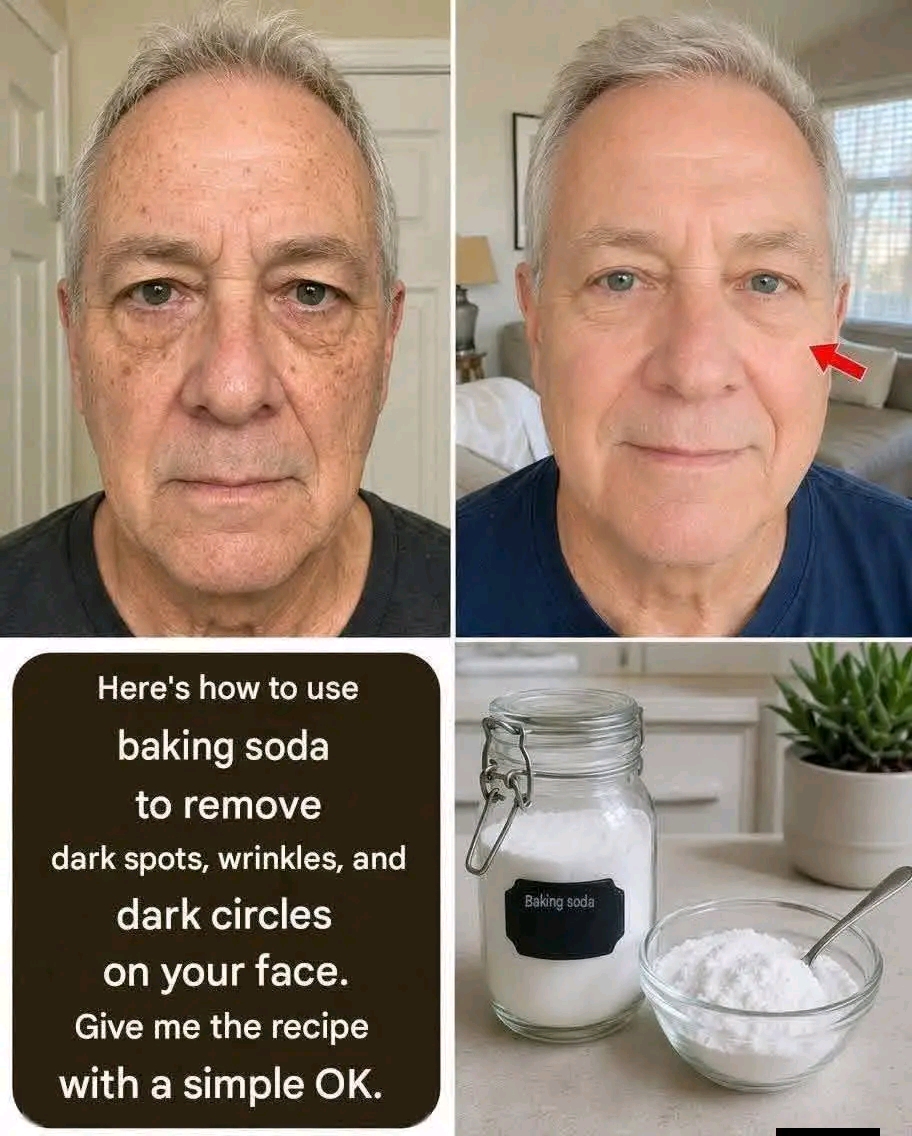
You’ve probably seen the before-and-after photos. An older man with visible wrinkles, age spots, and tired-looking under-eye circles on one side. On the other, smoother, brighter skin and a confident smile. Next to it sits a jar of baking soda and a simple caption: “Here’s how to use baking soda to remove dark spots, wrinkles, and dark circles on your face. Give me the recipe with a simple OK.”
These posts spread rapidly because they promise a cheap, kitchen-cupboard miracle. Baking soda (sodium bicarbonate) is inexpensive, widely available, and already sitting in most homes. The idea that one pantry staple could fade pigmentation, soften lines, and brighten dark circles is understandably appealing.
But does it actually work? And more importantly, is it safe?
This comprehensive guide examines the claims, the science, the risks, the limited ways some people still use it, and—most critically—the evidence-based alternatives that dermatologists actually recommend. By the end you will understand exactly what baking soda can and cannot do for facial skin, and how to make informed decisions instead of following viral trends.
What Baking Soda Actually Is
Baking soda is sodium bicarbonate, a white crystalline powder with a pH of approximately 9. It is alkaline. Healthy facial skin maintains a slightly acidic surface pH between 4.5 and 5.5. This “acid mantle” supports the skin barrier, helps beneficial microbes thrive, regulates enzyme activity involved in barrier repair, and keeps moisture locked in.
When an alkaline substance is applied to the face, it temporarily raises the skin’s pH. The barrier lipids become disorganized, transepidermal water loss increases, and the skin can become drier, more permeable, and more reactive. These effects are well-documented in dermatology literature and form the core reason most board-certified dermatologists advise against regular facial use of baking soda.
Baking soda does have mild abrasive particles and weak antibacterial properties. In diluted form it can act as a temporary mechanical exfoliant and may absorb some surface oil. These limited surface effects explain why some people report a short-term “glow” or smoother feel. They do not, however, translate into lasting reduction of wrinkles, true fading of dermal pigmentation, or correction of the vascular and structural causes of dark circles.
The Claims vs. Reality
Dark spots and hyperpigmentation
Viral posts often claim baking soda lightens age spots, sun spots, and post-acne marks. In reality, hyperpigmentation lives deeper in the epidermis and dermis. Melanin production and transfer are regulated by enzymes such as tyrosinase and by inflammatory pathways. Baking soda has no meaningful effect on these processes. Any temporary brightening comes from removing surface dead cells so light reflects more evenly. Harsh mechanical scrubbing or barrier disruption can actually trigger post-inflammatory hyperpigmentation—especially in medium to deep skin tones—making spots darker over time.
Wrinkles and fine lines
Baking soda does not stimulate collagen, elastin, or any dermal remodeling. Temporary softening of the appearance of fine lines occurs because mild exfoliation and oil removal make the surface smoother. Once the skin rehydrates or the surface cells rebuild, the lines return. Chronic barrier damage from repeated alkaline exposure can accelerate the appearance of fine lines by increasing dryness and inflammation.
Dark circles
Dark circles have multiple causes: genetics, thin under-eye skin revealing blood vessels, shadowing from hollows, pigment deposition, and fluid retention. Baking soda cannot address vascular visibility, structural volume loss, or true pigment. A brief cold compress effect or surface smoothing may make circles look marginally less pronounced for a few hours. The thin, delicate skin around the eyes is particularly vulnerable to irritation from alkaline products and abrasive particles.
In short, the dramatic before-and-after images circulating online are either heavily filtered, the result of temporary optical changes, lighting differences, or—in some cases—completely unrelated to the baking soda itself.
Why Dermatologists Generally Advise Against It
Multiple dermatologists and sources including Healthline, medical reviews, and clinical commentary consistently highlight these risks:
- Disruption of the acid mantle leading to dryness, tightness, and flaking
- Increased transepidermal water loss
- Microscopic barrier damage that can invite irritation, redness, and breakouts
- Higher risk of post-inflammatory hyperpigmentation in darker skin
- Potential worsening of eczema, rosacea, or sensitive skin
- Abrasive texture that can create micro-tears, especially when rubbed vigorously
Even short contact can sting on compromised or recently treated skin (retinoids, acids, after shaving). The under-eye area is especially high-risk because the skin is thinner and more permeable.
While diluted baking soda has been studied in certain dermatologic contexts (baths for certain conditions, or very low concentrations in specific formulations), these are not the same as DIY facial pastes left on the skin or used as daily scrubs.
Limited, Cautious Approaches Some People Still Try
If someone still wishes to experiment despite the risks, the absolute safest approach is extreme dilution, very short contact time, buffering with soothing ingredients, infrequent use, and rigorous aftercare. Even then, results remain temporary and the risk of irritation remains.
Important safety rules before any attempt
- Perform a 24-hour patch test on the inner arm or behind the ear.
- Never use on broken, inflamed, sunburned, or recently treated skin.
- Avoid the eye area entirely.
- Limit to once every 7–14 days maximum, and only if no irritation occurs.
- Immediately discontinue if stinging, redness, or tightness appears.
- Always follow with a rich moisturizer containing ceramides, glycerin, or hyaluronic acid, and use broad-spectrum SPF 30+ the next day (exfoliated skin is more sun-sensitive).
- People with eczema, rosacea, sensitive skin, darker skin tones prone to PIH, or those using prescription topicals should skip this entirely.
Very mild paste (if at all)
Mix ½ teaspoon baking soda with 2–3 teaspoons of water or rose water to create a thin, milky slurry rather than a thick abrasive paste. Optional buffers: a small amount of raw honey, plain yogurt, or aloe vera gel to reduce alkalinity and add humectant properties.
Apply with fingertips using almost no pressure for 20–40 seconds on the T-zone only if oily. Rinse thoroughly with lukewarm water. Pat dry and moisturize immediately. Do not leave on as a mask for 10–15 minutes—the longer the contact, the greater the pH disruption.
Some online recipes combine baking soda with lemon juice. This is particularly problematic. Lemon is highly acidic and photosensitizing; the combination creates a reaction that can increase irritation and sun sensitivity dramatically. Avoid citrus + baking soda mixtures on the face.
Other popular add-ins (honey, yogurt, aloe) may slightly mitigate dryness but do not neutralize the fundamental pH problem.
Evidence-Based Alternatives That Actually Work
Instead of relying on an alkaline kitchen ingredient, consider ingredients and approaches with clinical support:
For dark spots and hyperpigmentation
- Niacinamide (4–5%): strengthens barrier, reduces pigment transfer
- Azelaic acid (10–20%): anti-inflammatory and tyrosinase inhibitor
- Vitamin C (stable forms such as ascorbic acid or derivatives): antioxidant and brightening
- Retinoids (adapalene, tretinoin, or retinol): accelerate cell turnover and fade marks over months
- Chemical exfoliants used correctly: low-strength AHAs (lactic, glycolic) or PHAs for gentler renewal
- Consistent daily broad-spectrum sunscreen—the single most important step to prevent new spots and allow existing ones to fade
For wrinkles and texture
- Retinoids remain the gold standard for collagen support and surface improvement
- Peptides and growth-factor serums for additional support
- Hydrating ingredients (hyaluronic acid, glycerin, ceramides) to plump fine lines optically
- Professional procedures when appropriate: prescription retinoids, chemical peels, lasers, or injectables under medical supervision
For dark circles
- Caffeine gels or serums for temporary vasoconstriction and reduced puffiness
- Cold compresses or chilled spoons
- Color-correcting concealers and tinted mineral sunscreens for optical camouflage
- Addressing lifestyle factors: sleep, allergies, iron status if relevant
- For structural hollows or vascular issues: consultation with a dermatologist or oculoplastic specialist about fillers, lasers, or other treatments
A solid daily routine of gentle cleansing, targeted actives, barrier repair, and rigorous sun protection will outperform any short-term baking soda experiment both in safety and long-term results.
Practical Skincare Routine Framework
Morning
- Gentle, pH-balanced cleanser
- Antioxidant serum (vitamin C or similar)
- Moisturizer suited to skin type
- Broad-spectrum SPF 30 or higher (reapply as needed)
Evening
- Double cleanse if wearing sunscreen or makeup
- Treatment (retinoid, niacinamide, azelaic acid, etc.—introduce slowly)
- Barrier-supporting moisturizer
- Optional occlusive or eye cream if needed
Introduce only one new active at a time and monitor tolerance. Consistency over months, not days, produces visible change.
Who Should Never Use Baking Soda on the Face
- Anyone with eczema, rosacea, perioral dermatitis, or a compromised barrier
- People using prescription retinoids, strong acids, or undergoing professional treatments
- Those with medium to deep skin tones who are prone to post-inflammatory hyperpigmentation
- Individuals with very dry or sensitive skin
- Anyone who experiences stinging on first contact
When in doubt, consult a board-certified dermatologist. Viral before-and-after photos are not a substitute for personalized medical advice.
The Bigger Picture: Why These Trends Persist
Social media rewards dramatic claims and quick visual results. Baking soda is free or nearly free, requires no special purchase, and produces an immediate “squeaky clean” sensation that many interpret as effectiveness. Temporary brightness from surface cell removal photographs well under certain lighting. Combined with confirmation bias and the desire for accessible solutions, the narrative spreads.
Real skin improvement is slower, less photogenic in the short term, and requires consistent habits—especially sun protection—rather than a single dramatic treatment. Understanding the difference between optical temporary change and genuine biological improvement is the key to avoiding disappointment and potential damage.
Final Thoughts
Baking soda is an excellent household cleaner, deodorizer, and occasional body scrub in diluted form for some people. It is not a clinically proven treatment for facial dark spots, wrinkles, or dark circles. The risks of barrier disruption, irritation, and potential worsening of pigmentation outweigh the limited, temporary surface benefits for the majority of users.
If you have already tried it and experienced dryness or redness, focus on repairing the barrier with simple, fragrance-free moisturizers containing ceramides and avoiding further actives until the skin calms. Going forward, choose ingredients whose mechanisms are supported by research and whose pH is compatible with healthy skin.
The most effective “recipe” for better-looking skin remains the least glamorous: daily sunscreen, gentle cleansing, consistent use of proven actives, adequate sleep, and realistic expectations. That approach may not generate viral before-and-after posts overnight, but it delivers safer, more reliable results over time.
Always prioritize skin health over trends. When a claim sounds too good—and too cheap—to be true, it usually is.