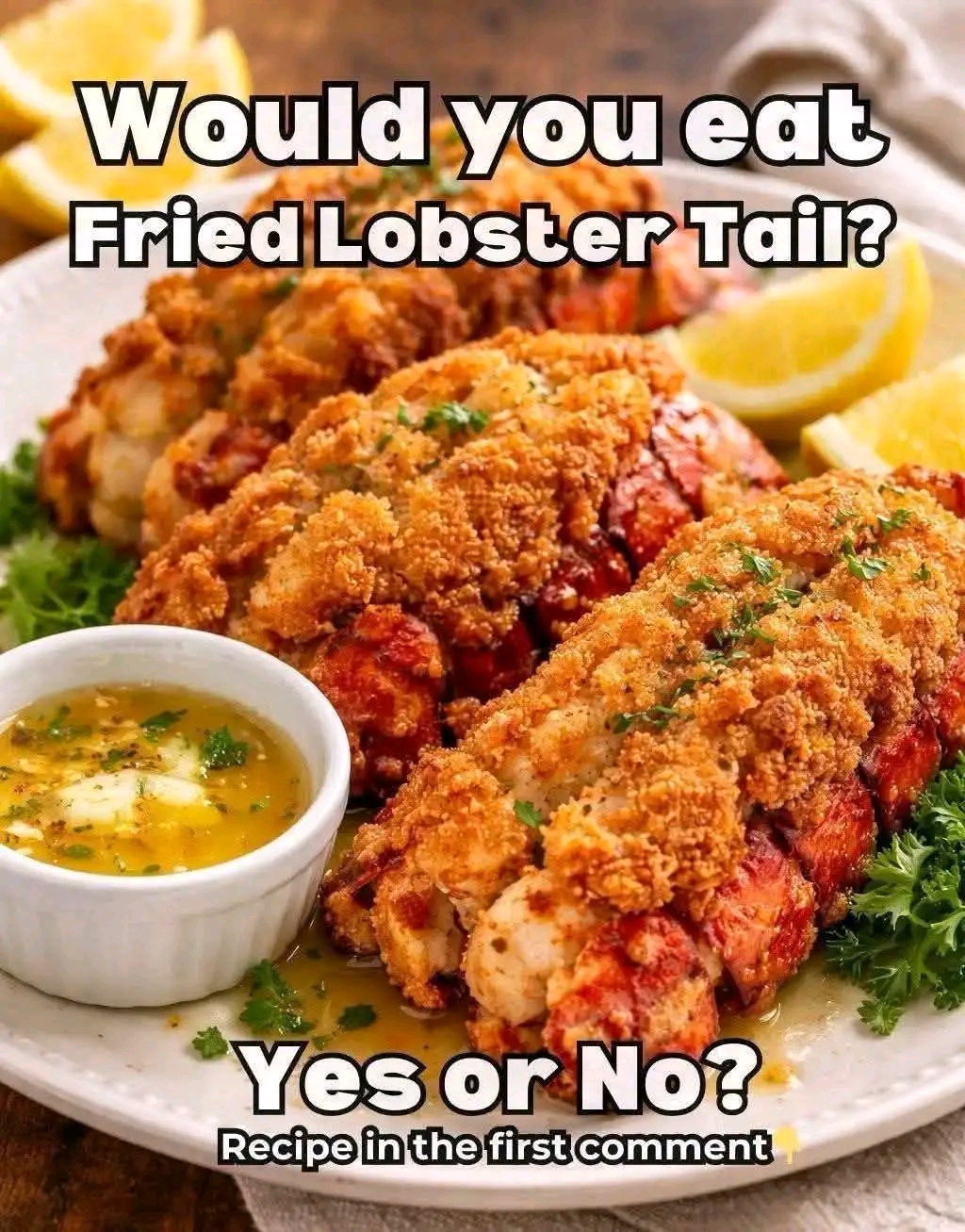
Crispy Fried Lobster Tail Recipe
Introduction
Fried lobster tail is one of the most luxurious seafood dishes you can prepare at home. Combining the naturally sweet, tender meat of lobster with a perfectly seasoned, crispy golden coating creates an unforgettable meal that feels worthy of a fine-dining restaurant. Every bite delivers a satisfying crunch followed by juicy, buttery lobster that practically melts in your mouth.
Although lobster is often associated with elegant dinners and special occasions, frying lobster tails transforms this premium seafood into a comforting dish that appeals to seafood lovers of all ages. Whether served with garlic butter, lemon wedges, tartar sauce, spicy aioli, or homemade remoulade, fried lobster tail is versatile enough for family dinners, holiday celebrations, romantic date nights, or backyard seafood feasts.
The secret to exceptional fried lobster tails lies in selecting quality lobster, preparing the meat properly, seasoning generously, and frying at the correct temperature to achieve a light, crisp exterior without overcooking the delicate meat inside.
This complete guide will walk you through everything you need to know—from its history and preparation techniques to nutritional information, cooking methods, serving suggestions, and expert tips.
Ingredients
For the Lobster
- 4 lobster tails (5–8 ounces each)
- 1 teaspoon salt
- 1 teaspoon black pepper
- 1 teaspoon paprika
- ½ teaspoon garlic powder
- ½ teaspoon onion powder
- ¼ teaspoon cayenne pepper (optional)
- 1 tablespoon lemon juice
For the Breading
- 1 cup all-purpose flour
- 2 large eggs
- 2 tablespoons milk
- 1½ cups panko breadcrumbs
- ½ cup regular breadcrumbs
- ½ teaspoon paprika
- ½ teaspoon garlic powder
- ½ teaspoon Italian seasoning
- Salt and pepper to taste
For Frying
- Vegetable oil
- Canola oil
- Peanut oil
Garlic Butter Sauce
- ½ cup melted butter
- 3 garlic cloves, minced
- 1 tablespoon parsley
- 1 teaspoon lemon juice
- Pinch of salt
Equipment Needed
- Sharp kitchen scissors
- Cutting board
- Three shallow bowls
- Large frying pan or deep fryer
- Cooking thermometer
- Paper towels
- Tongs
- Wire rack
Instructions
Step 1: Prepare the Lobster
Using kitchen scissors, carefully cut down the center of the lobster shell.
Gently pull the meat out while keeping the end attached to the shell.
Lay the meat on top of the shell.
Pat dry using paper towels.
Step 2: Season
Mix together:
- Salt
- Pepper
- Paprika
- Garlic powder
- Onion powder
- Cayenne
Rub evenly over the lobster meat.
Add lemon juice.
Allow to marinate for 15–20 minutes.
Step 3: Prepare the Breading Station
Bowl 1:
- Flour
Bowl 2:
- Eggs
- Milk
Whisk until smooth.
Bowl 3:
- Panko
- Breadcrumbs
- Garlic powder
- Paprika
- Italian seasoning
Mix thoroughly.
Step 4: Bread the Lobster
Coat lobster in flour.
Dip into egg mixture.
Press firmly into breadcrumb mixture.
Repeat egg and breadcrumbs for an extra crispy coating.
Allow breaded lobster to rest for 10 minutes.
Step 5: Fry
Heat oil to 350°F (175°C).
Carefully lower lobster tails into hot oil.
Cook for approximately:
- 4–5 minutes for small tails
- 5–6 minutes for medium tails
- 6–7 minutes for large tails
The coating should become deep golden brown.
Internal temperature should reach 145°F (63°C).
Drain on a wire rack.
Step 6: Garlic Butter
Combine melted butter, garlic, parsley, lemon juice, and salt.
Brush generously over the fried lobster.
Serve immediately.
Cooking Methods
Deep Frying
Produces the crispiest texture with an evenly golden crust.
Pan Frying
Uses less oil while still creating a crunchy exterior.
Air Fryer
Spray lightly with oil and cook at 380°F (193°C) for 8–10 minutes, flipping halfway through for a lighter version.
Oven Finish
After frying, place lobster in a 350°F oven for 3–4 minutes if using especially large tails to ensure the center is fully cooked.
History of Fried Lobster Tail
Lobsters were once considered an inexpensive food eaten primarily by coastal communities in North America. During the 18th and early 19th centuries, they were so abundant that they were commonly served to laborers and prisoners. Over time, improved transportation and refrigeration transformed lobster into a luxury seafood enjoyed around the world.
While boiled and steamed lobster remain traditional preparations, fried lobster became increasingly popular in coastal seafood restaurants in the southern United States and the Caribbean. Chefs discovered that coating lobster meat in seasoned breadcrumbs before frying created a delicious contrast between the crisp crust and the sweet, tender meat.
Today, fried lobster tails are featured on restaurant menus worldwide and are often served with garlic butter, Cajun spices, or creamy dipping sauces.
Health Benefits
When enjoyed in moderation, lobster offers many nutritional advantages:
- High-quality lean protein that supports muscle growth and repair.
- Rich in vitamin B12, essential for energy production and nervous system health.
- Contains selenium, an antioxidant that supports immune function.
- Provides zinc for wound healing and healthy immunity.
- Supplies phosphorus for strong bones and teeth.
- Naturally low in carbohydrates.
- Contains omega-3 fatty acids that support heart and brain health.
- Offers copper, magnesium, and potassium for overall wellness.
Using an air fryer or lightly pan-frying instead of deep frying can reduce the overall fat content while still delivering excellent flavor.