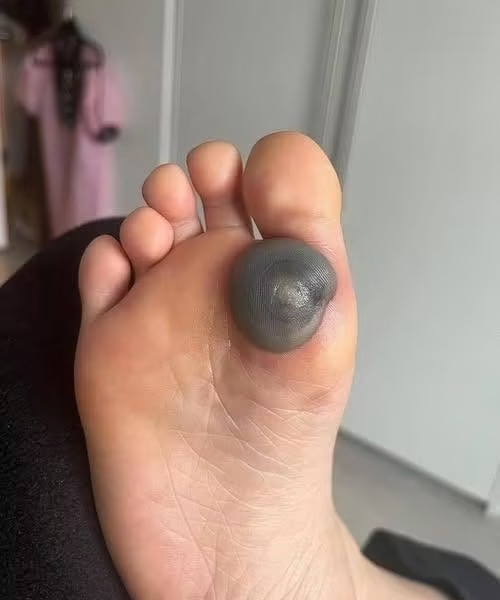
Subtitle: Hearing that your child woke up with intense pain and a noticeable spot on their foot can be deeply alarming—especially when it affects their ability to walk or move normally.
Let me tell you about the first time my child had a painful spot on their foot.
I was a new parent, and I was worried about everything. My child woke up with a painful spot on their foot. I didn’t know what it was. I panicked.
But I took a deep breath, and I assessed the situation.
First, Let’s Talk About Blood Blisters
Blood blisters can look quite dramatic when they suddenly appear, which often causes immediate panic. They usually show up as dark red, purple, or maroon bubbles beneath the skin and may feel tender to the touch.
How They Form
They occur when small blood vessels under the skin rupture, but the outer layer of skin remains intact. This traps blood underneath, forming a raised blister filled with dark fluid.
How to Tell If It’s a Blood Blister
Appearance. Dark red, purple, or maroon bubble.
Feel. Tender to the touch.
Location. Often on the foot or hand.
Cause. Often caused by friction or pressure.
Duration. They usually heal on their own.
Treatment. Leave them alone.
Other Possible Causes
1. Insect Bites
Appearance. Red, swollen, and itchy.
Feel. Painful and itchy.
Location. Anywhere on the body.
Cause. An insect bite.
Duration. Usually heal within a few days.
Treatment. Clean the area and apply a cold compress.
2. Infections
Appearance. Red, swollen, and warm.
Feel. Painful.
Location. Anywhere on the body.
Cause. A bacterial or viral infection.
Duration. May require medical treatment.
Treatment. See a doctor.
3. Injuries
Appearance. Bruised or swollen.
Feel. Painful.
Location. Anywhere on the body.
Cause. A fall or injury.
Duration. Usually heal within a few days.
Treatment. Rest, ice, and elevation.
4. Skin Conditions
Appearance. A rash or other skin change.
Feel. Itchy or painful.
Location. Anywhere on the body.
Cause. A skin condition.
Duration. May be chronic.
Treatment. See a doctor.
When to Seek Immediate Care
If the pain is severe. If it’s affecting their ability to walk.
If there are signs of infection. Redness, swelling, warmth, or pus.
If they have a fever. A fever can be a sign of a serious infection.
If the spot is growing. If it’s getting bigger.
If they are in distress. If they are crying or in pain.
If you are concerned. If you are worried, seek medical attention.
How to Care for a Blood Blister
Don’t pop it. Leave it alone.
Clean the area. Gently clean the area with soap and water.
Apply a bandage. Cover the blister with a bandage.
Protect it. Wear comfortable shoes.
Watch for signs of infection. Watch for redness, swelling, or pus.
See a doctor if it doesn’t heal. If it doesn’t heal within a few weeks.
How to Prevent Blood Blisters
Wear comfortable shoes. Wear shoes that fit properly.
Protect your feet. Wear socks.
Avoid friction. Avoid activities that cause friction.
Keep your feet dry. Keep your feet dry.
Use padding. Use padding to protect vulnerable areas.
Check your feet. Check your feet regularly.
Frequently Asked Questions
What is a blood blister?
A blister filled with blood.
How do they form?
They form when small blood vessels rupture.
Should I pop a blood blister?
No, leave it alone.
How long do they take to heal?
Usually within a few weeks.
When should I see a doctor?
If there are signs of infection or if it doesn’t heal.
A Final Thought
When my child had a painful spot on their foot, I was worried. But I assessed the situation, and I took the appropriate steps. It’s a reminder to stay calm and be proactive.
Have you ever had a child with a painful foot spot? Share your experience in the comments.