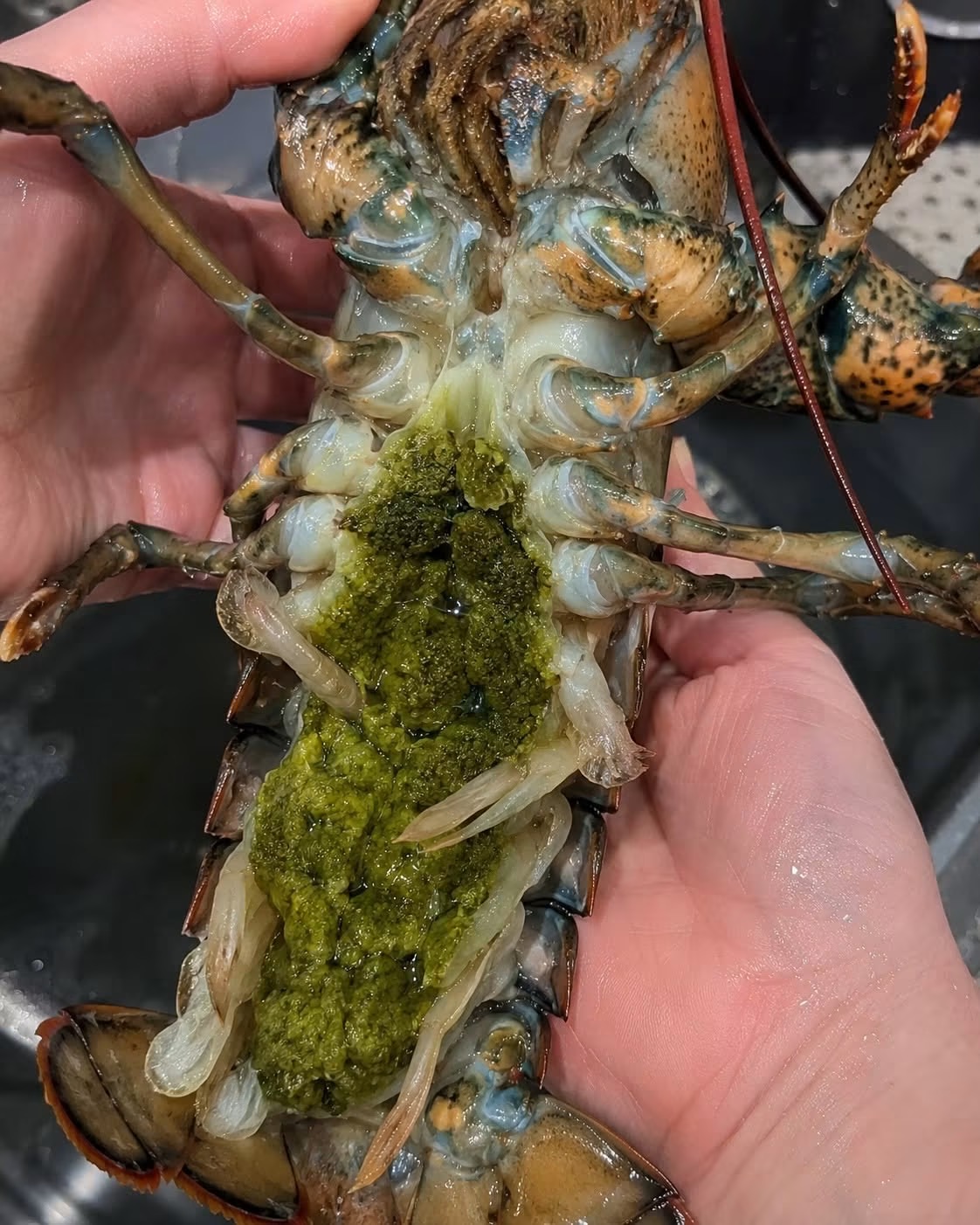
I was just a kid at a sprawling family seafood feast when I cracked open a massive lobster claw and discovered a bright green, pasty substance tucked inside. Confused and slightly repulsed, I assumed it was a mistake and had absolutely no intention of eating it.
My grandmother, however, smiled and said, “That’s lobster tomalley. It’s a delicacy.”
Still skeptical, I took a tiny bite. I was instantly blown away. It was creamy, intensely briny, and utterly delicious—arguably the best part of the entire lobster. Today, I actively hunt for that green gold whenever I order a lobster.
If you have ever been curious about this mysterious green filling, here is everything you need to know about what it is, why it is so prized, and how to enjoy it safely.
What Exactly is That Bright Green Stuff?
The bright green substance found inside the body cavity of a lobster is called tomalley. Biologically speaking, it is the lobster’s hepatopancreas—an organ that functions as both its liver and its pancreas.
As the digestive organ, the tomalley filters and processes the lobster’s food. Far from being waste, it is highly prized in the culinary world. It boasts a rich, concentrated, and intensely briny flavor that captures the very essence of the ocean. Because of its creamy texture and deep flavor profile, it is considered a true delicacy by seafood aficionados and is frequently used to elevate sauces and soups.
Don’t Confuse It with the “Other” Green Stuff (Roe)
Don’t Confuse It with the “Other” Green Stuff (Roe)
When cracking open a female lobster, you might actually encounter two different green substances. It is important to know the difference between them:
Tomalley: This is the smooth, pasty digestive organ (the hepatopancreas). It has a rich, savory, and deeply briny flavor.
Roe: Also known as coral, this is the female lobster’s unfertilized eggs. Roe has a distinct granular, caviar-like texture and offers a slightly sweeter, more delicate briny flavor.
Both are considered delicacies, but they offer entirely different culinary experiences.
How to Enjoy This Culinary Treasure
If you are lucky enough to find tomalley (or roe) in your lobster, here are the best ways to enjoy it:
On Its Own: Simply scoop it out of the shell and eat it as is. A tiny squeeze of fresh lemon juice perfectly cuts through the richness.
In Compound Butter: Mash the tomalley into softened butter to create a luxurious, flavorful spread for steak or seafood.
In Lobster Bisque: Stirring it into a creamy lobster bisque is a classic technique. It acts as a natural thickener while infusing the soup with an unbeatable depth of flavor.
On Warm Bread: Spread it generously over a slice of warm, crusty baguette or toast for a simple, decadent appetizer.
The Hidden Health Benefits
Beyond its incredible taste, lobster tomalley is surprisingly nutritious. It is packed with a variety of essential vitamins and minerals that offer several health benefits:
Supports Circulation: It is an excellent source of copper, a mineral vital for maintaining healthy blood flow and cardiovascular function.
Promotes Liver Health: Tomalley is rich in selenium, an antioxidant that plays a crucial role in liver function and overall cellular health.
Boosts Brain Health: It contains choline, an essential nutrient that supports brain development, memory, and nervous system function.
Is It Safe to Eat? (The Importance of Moderation)
While lobster tomalley is generally safe to eat and highly nutritious, there is an important caveat: it must be consumed in moderation.
Because the hepatopancreas acts as the lobster’s filtration system, it can accumulate environmental contaminants from the ocean, including heavy metals and toxins. For the average person, enjoying the tomalley from a few lobsters a year poses no significant health risk. However, health experts advise against eating it in large quantities. As a precaution, pregnant women, nursing mothers, and young children are often advised to skip the tomalley entirely to avoid any potential exposure to accumulated toxins.
Frequently Asked Questions
What is lobster tomalley?
It is the lobster’s hepatopancreas, which functions as its liver and pancreas.
Is it safe to eat?
Yes, it is generally safe for most adults to eat, provided it is consumed in moderation due to the potential for environmental toxin accumulation.
What does it taste like?
It has a highly concentrated, rich, and briny lobster flavor with a smooth, creamy, paste-like texture.
Can I eat lobster roe?
Yes, lobster roe (the eggs) is also a highly prized delicacy. It has a granular texture and a slightly sweeter flavor than the tomalley.
What is the green stuff in my lobster?
Depending on the texture and the sex of the lobster, it is either the pasty tomalley (digestive organ) or the granular roe (eggs). Both are edible and delicious.
A Final Thought
When I sit down to eat lobster today, I always look forward to finding the green stuff. What I once mistook for a culinary mistake has become my absolute favorite part of the meal. The next time you crack open a lobster and spot that vibrant green gold, don’t scrape it away. Embrace it, taste it, and discover the rich, briny delicacy that so many seafood lovers already know and cherish.