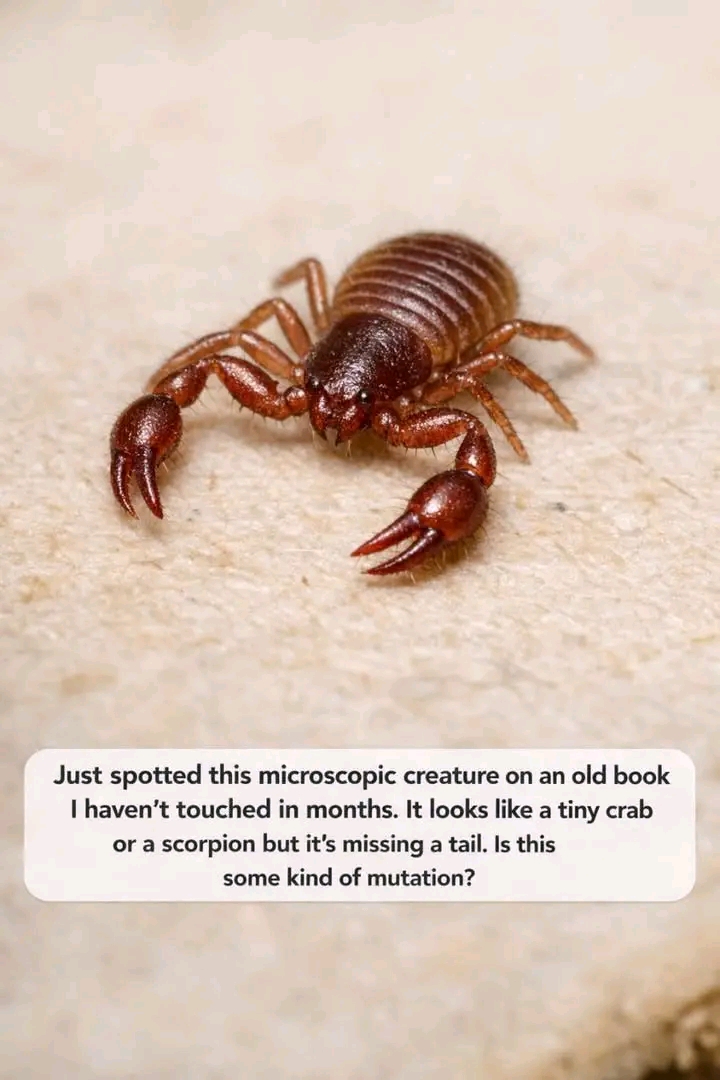
The Mysterious Microscopic Creature: Unveiling the World of Booklice
Imagine discovering a tiny creature on an old book you haven’t touched in months. It looks like a miniature crab or a scorpion but lacks a tail. Is it a mutation? What exactly is this creature? This article takes you on a journey into the fascinating world of microscopic creatures, focusing on the one you’ve encountered — commonly known as the booklouse.
Introduction: The Unexpected Discovery
Many of us have experienced the thrill and slight unease of finding tiny creatures in unexpected places. Books, especially old ones stored away for months or years, can harbor a variety of microscopic life forms. Among these, the creature resembling a tiny crab or scorpion but missing a tail is often a booklouse, a member of the order Psocoptera.
Despite their name, booklice are not true lice and do not bite humans. They are tiny insects that thrive in environments rich in mold, fungi, and organic matter — conditions often found in old books, papers, and damp areas.
What Are Booklice?
Taxonomy and Classification
Booklice belong to the order Psocoptera, which includes over 5,500 species worldwide. They are small, soft-bodied insects, typically measuring 1 to 2 millimeters in length. Unlike true lice, which are parasitic, booklice are free-living and feed primarily on mold, fungi, and organic detritus.
Physical Characteristics
Body Shape: Booklice have a soft, elongated body with a large head relative to their body size.
Legs and Antennae: They possess six legs and long, threadlike antennae.
Claws: Their front legs often have claw-like structures used for gripping surfaces.
Tail: Unlike scorpions, booklice lack a tail or stinger, which explains the missing tail you noticed.
Color: They range in color from translucent white to brown, depending on species and age.
Habitat and Behavior
Where Do Booklice Live?
Booklice thrive in warm, humid environments where mold and fungi grow. Common habitats include:
Old books and paper materials
Damp walls and ceilings
Stored food products
Leaf litter and bark in nature
Feeding Habits
Booklice feed on microscopic mold, fungi, algae, and organic debris. They play an important ecological role by helping decompose organic matter.
Reproduction and Life Cycle
Booklice reproduce by laying eggs in hidden crevices. The eggs hatch into nymphs, which undergo several molts before reaching adulthood. Their life cycle can be as short as a few weeks under optimal conditions.
Are Booklice Harmful?
Impact on Humans and Property
Booklice do not bite or transmit diseases. However, they can be a nuisance when they infest homes, libraries, or food storage areas. They may cause minor damage by feeding on book bindings, wallpaper paste, or stored grains.
Allergies and Sensitivities
Some individuals may experience allergic reactions to booklice or their shed skins, but such cases are rare.
How to Identify Booklice
Visual Identification
Size: 1-2 mm, visible with the naked eye or a magnifying glass.
Shape: Soft-bodied, crab-like appearance without a tail.
Movement: Slow crawling, often found on paper or damp surfaces.
Differentiating from Other Creatures
Scorpions: Have a segmented tail with a stinger, which booklice lack.
True Lice: Parasitic, with different body shapes and behaviors.
Springtails: Another tiny insect, but with a jumping mechanism.
Controlling and Preventing Booklice Infestations
Environmental Control
Reduce humidity and moisture in storage areas.
Improve ventilation in damp rooms.
Use dehumidifiers if necessary.
Cleaning and Maintenance
Regularly clean bookshelves and storage areas.
Remove mold and mildew promptly.
Store books and papers in dry, well-ventilated places.
Chemical Treatments
Insecticides are generally not recommended for booklice due to their low harm.
Professional pest control may be necessary for severe infestations.
Scientific and Ecological Importance
Booklice contribute to the ecosystem by breaking down organic matter and controlling mold growth. Their presence indicates moisture problems that may require attention.
Fascinating Facts About Booklice
Booklice have been around for millions of years, with fossil records dating back to the Jurassic period.
They can survive in a variety of environments, from tropical forests to temperate homes.
Despite their tiny size, booklice have complex sensory organs and behaviors.
Conclusion: Appreciating the Microscopic World
The tiny creature you found on your old book is a remarkable example of the hidden biodiversity around us. Booklice, often misunderstood and overlooked, play a vital role in our environment. Understanding their biology and habits helps us coexist with these fascinating insects and maintain the health of our homes and collections.
Next time you spot a microscopic creature, remember that it’s part of a vast and intricate web of life, deserving curiosity and respect rather than fear.