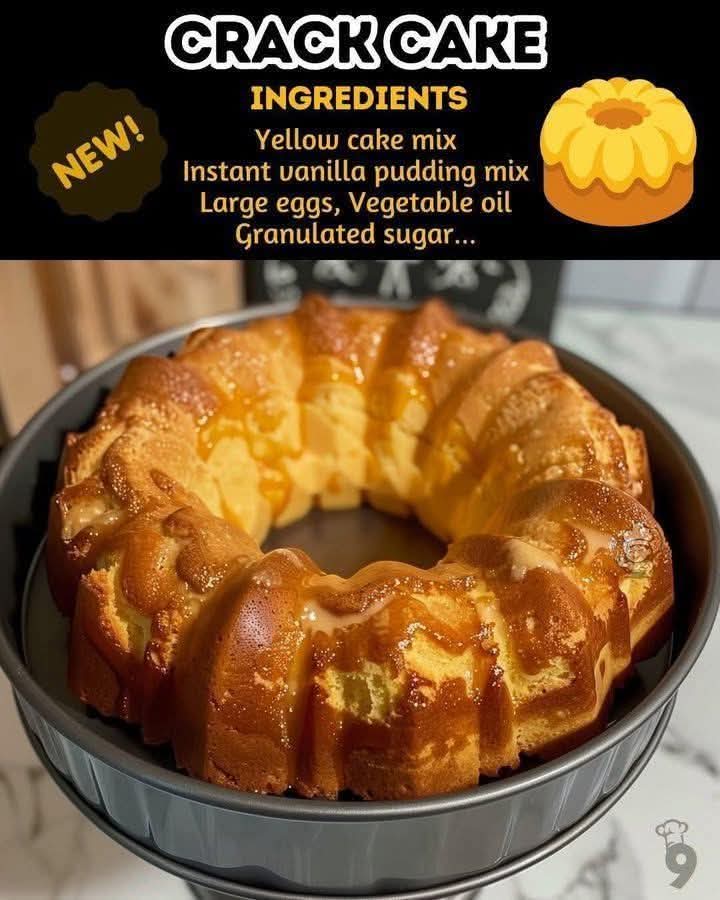
Crack Cake: The Irresistibly Moist Bundt Cake That Lives Up to Its Name
In the world of easy, crowd-pleasing desserts, few recipes generate as much buzz as Crack Cake. This decadent bundt cake earned its bold name not from any questionable ingredients, but from its utterly addictive qualities. One bite of its ultra-moist, tender crumb infused with warm cinnamon, vanilla, and a buttery glaze, and you’ll understand why families polish off entire cakes in a single day.
Whether you’re a beginner baker looking for foolproof results or an experienced home cook seeking a reliable showstopper, Crack Cake delivers every time. Made primarily from a boxed yellow cake mix and instant pudding, it transforms simple pantry staples into something extraordinary. In this comprehensive 3000-word guide, we’ll explore the history and origins of this viral dessert, provide a detailed step-by-step recipe with tips for success, variations for different occasions, troubleshooting advice, pairing suggestions, nutritional insights, and much more. By the end, you’ll be equipped to bake, serve, and even customize your own perfect Crack Cake.
The Origins and Rise of Crack Cake
Crack Cake belongs to the beloved tradition of “doctored cake mix” recipes that gained popularity in the mid-20th century when boxed mixes became household staples. Home bakers realized they could elevate convenience products by adding pudding mix, extra eggs, oils, and flavorful add-ins.
While exact origins are hard to pinpoint—many similar “wine cakes” or “pudding cakes” existed in Southern U.S. cookbooks—the modern Crack Cake exploded online in the 2010s through Facebook groups, Pinterest, and recipe blogs. Its name reflects the way the sugary, buttery glaze creates a crackly top and soaks deeply into the cake, making it almost impossible to stop eating. Some versions incorporate white wine, adding a subtle tang that balances the sweetness and keeps the cake exceptionally moist for days.
This cake is particularly popular for potlucks, holidays, church gatherings, and family celebrations because it requires minimal effort yet tastes like it came from a high-end bakery. The bundt pan shape gives it an elegant presentation with beautiful ridges that catch the glaze perfectly.
Why Crack Cake Works So Well: The Science Behind the Addiction
Several key elements make this cake special:
- Instant Pudding Mix: Adds moisture and creates a velvety texture by helping retain water and fats during baking.
- Extra Eggs and Oil: Contribute richness and tenderness.
- Cinnamon and Sugars: Provide warm spice and caramelized edges.
- The Glaze: A simple butter-sugar-wine (or milk) mixture poured over the warm cake that seeps into every nook, creating that signature “crack” effect and keeping the cake moist.
The combination results in a cake with a dense-yet-tender crumb that stays fresh longer than most homemade cakes.
Classic Crack Cake Recipe (Serves 12-16)
Ingredients for the Cake:
- 1 box (15.25 oz) yellow cake mix (Duncan Hines or Betty Crocker recommended for best results)
- 1 (3.4 oz) box instant vanilla pudding mix (not cook-and-serve)
- 4 large eggs, room temperature
- ¾ cup vegetable oil (or canola oil)
- ¾ cup water (or white wine for a more complex flavor)
- ¼ cup granulated sugar
- ¼ cup light brown sugar, packed
- 2 teaspoons ground cinnamon
- Optional: 1 teaspoon vanilla extract, ½ cup chopped pecans or walnuts
Ingredients for the Glaze:
- ½ cup (1 stick) unsalted butter
- 1 cup granulated sugar
- ¼ cup white wine (or milk, water, or apple juice for a non-alcoholic version)
- Optional: 1 teaspoon vanilla extract or a pinch of salt
Equipment Needed:
- 10-12 cup bundt pan
- Mixing bowl and electric mixer (stand or hand)
- Cooling rack
- Saucepan for glaze
- Pastry brush or spoon for applying glaze
Step-by-Step Instructions
Step 1: Preheat and Prepare the Pan
Preheat your oven to 350°F (175°C). Generously grease and flour your bundt pan, or use a baking spray with flour. This is crucial to prevent sticking, especially with the sugary glaze.
Step 2: Mix the Cake Batter
In a large mixing bowl, combine the yellow cake mix, instant vanilla pudding mix, granulated sugar, brown sugar, and cinnamon. Whisk dry ingredients together to ensure even distribution.
Add the eggs, vegetable oil, water (or wine), and vanilla extract. Beat on medium speed for 2-3 minutes until the batter is smooth and creamy. It should be thick but pourable. Fold in nuts if using.
Step 3: Bake the Cake
Pour the batter evenly into the prepared bundt pan. Tap the pan gently on the counter to release air bubbles. Bake for 50-60 minutes, or until a toothpick inserted in the center comes out clean or with a few moist crumbs. The top should be golden brown and the cake should spring back when lightly touched.
Step 4: Prepare the Glaze While the Cake Bakes
In a medium saucepan, combine butter, sugar, and wine (or substitute) over medium heat. Stir continuously until the butter melts and the sugar fully dissolves. Bring to a gentle simmer for 1-2 minutes. Remove from heat and stir in vanilla if desired. Keep warm.
Step 5: Glaze the Cake
Allow the cake to cool in the pan for 10-15 minutes. Carefully invert it onto a cooling rack or serving plate. While still warm, poke small holes all over the top and sides with a skewer or toothpick. Slowly spoon or brush the warm glaze over the cake, allowing it to soak in. Repeat until all glaze is used. Some glaze will pool at the bottom—this is perfect for spooning over slices later.
Step 6: Cool and Serve
Let the cake cool completely, about 1-2 hours. The glaze will set with a slight crackly texture on top. Slice and serve at room temperature.
Pro Tips for Baking Success
- Room Temperature Ingredients: Eggs and any dairy should be at room temp for better emulsification.
- Don’t Overmix: Once smooth, stop beating to avoid a tough cake.
- Pan Preparation: Don’t skip this—crack cake’s high sugar content makes sticking more likely.
- Oven Variations: Every oven is different. Start checking at 45 minutes. If the top browns too quickly, tent with foil.
- Glaze Consistency: It should be pourable but not watery. Adjust with a bit more sugar if needed.
- Make-Ahead: This cake tastes even better the next day as flavors meld and moisture distributes.
- Storage: Store covered at room temperature for up to 4 days, or refrigerate for up to a week. Bring to room temp before serving.
Popular Variations of Crack Cake
White Wine Crack Cake: Replace water with white wine in the batter and use it in the glaze for a subtle fermented tang that cuts sweetness.
Lemon Crack Cake: Use lemon cake mix and lemon pudding. Add lemon zest and juice to the glaze.
Chocolate Crack Cake: Swap yellow cake for chocolate, vanilla pudding for chocolate, and add cocoa powder. Use chocolate glaze or a simple ganache.
Coconut Crack Cake: Add coconut extract, shredded coconut to the batter, and coconut milk in the glaze.
Berry Crack Cake: Fold fresh or frozen blueberries into the batter. Top with a berry compote.
Pecan Pie Inspired: Increase pecans and add a touch of bourbon to the glaze.
Small Batch Version: Halve ingredients and bake in a loaf pan or smaller bundt for 35-45 minutes.
Gluten-Free Adaptation: Use a gluten-free yellow cake mix and certified GF pudding mix. Results may vary slightly in texture.
Serving Suggestions and Pairings
Crack Cake shines on its own but pairs beautifully with:
- Fresh berries or berry compote
- Whipped cream or vanilla ice cream
- Coffee or espresso (the cinnamon complements it perfectly)
- Sweet wines or dessert sherry
- For brunch: alongside fresh fruit and yogurt
It’s ideal for holidays like Christmas, Thanksgiving, Easter, or Mother’s Day. The bundt shape looks festive dusted with powdered sugar or decorated with candied nuts.
Troubleshooting Common Issues
- Cake Stuck in Pan: Run a thin knife around edges and tap firmly. Next time, improve greasing.
- Dry Cake: Likely overbaked or insufficient glaze. Use a meat thermometer—cake is done around 205-210°F internal temp.
- Glaze Not Absorbing: Cake too cool or glaze too thick. Apply while both are warm.
- Sunken Center: Oven door opened too early or too much leavening. Follow timing precisely.
- Too Sweet: Reduce sugar in batter slightly or use a tart fruit accompaniment.
The Cultural Impact and Why It’s Called “Crack”
The name is hyperbolic marketing at its best—emphasizing irresistibility rather than any actual substance. In recipe communities, it’s often shared with warnings like “You won’t be able to stop eating it!” Social media has amplified its popularity with viral videos of the glaze soaking in and satisfied taste-testers.
Many bakers report it becoming a family tradition. Its simplicity makes it accessible, while customizations allow creativity.
Nutritional Information (Approximate per Slice)
A standard slice (1/12th of cake) contains roughly:
- 400-500 calories
- High in carbs and fats from oil, butter, and sugars
- Moderate protein from eggs
It’s an indulgence, not everyday fare. For lighter versions, reduce oil slightly, use applesauce substitution, or opt for sugar alternatives (results vary).
Portion control is key—though easier said than done!
Baking for Special Diets and Occasions
For Kids: Omit wine entirely and use milk or juice. Add colorful sprinkles for birthdays.
Vegan Adaptation: Use vegan cake mix, plant-based pudding, flax eggs, and vegan butter/margarine. Test for best results.
Large Gatherings: Double the recipe and bake in two pans or a larger tube pan.
Gift Giving: Bake in mini bundt pans, wrap beautifully, and share with neighbors or teachers.
Advanced Techniques and Flavor Enhancements
- Infused Glaze: Steep cinnamon sticks or vanilla beans in the warm glaze.
- Layered Version: Though traditionally bundt, some adapt to layer cakes with glaze between layers.
- Toasted Nuts: Toast pecans before adding for deeper flavor.
- Spice Blend: Add nutmeg, cardamom, or ginger for warmth.
- Alcohol Alternatives: Rum extract, orange juice, or buttermilk for tang.
Experiment with different cake mix brands—some have better “super moist” formulas.
Why Home Bakers Love Crack Cake
In an era of complicated viral recipes with dozens of steps, Crack Cake stands out for its reliability. It uses affordable ingredients, requires basic equipment, and consistently delivers wow-factor results. Beginners gain confidence, while experts appreciate the blank canvas for creativity.
It’s also forgiving. Minor measurement errors rarely ruin it, thanks to the pudding mix’s stabilizing effect.
Seasonal Twists
- Fall: Pumpkin spice cake mix with extra cinnamon.
- Winter Holidays: Add eggnog to the glaze and nutmeg.
- Spring/Summer: Citrus versions with fresh zest.
- Valentine’s: Red velvet adaptation with cream cheese elements.
Conclusion: Bake It Once, Crave It Forever
Crack Cake embodies the joy of simple baking done exceptionally well. From its humble boxed-mix beginnings to viral sensation, it proves that great desserts don’t need fancy techniques—just quality ingredients combined thoughtfully.
Whether you’re making it for a weeknight treat, holiday feast, or to impress guests, this cake rarely disappoints. The combination of moist vanilla-cinnamon cake and that addictive buttery glaze creates a dessert experience that’s hard to forget.
So preheat your oven, gather your ingredients, and prepare for compliments. Once you bake your first Crack Cake, it might just become your signature recipe too. Happy baking!