The Ultimate Guide to the Perfect Glazed Cranberry Orange Fruitcake
Introduction: Redefining the Fruitcake
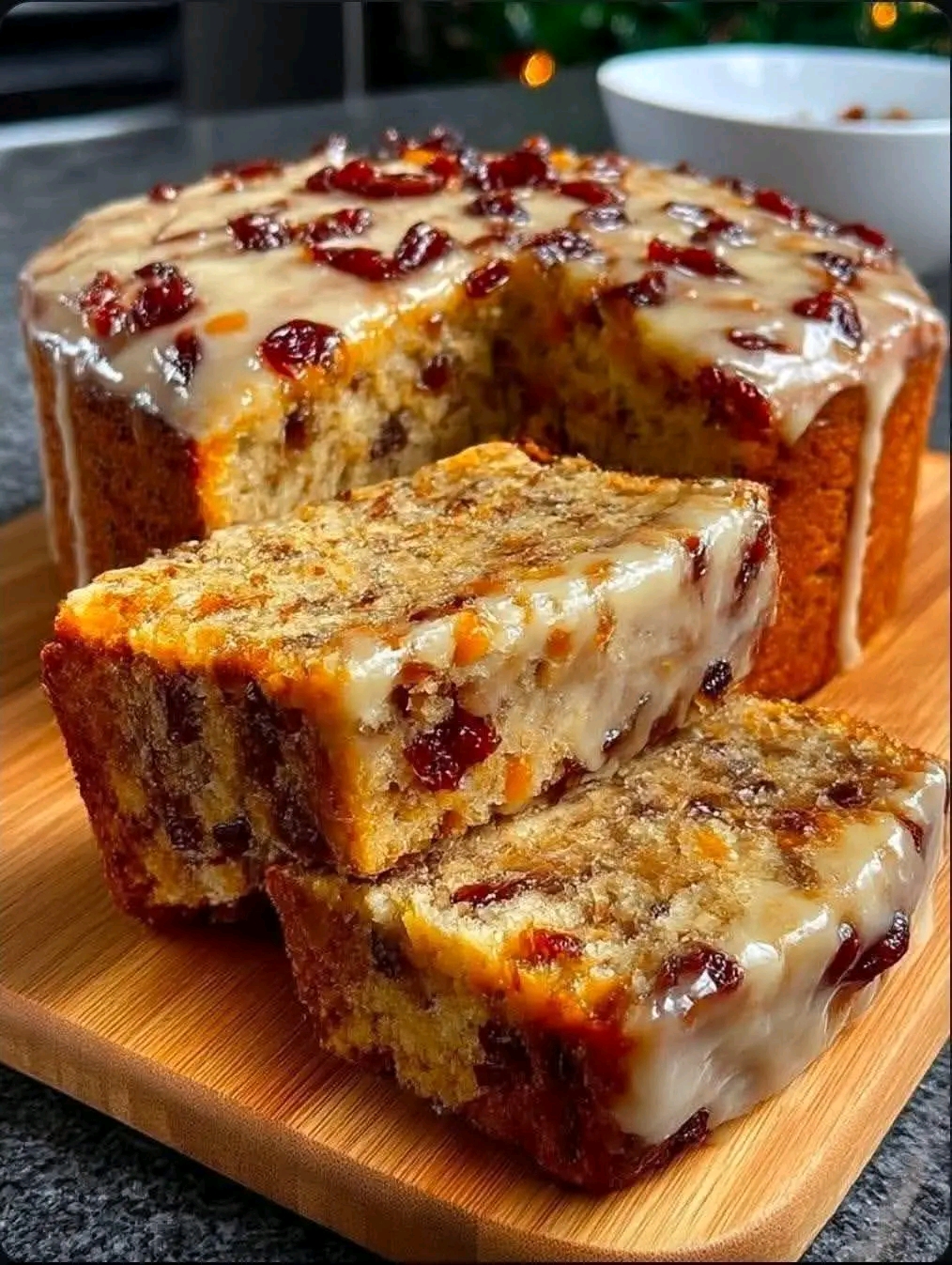
For many, the word “fruitcake” evokes images of a rock-hard, neon-colored brick that sits at the back of the pantry until February. We are here to change that narrative. The cake you see in the image is a departure from the dry, overly preserved cakes of the past. It is a celebration of texture: a buttery, tender crumb infused with the bright acidity of oranges and the tart pop of dried cranberries, all brought together with a silky, citrus-infused glaze.
This recipe is designed for the modern baker who appreciates tradition but demands flavor. Whether you are preparing this for a holiday centerpiece or a cozy weekend project, this 3,000-word guide will walk you through every nuance of the process.
Part 1: The Philosophy of Ingredients
A cake is only as good as what you put into it. Because this cake is “fruit-forward,” the quality of your dried fruit is paramount.
1. The Cranberries
Unlike raisins, which provide a deep, earthy sweetness, dried cranberries offer a tartness that cuts through the rich butter base of the cake. When choosing cranberries, look for those that are still slightly pliable. If they are hard as pebbles, they will rob the cake of its moisture.
2. The Citrus Element
We aren’t just using orange juice; we are using the zest. The essential oils in the skin of the orange provide a floral, aromatic lift that juice alone cannot achieve. We recommend using organic oranges since you will be consuming the peel.
3. The Fat Content: Butter vs. Oil
While oil makes for a very moist cake, butter provides the flavor and structure necessary to hold the weight of the fruit. We use a high-fat European-style butter for this recipe to ensure a “melt-in-your-mouth” quality.
Part 2: The Science of Fruit Hydration
The biggest mistake bakers make is adding dried fruit directly to the batter. Dried fruit is hygroscopic—it wants to absorb water. If you don’t hydrate it first, it will suck the moisture out of your cake crumb, leaving it dry and crumbly.
The Maceration Process:
In this recipe, we soak the cranberries in a mixture of orange juice and a touch of brandy (or tea for a non-alcoholic version). This “plumps” the fruit. When the cake bakes, the fruit releases this moisture back into the surrounding cake, creating those “pockets of joy” seen in the photo.
Part 3: The Master Recipe
Equipment Needed
- 9-inch springform pan or deep cake tin
- Parchment paper
- Stand mixer or electric hand mixer
- Fine-mesh sieve
- Microplane zester
Ingredients
The Fruit Soak:
- 3 cups (340g) dried cranberries
- 1/2 cup fresh orange juice
- 3 tbsp orange liqueur or brandy (optional)
- Zest of 2 large oranges
The Cake Batter: - 1 cup (225g) unsalted butter, softened to room temperature
- 1 ½ cups (300g) granulated sugar
- 1/2 cup (100g) packed light brown sugar
- 4 large eggs, room temperature
- 1 tsp pure vanilla extract
- 3 cups (375g) all-purpose flour
- 1 tsp baking powder
- 1/2 tsp baking soda
- 1 tsp salt
- 1 tsp ground cinnamon
- 1/2 tsp ground ginger
- 1 cup (240g) sour cream or full-fat Greek yogurt
The Orange Glaze: - 2 cups (240g) powdered sugar, sifted
- 3-4 tbsp fresh orange juice
- 1 tbsp melted butter
- Pinch of salt
Step-by-Step Instructions
I. Preparing the Fruit (The Night Before)
For the best results, combine your cranberries, orange juice, liqueur, and zest in a bowl. Cover tightly and let sit at room temperature for at least 4 hours, though overnight is ideal. If you are in a rush, you can microwave the mixture for 60 seconds and let it cool, but the slow soak yields a better texture.
II. Preheating and Pan Prep
Preheat your oven to 325°F (160°C). This cake is dense, so a lower temperature for a longer time prevents the outside from burning before the middle is set. Grease your pan thoroughly and line the bottom with parchment paper.
III. The Creaming Method
In your stand mixer, beat the butter and both sugars on medium-high speed for at least 5 minutes. You are looking for a pale, fluffy texture. This incorporates air, which acts as a leavening agent.
Add the eggs one at a time, beating well after each addition. If the mixture looks like it’s curdling, add a tablespoon of your measured flour to bind it back together. Stir in the vanilla.
IV. Sifting Dry Ingredients
In a separate bowl, whisk together the flour, baking powder, baking soda, salt, cinnamon, and ginger. Sifting is crucial here to ensure there are no clumps of baking soda, which can leave a metallic taste.
V. The Alternating Addition
Turn your mixer to the lowest speed. Add 1/3 of the flour mixture, then 1/2 of the sour cream. Repeat, ending with the final 1/3 of flour. Do not overmix. Overmixing develops gluten, which will turn your beautiful cake into a loaf of bread.
VI. Folding in the Fruit
Using a spatula, gently fold in the macerated cranberries and any remaining liquid from the bowl. The batter will be thick and heavy.
VII. The Bake
Pour the batter into the prepared pan and smooth the top. Bake for 65 to 75 minutes. Because every oven is different, start checking at 60 minutes. A skewer inserted into the center should come out clean or with a few moist crumbs.
VIII. The Cooling Phase
Let the cake cool in the pan for 20 minutes. This allows the structure to “set.” Then, run a knife around the edge and transfer to a wire rack.
IX. Glazing
Whisk the glaze ingredients together until smooth. It should be thick but pourable (like the consistency of heavy cream). While the cake is still slightly warm, pour the glaze over the center, allowing it to drip down the sides naturally as seen in the image. Top with a few extra dried cranberries for garnish.
Part 4: Troubleshooting and Variations
Why did my fruit sink to the bottom?
This is a common issue. If your batter is too thin or your fruit is too wet, gravity wins. To prevent this:
- Ensure your butter and sugar are creamed properly to create a strong “web” of air.
- Toss the soaked fruit in a tablespoon of dry flour before adding it to the batter. This gives the fruit a “grip.”
Can I make this gluten-free?
Yes. This recipe works well with a high-quality 1-to-1 gluten-free flour blend. Avoid using single flours like almond or coconut alone, as they lack the structural integrity to hold the heavy fruit.
Storage and Aging
Like a fine wine, this cake actually improves with age. Wrap it tightly in plastic wrap and store it at room temperature for up to 3 days, or in the fridge for a week. The flavors of the spices and citrus will meld and intensify over time.
Part 5: Serving Suggestions
To truly honor the cake in the photo, serve it in thick slices.
- The Morning After: Lightly toast a slice and spread it with salted butter.
- The Dinner Party: Serve with a dollop of crème fraîche to balance the sweetness of the glaze.
- The Pairing: This cake pairs beautifully with an Earl Grey tea or a dark roast coffee.
Conclusion: The Joy of Baking
Baking a cake of this magnitude is an act of patience. From the overnight soak of the fruit to the slow bake in the oven, it requires you to slow down. When you finally cut that first slice and see the jewel-toned cranberries nestled in the golden crumb, you’ll realize it was worth every minute.
Happy baking!