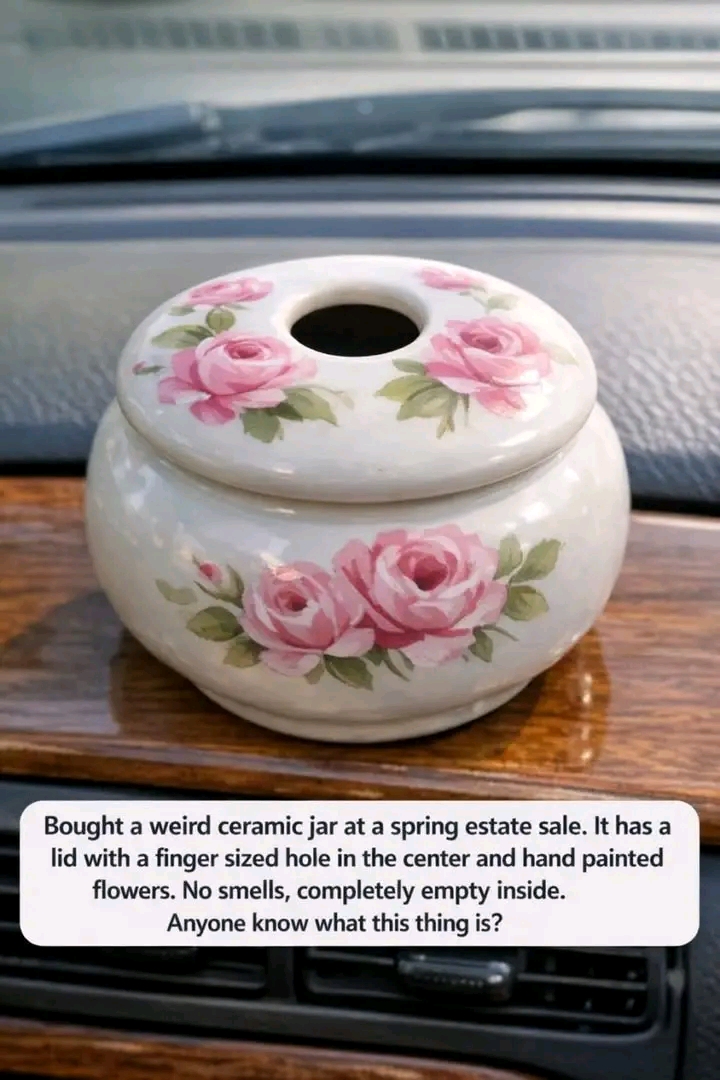
The Mystery of the Floral Ceramic Jar: A Guide to Vintage Hair Receivers
If you’ve ever scoured an estate sale or an antique shop and come across a dainty, hole-topped ceramic jar, you’ve likely asked yourself: “What on earth is this for?” It’s too small for a cookie jar, too open for a jewelry box, and the hole in the lid is just large enough for a finger. Meet the Hair Receiver, a staple of the Victorian and Edwardian vanity that holds the secrets to the elaborate hairstyles of the past.
In this guide, we’ll explore the history of this unique object, the “recipe” for how women used them to create “hair rats,” and how you can repurpose these beautiful hand-painted treasures in your modern home.
1. What Exactly is a Hair Receiver?
Popular from the mid-19th century through the 1920s, a hair receiver was a decorative container kept on a woman’s dressing table. They were typically made of porcelain, celluloid, or glass and often featured delicate hand-painted florals, like the roses seen in our estate sale find.
The Function
The hole in the center served a very practical, albeit slightly surprising, purpose. After a woman brushed her hair, she would remove the “fallen” strands from her hairbrush, twist them around her finger, and push them through the hole into the jar.
But why save dead hair? The answer lies in the dramatic silhouettes of historical fashion.
2. The “Recipe” for Victorian Volume: Making Hair Rats
In the late 1800s and early 1900s (specifically the Gibson Girl era), big hair was the height of fashion. To achieve those voluminous “pompadour” styles, women needed more than just their natural hair—they needed padding.
How it was done:
- The Collection: Over weeks or months, the hair receiver would fill with the owner’s own shed hair.
- The Stuffing: Once enough hair was collected, it was stuffed into a small, sheer hairnet.
- The Shaping: The net was shaped into an oval or crescent-shaped bolster, known as a “Hair Rat.”
- The Styling: The “rat” was pinned to the crown of the head, and the woman’s natural hair was combed over it to create incredible height and volume.
Because the rat was made of the woman’s own hair, the color match was always perfect, and the texture was ideal for pinning.
3. Identifying Your Find: Makers and Styles
If you’ve found a hair receiver with hand-painted roses, you are likely looking at a piece from one of several major porcelain manufacturers of the era:
- Nippon (Japan): Known for heavy gilding and intricate floral work.
- RS Prussia: Famous for “satin” finishes and soft, romantic rose motifs.
- Limoges (France): Highly sought after for their delicate porcelain and fine artistry.
- Bavarian Porcelain: Often found with naturalistic floral patterns.
How to tell it’s a Hair Receiver (and not a Powder Jar):
The two look identical except for the lid. A powder jar has a solid lid to keep the powder dry and contained. A hair receiver always has a circular opening in the center.
4. Modern Uses: Giving New Life to an Old Treasure
While we may no longer be making “hair rats,” these jars are far too beautiful to sit empty. Here are five ways to incorporate a vintage hair receiver into your 21st-century life:
A. The Modern Cotton Swab/Ball Holder
The center hole is perfectly sized to pull out a single cotton ball or a handful of swabs while keeping the rest tucked away and dust-free.
B. Dried Flower Potpourri
Fill the jar with highly scented dried lavender or rose petals. The hole in the lid acts as a natural diffuser, allowing the scent to waft through your bathroom or bedroom.
C. A Unique Incense Burner
If the jar is ceramic or glass, you can fill it with sand and use it to hold cone incense. The smoke will rise elegantly through the center hole.
D. The Desktop String Dispenser
For the crafter or gardener, place a ball of twine or colorful yarn inside the jar. Thread the end through the hole for a tangle-free, aesthetically pleasing string dispenser.
E. Succulent Planter
Remove the lid and use the base as a small planter for a succulent. Alternatively, keep the lid on and use the center hole for a single air plant (Tillandsia) to sit nestled on top.
5. Caring for Your Vintage Porcelain
Since many of these jars are over 100 years old, they require a bit of “TLC” to maintain their value and beauty.
- Hand Wash Only: Never put vintage porcelain in the dishwasher. The heat and harsh detergents will strip away the hand-painted details and gold leaf.
- Mild Soap: Use a gentle dish soap and lukewarm water.
- Avoid Soaking: Long soaks can sometimes cause “crazing” (tiny cracks in the glaze).
- The “Q-Tip” Method: Use a cotton swab to clean the rim of the center hole, where dust often accumulates.
Final Thoughts
The next time you see a floral jar with a “weird hole” in the lid, you’ll know you’re looking at a piece of beauty history. It represents a time when nothing went to waste—not even a strand of hair—and when even the most mundane grooming tasks were performed with objects of art.
Whether you use it for hair, string, or just as a conversation piece on your dashboard, your estate sale find is a beautiful link to the past.
Have you ever found a mystery object at a thrift store? Drop a comment below and let’s solve the mystery together!