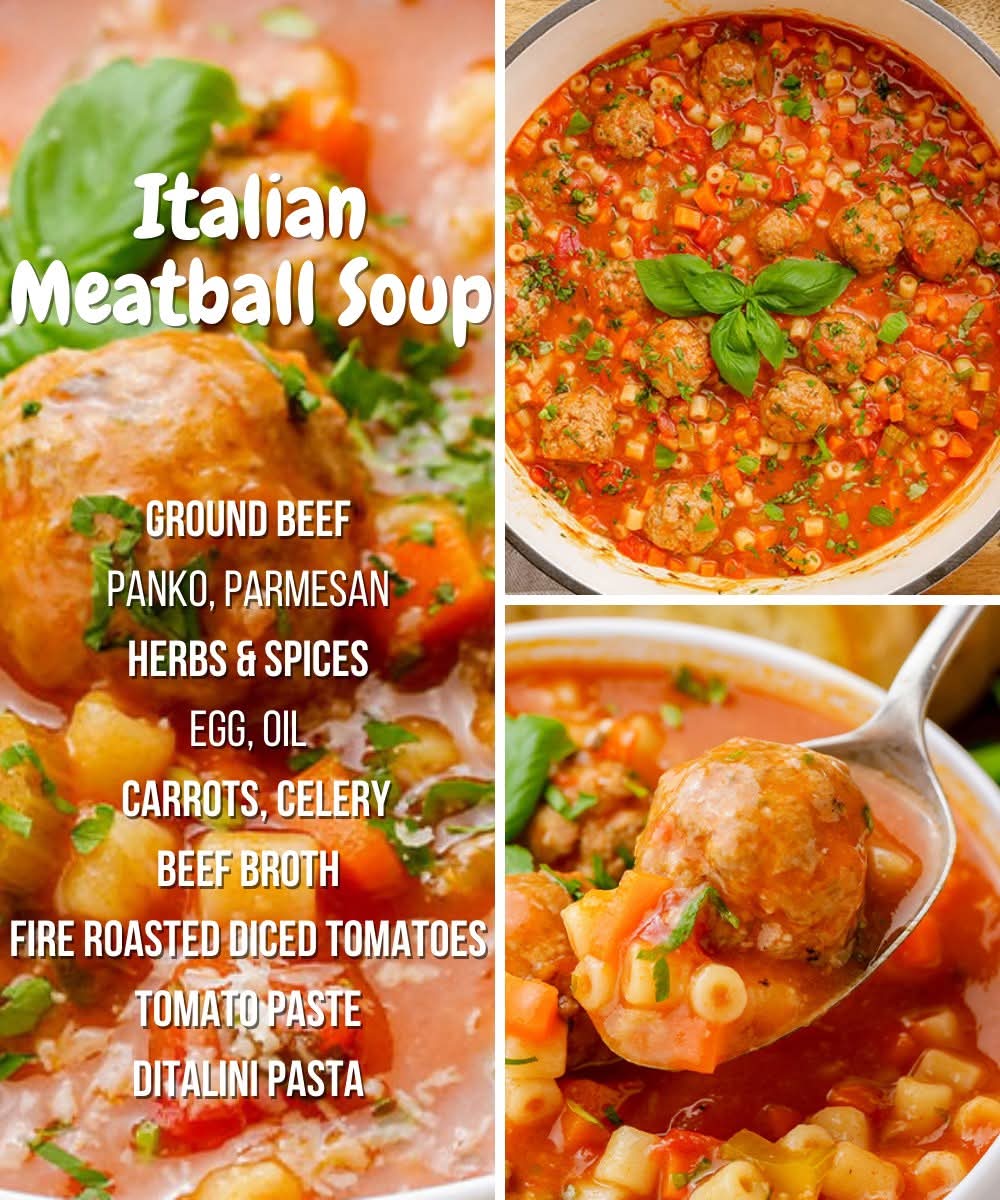
The Ultimate Italian Meatball Soup: A Deep Dive into Comfort
There is something inherently medicinal about a bowl of Italian soup. It’s not just the steam rising from a rich, tomato-tinted broth; it’s the labor of love found in hand-rolled meatballs, the aromatic “holy trinity” of sautéed vegetables, and the way a sprinkle of sharp Parmesan ties everything together.
This isn’t just a recipe; it’s a masterclass in building flavors. We are going to explore why we use panko over traditional breadcrumbs, how fire-roasted tomatoes change the game, and the secrets to keeping your pasta perfectly al dente in a liquid environment.
The Anatomy of the Perfect Meatball
The meatball is the star of this show. In this soup, we want meatballs that are flavorful enough to stand on their own but tender enough to be cut with a spoon.
1. The Meat Selection
We’ve chosen Ground Beef as our base. While you can use a mix of pork and veal, a high-quality ground beef (80/20 or 85/15) provides the necessary fat content to ensure the meatballs don’t become tough “rubbery bullets” once they hit the boiling broth.
2. The Binder: Panko and Egg
Traditional breadcrumbs can sometimes make a meatball dense. Panko, the Japanese-style breadcrumb, has a larger, airier flake. When hydrated with the egg and a splash of beef broth, it creates a “panade”—a paste that keeps the meat fibers separated, resulting in a melt-in-your-mouth texture.
3. The Flavor Boosters
- Parmesan Cheese: Never skip this. It adds a salty, nutty “umami” that salt alone cannot provide.
- Fresh vs. Dried Herbs: We recommend a blend. Dried oregano and basil provide a deep, earthy base, while fresh parsley added at the end brings a bright, grassy finish.
The Secret to the Broth: Layers of Flavor
A great soup is more than just flavored water. It requires a process called Layering.
The Mirepoix (The Foundation)
In French cooking, it’s mirepoix; in Italian, it’s soffritto. By slowly sautéing carrots, celery, and onions in olive oil, you release their natural sugars. This provides a subtle sweetness that balances the acidity of the tomatoes.
Fire-Roasted Diced Tomatoes
Why fire-roasted? These tomatoes are charred over a flame before being diced and canned. This adds a faint smokiness and a caramelized depth that regular canned tomatoes simply lack. When paired with tomato paste, which provides body and a concentrated “tomatoey” punch, the broth becomes incredibly robust.
Ditalini: The “Little Thimbles”
The choice of Ditalini pasta is intentional. Its small, tubular shape mirrors the size of the diced vegetables, ensuring that every spoonful contains a perfect ratio of meat, pasta, and veg.
Ingredients Checklist
For the Meatballs:
- 1 lb Ground Beef: 85% lean is the sweet spot.
- 1/2 cup Panko Breadcrumbs: For that light, airy texture.
- 1/4 cup Grated Parmesan: Use the good stuff (Reggiano if possible).
- 1 Large Egg: Our primary binder.
- 2 cloves Garlic: Minced into a fine paste.
- 1 tsp Dried Oregano & 1/2 tsp Salt/Pepper: The essential seasoning.
- 2 tbsp Fresh Parsley: Finely chopped.
For the Soup Base:
- 1 tbsp Extra Virgin Olive Oil: To get the aromatics going.
- 3 Carrots: Peeled and diced into small coins.
- 3 Stalks Celery: Diced to match the size of the carrots.
- 1 Yellow Onion: Finely diced.
- 2 tbsp Tomato Paste: To thicken and deepen the color.
- 1 can (14.5 oz) Fire-Roasted Diced Tomatoes: Including the juices.
- 6-8 cups Beef Broth: Use low-sodium so you can control the salt.
- 1 cup Ditalini Pasta: Uncooked.
- Fresh Basil: For garnish.
Step-by-Step Instructions
Step 1: Crafting the Meatballs
In a large mixing bowl, combine your ground beef, panko, Parmesan, egg, minced garlic, and herbs.
Pro Tip: Use your hands, but do not overwork the meat. Over-mixing leads to tough meatballs. Gently fold the ingredients together until just combined.
Roll the mixture into small, bite-sized balls (about 1 inch in diameter). You should get roughly 20-25 meatballs. Set these aside on a tray.
Step 2: Sautéing the Aromatics
In a large Dutch oven or heavy-bottomed pot, heat the olive oil over medium heat. Add your carrots, celery, and onion. Cook for about 6-8 minutes until the onions are translucent and the carrots have softened slightly.
Add the tomato paste to the center of the pot. Stir it into the vegetables for 2 minutes—this “toasts” the paste, removing the raw metallic taste and darkening the color.Step 3: Simmering the Base
Pour in your beef broth and the fire-roasted tomatoes. Bring the mixture to a gentle boil. Once boiling, reduce the heat to low and let it simmer for 10 minutes to allow the vegetable flavors to meld into the broth.
Step 4: Cooking the Meatballs and Pasta
Gently drop the raw meatballs into the simmering broth. They will sink at first but will float as they cook.
After the meatballs have simmered for about 5 minutes, add the ditalini pasta directly into the pot. Cook for another 8-10 minutes, or until the pasta is al dente.
Note: The pasta will continue to absorb liquid as it sits. If you are making this ahead of time, see our “Make-Ahead” section below.Step 5: The Finishing Touches
Taste the broth. Adjust salt and pepper as needed. Stir in a handful of fresh chopped parsley and top each bowl with a sprig of fresh basil and an extra dusting of Parmesan cheese.
Variations and Substitutions
- The Low Carb Option: Swap the ditalini for zucchini noodles or cauliflower florets. Add these in the last 3 minutes of cooking to prevent mushiness.
- The Spicy Kick: Add 1/2 tsp of red pepper flakes when sautéing the vegetables.
- Greens: Stir in two handfuls of fresh baby spinach or chopped kale right before serving for added nutrients and a pop of green.
Storage and Reheating Tips
Leftovers
This soup tastes even better the next day as the flavors have more time to marry. Store in an airtight container in the fridge for up to 4 days.
Freezing
You can freeze this soup, but be warned: pasta often becomes mushy when thawed and reheated. If you plan to freeze a batch, we recommend cooking the soup without the pasta. Freeze the meatball and broth base, then boil fresh pasta and add it when you reheat the soup.
Reheating
If the soup has thickened too much (because the pasta absorbed the broth), simply add a splash of water or extra beef broth when reheating on the stove.
Frequently Asked Questions
Can I brown the meatballs first?
Absolutely. If you prefer a crust on your meatballs, you can sear them in the pot with a little oil before adding the vegetables. Remove them, cook the veg, and then add the meatballs back in later. This adds a deeper flavor but takes more time.
Why is my soup oily?
If you use high-fat beef, some oil will render out into the broth. You can easily skim this off the top with a spoon before serving.
What should I serve with this?
A crusty loaf of Italian bread or garlic focaccia is mandatory for soaking up the remaining broth!Final Thoughts
This Italian Meatball Soup is the epitome of “slow food” made accessible. It’s a complete meal in a bowl, balancing proteins, carbohydrates, and vegetables. Whether it’s a rainy Tuesday or a festive family gathering, this recipe promises to warm you from the inside out.
Happy Cooking!