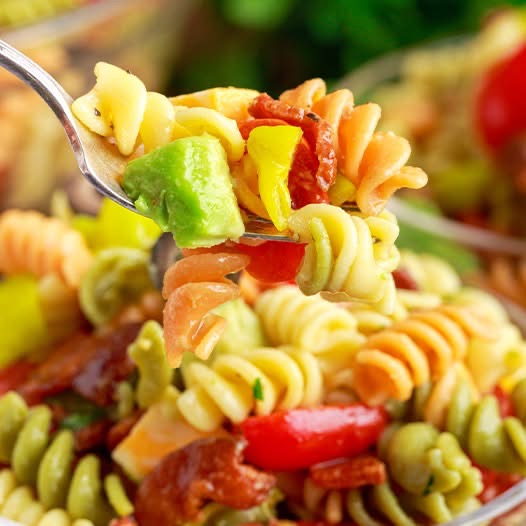
Recipe Overview
• Prep Time: 20 minutes
• Cook Time: 10 minutes (for pasta)
• Chill Time: 1–2 hours (recommended for best flavor)
• Total Time: About 1 hour 30 minutes (plus chilling)
• Servings: 8–10 as a side dish; 6 as a main
• Cuisine: Italian-inspired / Mediterranean
• Difficulty: Easy (beginner-friendly)
• Dietary Notes: Vegetarian (easily vegan), no mayo, can be gluten-free with appropriate pasta
This recipe serves a crowd but scales easily. It’s loaded with vegetables for freshness, avocado for creaminess, and a bright dressing that ties everything together without overpowering the ingredients.
Ingredients
For the Pasta Salad
• 12–16 oz (340–450g) tri-color rotini pasta (or plain rotini, farfalle, or penne). Tri-color adds visual appeal matching the image.
• 1 large ripe avocado (or 2 small), diced into bite-sized chunks. Toss with lemon juice to prevent browning.
• 1 red bell pepper, diced
• 1 yellow bell pepper, diced (for that bright pop seen in the photo)
• 1 green bell pepper, diced (optional, for extra color and crunch)
• ½ cup sun-dried tomatoes in oil, drained and chopped (or more for intense flavor)
• 1 cup cherry or grape tomatoes, halved
• ½ red onion, finely diced (or green onions for milder taste)
• ½ cup black or Kalamata olives, sliced
• ½ cup fresh basil or parsley, chopped (plus extra for garnish)
• 4–6 oz mozzarella cheese, cubed or pearl mozzarella (optional, for creaminess)
• Optional add-ins for heartiness: ½ cup crumbled feta, diced cucumber, chickpeas, or grilled chicken/shrimp
For the Homemade Zesty Italian Dressing (makes about 1 cup – use ¾ cup for the salad, save the rest)
• ½ cup extra virgin olive oil
• ¼ cup red wine vinegar (or white wine vinegar/lemon juice for brightness)
• 1 tablespoon Dijon mustard (helps emulsify)
• 2–3 garlic cloves, minced (or 1 tsp garlic powder)
• 1 teaspoon dried oregano
• 1 teaspoon dried basil
• ½ teaspoon dried thyme (optional)
• ½ teaspoon onion powder
• ½–1 teaspoon honey or maple syrup (to balance acidity; omit for vegan)
• ½ teaspoon salt (or to taste)
• ¼ teaspoon black pepper
• ¼ teaspoon red pepper flakes (optional, for a kick)
• Optional: 2 tablespoons grated Parmesan or nutritional yeast for umami
Pro Tip: Make the dressing in a jar with a tight lid—shake vigorously for 30 seconds until emulsified. It tastes better after sitting for 10–15 minutes.
Optional Garnishes
• Fresh herbs (basil, parsley, or chives)
• Cracked black pepper
• A sprinkle of feta or grated Parmesan
• Lemon zest
Equipment Needed
• Large pot for boiling pasta
• Colander
• Large mixing bowl
• Sharp knife and cutting board
• Jar or small bowl for dressing
• Measuring cups/spoons
• Refrigerator space for chilling
Step-by-Step Instructions
1. Cook the Pasta
Bring a large pot of salted water to a rolling boil (use about 1–2 tablespoons salt for flavor). Add the rotini pasta and cook according to package directions, but aim for slightly past al dente—about 1–2 minutes longer than recommended for hot pasta. This ensures the pasta stays tender once cooled and doesn’t harden in the fridge.
Stir occasionally to prevent sticking.
Why this matters: Overcooked mushy pasta ruins the texture, while undercooked pasta absorbs dressing poorly.
2. Drain and Cool the Pasta
Drain the pasta in a colander. Immediately rinse under cold running water for 1–2 minutes to stop the cooking process and remove excess starch. This prevents the pasta from becoming gummy and keeps it from warming the other ingredients.
Shake off excess water and spread the pasta on a baking sheet or in a large bowl to cool completely (about 10–15 minutes). You can toss it with a tiny drizzle of olive oil to prevent clumping.
3. Prepare the Vegetables and Add-Ins
While the pasta cools, dice the bell peppers into even bite-sized pieces for consistent texture. Halve the cherry tomatoes. Finely dice the red onion. Chop the sun-dried tomatoes if not already done. Slice the olives.
Dice the avocado last (right before assembling) and immediately toss the chunks with juice from half a lemon or lime. This keeps the avocado bright green and prevents oxidation.
Chop the fresh herbs.
4. Make the Dressing
In a jar or small bowl, combine all dressing ingredients. Shake or whisk until well combined and slightly thickened. Taste and adjust: more vinegar for tang, more oil for smoothness, more salt/herbs for flavor. The dressing should be zesty but not overly acidic.
5. Assemble the Salad
In a large mixing bowl, add the cooled pasta as the base.
Layer in the diced bell peppers, halved cherry tomatoes, sun-dried tomatoes, red onion, olives, and herbs.
Gently fold in the avocado chunks and cheese (if using) to avoid mashing the avocado.
Pour about ¾ of the dressing over the salad. Toss gently with tongs or a large spoon until everything is evenly coated. Add more dressing if it seems dry—the pasta will continue to absorb it as it chills.
Visual Tip: The salad should look colorful and vibrant, just like the image: pops of red, yellow, green, and orange against the curly rotini.
6. Chill for Best Flavor
Cover the bowl tightly with plastic wrap or transfer to an airtight container. Refrigerate for at least 1 hour (ideally 2–4 hours or overnight). This allows the flavors to meld beautifully. The pasta softens slightly, and the dressing infuses everything.
7. Serve and Garnish
Before serving, give the salad a gentle toss and taste. Add more dressing, salt, pepper, or a squeeze of fresh lemon if needed. Garnish with extra chopped herbs, lemon zest, or a sprinkle of cheese.
Serve cold or at room temperature. It pairs wonderfully with grilled meats, sandwiches, or as a standalone vegetarian meal.
Why This Recipe Works (Detailed Explanation)
The image highlights several key elements that make this salad shine:
• Curly rotini shape: Traps dressing and small pieces of veggies in every bite.
• Avocado: Adds creamy richness without mayo, balancing the acidity.
• Bell peppers: Provide crunch and sweetness; the mix of colors makes it photogenic.
• Sun-dried tomatoes: Concentrated umami and chewy texture contrasting the juicy fresh tomatoes.
• Overall balance: Salty (olives/cheese), sweet (peppers/tomatoes), tangy (dressing), creamy (avocado), and fresh (herbs).
Pasta salads improve with time because the starches in the pasta absorb the dressing, creating deeper flavor. Unlike leafy green salads that wilt, this holds up well.
Nutrition Information (Approximate, Per Serving)
Based on 10 servings using the base ingredients (without optional cheese or extra add-ins):
• Calories: ~320–380 per serving
• Protein: 8–12g
• Carbohydrates: 40–45g (mostly from pasta and veggies)
• Fat: 12–18g (healthy fats from olive oil and avocado)
• Fiber: 4–6g
• Key Micronutrients: Rich in vitamin C (from bell peppers), vitamin E and potassium (avocado), antioxidants (tomatoes and herbs)
Note: Exact values vary by brand and portions. Use a tool like MyFitnessPal for precise tracking if needed. This is a nutrient-dense dish—lower in calories than many creamy pasta salads due to the veggie-heavy profile.
For a higher-protein version, add chickpeas (extra 5–7g protein per serving) or grilled chicken.
Variations and Customizations
This base recipe is highly adaptable. Here are ideas to keep it exciting:
1. Mediterranean Twist: Add cucumber, feta, artichoke hearts, and extra oregano. Swap red wine vinegar for lemon juice.
2. Greek-Inspired: Kalamata olives, feta, red onion, and a Greek dressing with more lemon and dill.
3. Caprese Style: Fresh mozzarella balls, extra basil, and a balsamic glaze drizzle instead of full dressing.
4. Protein-Packed: Add canned tuna, chickpeas, diced salami, pepperoni, or grilled shrimp. For plant-based, use tofu or tempeh.
5. Spicy Version: Include diced jalapeños, more red pepper flakes, or a dash of hot sauce in the dressing.
6. Tex-Mex Fusion: Corn kernels, black beans, cilantro instead of basil, lime in the dressing, and a sprinkle of cotija cheese.
7. Seasonal Changes:
• Summer: Extra fresh tomatoes and zucchini.
• Fall: Roasted butternut squash or apples.
• Winter: Add roasted broccoli or kale.
8. Gluten-Free: Use gluten-free rotini (rice or quinoa-based). The dressing remains the same.
9. Vegan: Omit cheese/Parmesan; use maple syrup or agave in dressing; add nutritional yeast for cheesy flavor.
10. Low-Carb/Keto-Friendly: Replace pasta with spiralized zucchini or cauliflower florets (blanch briefly).
Experiment freely—the image’s colorful mix encourages creativity!
Tips for Success
• Pasta Cooking: Always salt the water generously (“like the sea”). Taste-test a few minutes early.
• Cooling is Crucial: Warm pasta wilts veggies and makes the salad soggy.
• Dressing Ratio: Start with less dressing; you can always add more. Pasta absorbs liquid as it sits.
• Make-Ahead: Prepare components separately (pasta + veggies in one container, dressing in another, avocado last). Combine up to 24 hours ahead for peak flavor.
• Prevent Avocado Browning: Lemon juice is your friend. Add avocado just before chilling or serving if making very far in advance.
• Scaling: Double ingredients for a large crowd (20+ servings). Use two large bowls if needed.
• Texture Balance: Aim for variety—crunchy (peppers/onion), chewy (sun-dried tomatoes/pasta), creamy (avocado/cheese).
• Taste as You Go: Season generously. Cold dishes need bolder flavors than hot ones.
• Presentation: Serve in a clear glass bowl to show off the colors. The image-style fork lift looks stunning for photos or serving.
Common Mistakes to Avoid:
• Rinsing pasta with hot water (stops cooling).
• Using too little salt.
• Over-dressing initially.
• Skipping the chill time (flavors won’t meld).
Storage and Leftovers
• Refrigerator: Store in an airtight container for 3–5 days. Flavors often improve on day 2–3. If it dries out, add a splash of olive oil or extra dressing and toss.
• Freezing: Not recommended—pasta texture suffers, and avocado turns mushy.
• Meal Prep: Portion into individual containers for grab-and-go lunches. Keeps well for 4 days.
• Travel Tip: For picnics, keep in a cooler with ice packs. The no-mayo dressing makes it safer in warmer weather than creamy versions.
If storing longer than 3 days, refresh with fresh herbs or a squeeze of lemon before eating.
Pairing Suggestions
• Mains: Grilled chicken, salmon, burgers, or Italian sausages.
• Sides: Garlic bread, fresh fruit salad, or a simple green salad.
• Drinks: Iced tea, lemonade, white wine (Pinot Grigio), or sparkling water with lemon.
• Occasions: BBQs, potlucks, holiday gatherings, office lunches, or weekly meal prep.
Health Benefits and Why It’s a Winner
This salad is more than tasty—it’s nutritious. Bell peppers provide vitamin C for immune support. Avocado offers heart-healthy monounsaturated fats and fiber. Tomatoes (fresh and sun-dried) deliver lycopene, an antioxidant. Olive oil in the dressing supports anti-inflammatory benefits. Overall, it’s a balanced plate: carbs from pasta, healthy fats, veggies for volume and micronutrients, and protein options.
Compared to store-bought or mayo-heavy versions, this homemade one lets you control sodium, sugar, and quality of ingredients.
FAQs
Can I use a store-bought dressing?
Yes, a good-quality Italian or sun-dried tomato vinaigrette works in a pinch. But homemade tastes fresher and lets you customize.
How do I make it less oily?
Reduce olive oil slightly and increase vinegar/lemon. Or use more veggies relative to pasta.
Is it kid-friendly?
Yes—many kids love the curly pasta and mild flavors. Let them pick add-ins or reduce onions.
What if I don’t have tri-color pasta?
Any short pasta shape works. Whole wheat or chickpea pasta adds extra fiber/protein.
Can I add meat?
Absolutely—diced salami, ham, or bacon bits turn it into a heartier meal.
Why rinse the pasta?
It cools it quickly and prevents clumping, essential for cold salads.
How long does the dressing last?
Up to 1–2 weeks in the fridge. Shake before each use.
Advanced Tips for Food Bloggers/WordPress Users
• SEO: Use keywords like “easy pasta salad recipe,” “tri color rotini salad,” “avocado pasta salad,” “summer pasta salad no mayo.”
• Images: Upload the provided image as featured. Add more step-by-step photos if possible.
• Schema: Use a recipe plugin for rich snippets (ratings, prep time, etc.).
• Monetization: Add affiliate links for olive oil, pasta brands, or kitchen tools.
• Engagement: Ask readers: “What’s your favorite pasta salad add-in?” Encourage comments.
Final Thoughts
This Colorful Rotini Pasta Salad is a reliable crowd-pleaser that’s as beautiful as it is delicious. The combination of textures and flavors in every bite—creamy avocado, crunchy peppers, tangy dressing—makes it addictive. Whether you’re feeding family or a party, it delivers.