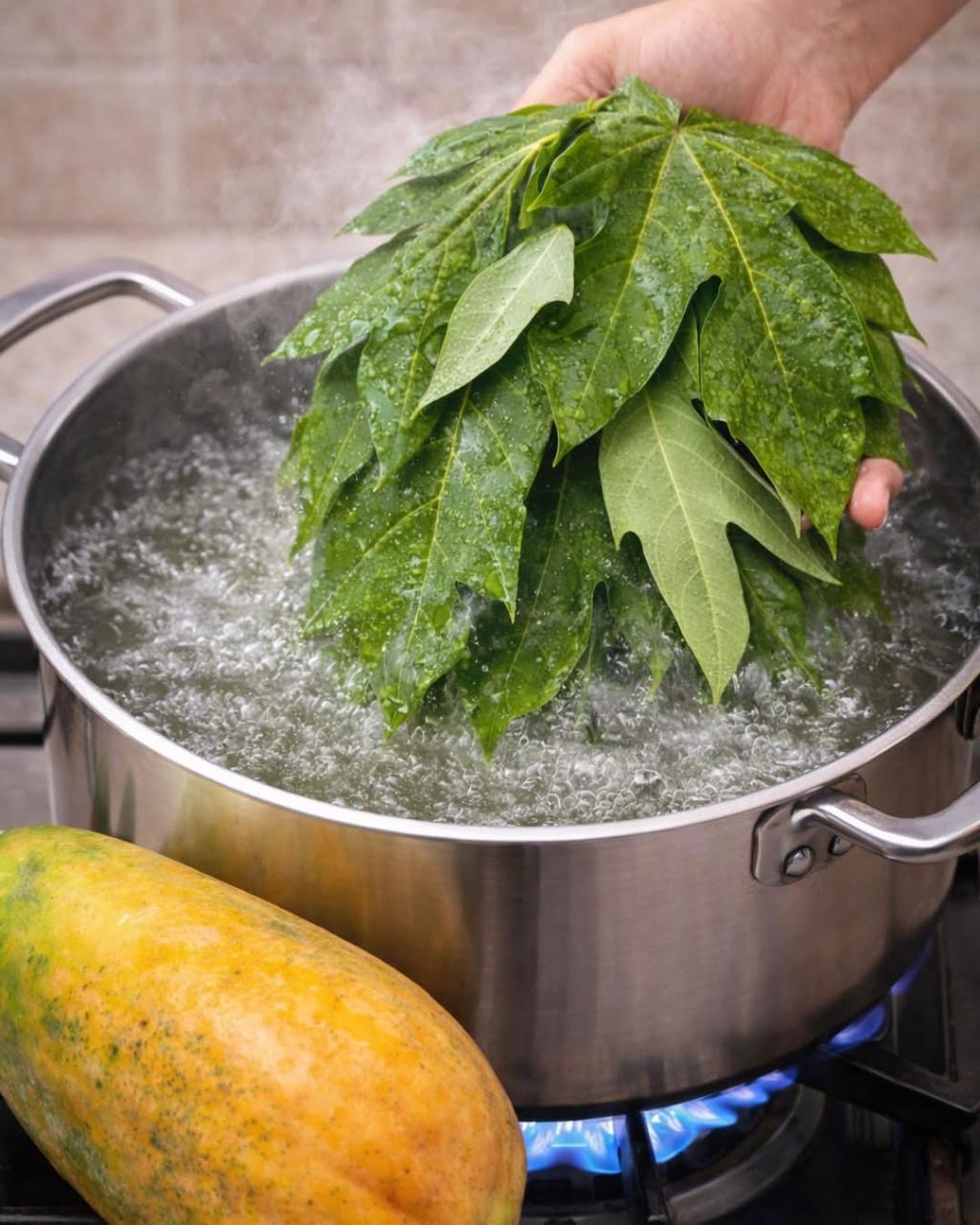
Papaya is widely loved for its sweet tropical fruit, but many people overlook one of the plant’s most powerful parts: its leaves. In many traditional medicine systems across Asia, Africa, and Latin America, boiled papaya leaves have been used as a natural remedy for digestion problems, immune support, and even recovery from viral infections.
Papaya leaves contain a rich mix of bioactive compounds such as papain, flavonoids, vitamin C, and vitamin E, which contribute to their anti-inflammatory and antioxidant properties.
In this article, we’ll explore the main benefits of boiled papaya leaves, how they work in the body, and the safest ways to prepare them at home.
What Are Papaya Leaves?
Papaya leaves come from the tropical tree Carica papaya. While the fruit is commonly eaten worldwide, the leaves are often used in herbal teas, decoctions, or juices for medicinal purposes.
When the leaves are boiled in water, their beneficial compounds are released into the liquid, creating a slightly bitter herbal drink that has long been used in folk medicine.
Papaya leaves contain:
Papain and chymopapain enzymes
Flavonoids and alkaloids
Vitamins A, C, and E
Antioxidant plant compounds
These components are believed to support digestion, reduce inflammation, and strengthen immune responses.
7 Powerful Benefits of Boiled Papaya Leaves
- Supports the Immune System
One of the most well-known benefits of papaya leaves is their ability to help strengthen the immune system.
Papaya leaves contain antioxidants and vitamins that protect cells from oxidative stress. These compounds help the body defend itself against infections and inflammatory conditions.
Research suggests papaya leaf extracts may even help regulate immune responses by reducing harmful inflammatory signals in the body.
This is one reason papaya leaf tea has become popular as a natural wellness drink.
- May Help Increase Platelet Counts
Papaya leaf remedies gained global attention due to their potential role in supporting platelet production.
Some studies suggest papaya leaf extract may help increase platelet levels, especially during certain viral infections such as dengue fever.
Platelets are essential blood components that help prevent excessive bleeding. When platelet levels drop, recovery can be difficult.
While papaya leaf remedies are not a cure for disease, they are often studied as a supportive natural approach.
- Improves Digestive Health
Papaya leaves contain the enzyme papain, which helps break down proteins and improves digestion.
Because of this, boiled papaya leaf tea is sometimes used to relieve digestive discomfort such as:
Bloating
Gas
Constipation
Indigestion
These enzymes help the body process food more efficiently and may reduce irritation in the digestive tract.
In traditional medicine, papaya leaf decoctions are often consumed after heavy meals to support gut health.
- Natural Anti-Inflammatory Effects
Papaya leaves contain compounds such as flavonoids and vitamin E that may help reduce inflammation.
Inflammation plays a role in many chronic conditions, including:
Joint pain
Muscle soreness
Arthritis
Skin irritation
Laboratory studies have shown papaya leaf extract can reduce swelling and inflammatory responses in experimental models.
While human studies are still limited, these early findings support traditional uses of papaya leaves for pain relief.
- Rich in Antioxidants
Antioxidants are compounds that help neutralize free radicals—unstable molecules that damage cells and accelerate aging.
Papaya leaves are packed with antioxidants that may help:
Protect cells from oxidative damage
Reduce inflammation
Support overall metabolic health
These protective properties may contribute to better long-term health and improved resilience against environmental stressors.
- May Support Liver Health
Traditional herbal medicine often uses papaya leaves to support liver function.
Early research suggests papaya leaf compounds may help protect the liver from oxidative stress and toxins.
The liver plays a key role in detoxification, digestion, and metabolism. Supporting liver health may improve overall energy and well-being.
- Helps the Body Recover from Illness
Because of their immune-supporting and antioxidant properties, papaya leaves are sometimes used during recovery from illness.
The nutrients and plant compounds found in the leaves may help:
Reduce fatigue
Support immune response
Improve nutrient absorption
While more clinical research is needed, traditional medicine continues to value papaya leaves as a restorative herbal remedy.
How to Prepare Boiled Papaya Leaves
Making papaya leaf tea is simple and requires only a few ingredients.
Ingredients
3–5 fresh papaya leaves
1 liter of water
Optional: ginger or lemongrass for flavor
Instructions
Wash the papaya leaves thoroughly.
Cut the leaves into small pieces.
Place them in a pot with water.
Bring to a boil and simmer for about 20–30 minutes.
Strain the liquid and allow it to cool.
Drink a small cup once or twice a day.
This method extracts beneficial compounds from the leaves into the water.
Because papaya leaves are naturally bitter, some people add honey or lemon to improve the taste.
Possible Side Effects and Precautions
Although papaya leaves are natural, they may not be suitable for everyone.
Potential side effects include:
Nausea or stomach discomfort
Allergic reactions in sensitive individuals
Interactions with certain medications
People taking blood-thinning or diabetes medications should consult a healthcare professional before consuming papaya leaf remedies.
Pregnant women are generally advised to avoid papaya leaf preparations unless recommended by a doctor.
Final Thoughts
Boiled papaya leaves are an ancient herbal remedy that continues to attract scientific interest. Rich in enzymes, antioxidants, and anti-inflammatory compounds, they may offer several potential health benefits—from improved digestion to immune support.
While research is still evolving, moderate consumption of papaya leaf tea may be a useful addition to a balanced wellness routine.
However, like any natural remedy, it’s important to use it responsibly and consult a healthcare professional if you have underlying medical conditions.