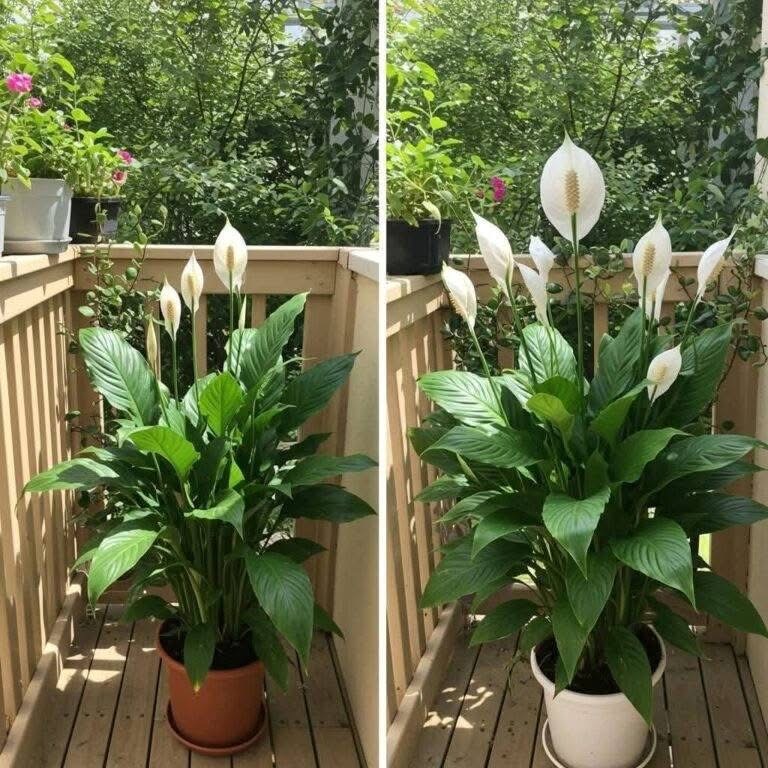
your Peace Lily (Spathiphyllum) has been slow to bloom or shows signs of fatigue—pale leaves, sparse flowers, or general lethargy—you’re not alone. These elegant plants thrive on consistent, thoughtful care. One time-honored practice gaining renewed appreciation: rice water, a simple, nutrient-rich supplement made from uncooked rice and water.
This isn’t a miracle cure—but when paired with proper care, it can gently support vitality, deepen leaf color, and encourage blooming in plants that have been struggling.
Why Rice Water Works
Rice water contains trace amounts of beneficial nutrients released during soaking or blending:
→ Potassium – Supports flower development and root strength
→ Magnesium & Calcium – Promote vibrant, resilient foliage
→ B vitamins – Aid metabolic processes in plants
→ Starches – Feed beneficial soil microbes
Important note: Rice water is a supplement, not a complete fertilizer. It works best as part of a holistic care routine—and must be strained thoroughly to prevent mold or pests.
How to Prepare & Apply Safely
How to Prepare & Apply Safely
You’ll need:
- 1 cup uncooked rice (any variety)
- 2 cups chlorine-free water (filtered or tap water left out 24 hours)
- Blender
- Fine-mesh strainer or cheesecloth
- Watering can
Steps:
Blend rice and water 2–3 minutes until milky.
Strain meticulously—any residual rice particles can ferment, attract gnats, or encourage mold.
Use immediately (do not store—freshness prevents bacterial growth).
Water soil gently until moist (not soggy). Avoid wetting leaves.
Frequency:
→ For revitalizing dormant plants: Once weekly for 3–4 weeks
→ For maintenance: Every 2–3 weeks
→ Never replace regular watering—use in place of one scheduled watering
Essential Peace Lily Care (The Real Foundation)
Rice water supports—but cannot replace—core care practices:
Need
Ideal Practice
Why It Matters
Light
Bright, indirect light (north/east window)
Direct sun scorches leaves; deep shade inhibits blooms
Water
Keep soil consistently moist; water when top inch feels dry
Drooping = thirst signal; prolonged dryness stresses roots
Humidity
Mist leaves or place on pebble tray
Peace Lilies thrive in 40–60% humidity
Fertilizer
Balanced liquid fertilizer (diluted) every 6–8 weeks in growing season
Provides nitrogen/phosphorus rice water lacks
Soil
Well-draining potting mix with perlite
Prevents root rot—a leading cause of decline
⚠️ Critical reminder: Overwatering causes more Peace Lily deaths than underwatering. Ensure pots have drainage holes. Yellow leaves often signal soggy soil—not thirst.
What to Realistically Expect
With consistent care:
✓ Leaves deepen to rich, glossy green within 2–4 weeks
✓ New growth emerges more vigorously
✓ Flower spikes may appear in 4–8 weeks (if light/temperature conditions support blooming)
✓ Overall resilience improves
Patience is key: Plants recovering from stress may take months to rebloom. Rice water supports the journey—it doesn’t override biology.
💡 Thoughtful Additions
Propagation tip: When repotting, gently separate rooted offshoots (“pups”) with 2+ leaves. Pot in small containers with fresh soil.
Eco-note: Save blended rice for compost—nothing wasted.
Alternative: Soak ½ cup rice in 2 cups water for 30 minutes (no blending). Strain and use. Less nutrient-dense but equally safe.
A Gentle Philosophy
This practice honors a quiet wisdom found in many cultures: using kitchen resources thoughtfully to nurture life. There’s no shame in a plant that isn’t blooming—it’s often a signal asking for adjusted care.
Your Peace Lily isn’t “ugly.” It’s communicating.
And your willingness to listen—through light adjustments, mindful watering, and gentle supplements like rice water—is the truest form of plant care.
With patience and consistency, you may just witness that quiet magic: a new white spathe unfurling like a promise kept. 🌼
Note: Rice water is a traditional supplement. For persistent issues (yellowing, no growth), assess light, drainage, or consult a nursery professional. Healthy roots and proper environment always come first.