The Ultimate Guide to Pork Chop Marinades
Introduction
Marinating pork chops is an age-old technique that transforms a simple cut of meat into a flavorful, tender masterpiece. Whether you’re grilling, pan-searing, or baking, marinades provide depth and character to pork chops, enhancing their natural juiciness and taste. In this guide, we’ll explore five delectable marinades—BBQ, Teriyaki, Asian Style, Italian Balsamic, and Steakhouse—each offering a unique culinary experience.
The History of Marinades
The tradition of marinating meat dates back thousands of years to ancient civilizations, where acidic liquids like vinegar, wine, and fermented juices were used to preserve and tenderize food. Over time, the method evolved into a way to enhance flavors. In particular, marinades became a cornerstone of culinary traditions worldwide, with regional ingredients influencing their composition
The concept of marinating meat has ancient origins, dating back thousands of years. In early human history, marination was not just about flavor but served a practical purpose: preservation. Ancient Egyptians, Greeks, and Romans used acidic liquids like vinegar, fermented grape juice, and citrus fruits to keep meat from spoiling. These acidic ingredients also began the process of tenderizing the meat, breaking down proteins to make it softer and more palatable.
As trade routes expanded during the Middle Ages, new spices and ingredients entered the culinary world. Soy sauce, sesame oil, and five-spice powder became prominent in Asia, while Europe embraced olive oil, balsamic vinegar, and herbs such as rosemary, oregano, and thyme. These ingredients laid the foundation for regional marinades.
- Asian Influence: In China, soy sauce and Shaoxing wine were central to marinades, creating umami-rich flavors. The addition of sesame oil and garlic further elevated the meat’s taste. Meanwhile, Japan perfected teriyaki sauce as a sweet and savory glaze.
- European Traditions: In Italy, marinades evolved with the use of olive oil, wine, balsamic vinegar, and fresh herbs, reflecting the country’s Mediterranean roots. Barbecue-style marinades later developed in the Americas, influenced by indigenous smoking techniques and European spice blends.
By the 20th century, marinades had become an integral part of global cuisine, reflecting a fusion of traditional practices and modern tastes. Today, they are used not only for flavor but also for their health benefits, as they reduce the need for excess salt or unhealthy fats during cooking.
Whether inspired by ancient preservation methods or modern-day culinary innovation, marinades remain a timeless way to transform pork chops into a flavorful and tender dish.
Benefits of Marinating Pork Chops
- Flavor Boost: Marinades infuse the meat with bold, complex flavors.
- Tenderization: Acidic ingredients break down tough fibers, resulting in tender chops.
- Moisture Retention: Oils in the marinade help keep the meat juicy.
- Versatility: Marinades can be customized to suit various cuisines.
Ingredients
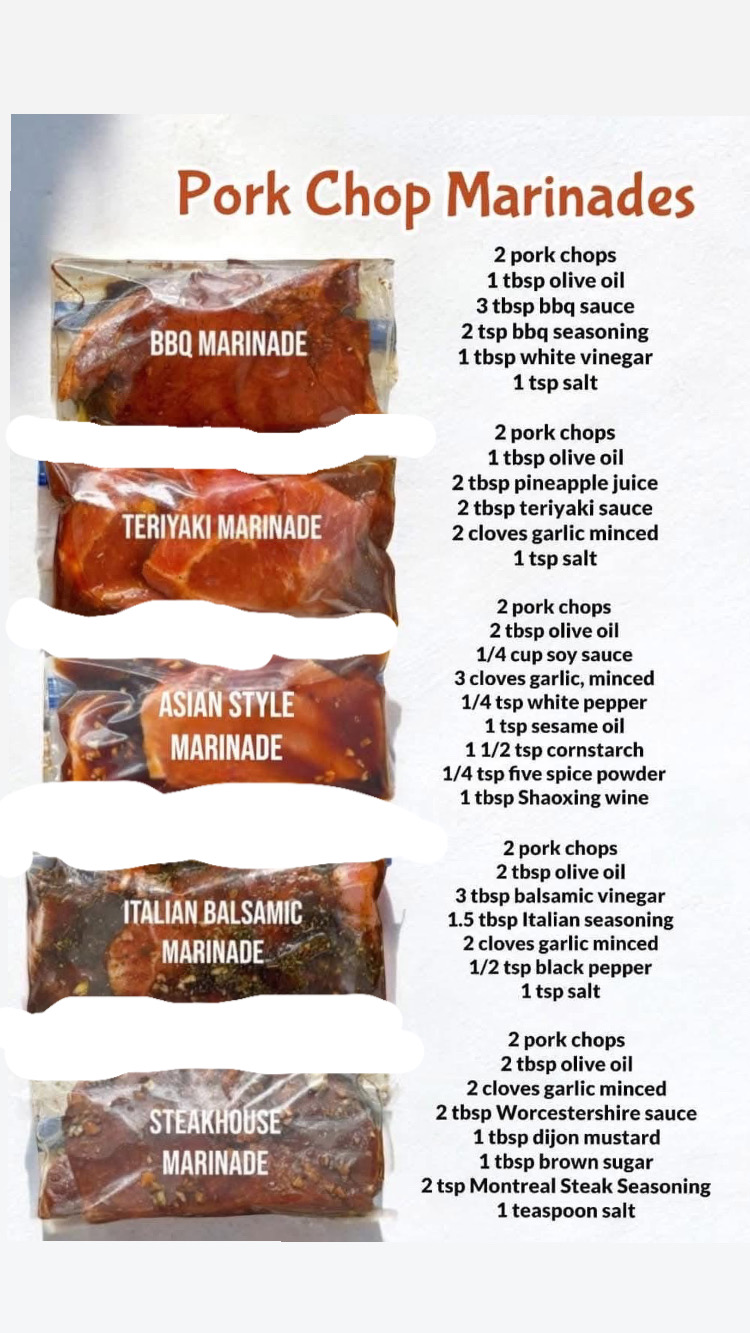
Here’s what you’ll need for each marinade (suitable for 2 pork chops):
BBQ Marinade
- 1 tbsp olive oil
- 3 tbsp BBQ sauce
- 2 tsp BBQ seasoning
- 1 tbsp white vinegar
- 1 tsp salt
Teriyaki Marinade
- 1 tbsp olive oil
- 2 tbsp pineapple juice
- 2 tbsp teriyaki sauce
- 2 cloves garlic, minced
- 1 tsp salt
Asian Style Marinade
- 2 tbsp olive oil
- 1/4 cup soy sauce
- 3 cloves garlic, minced
- 1/4 tsp white pepper
- 1 tsp sesame oil
- 1 1/2 tsp cornstarch
- 1/4 tsp five-spice powder
- 1 tbsp Shaoxing wine
Italian Balsamic Marinade
- 2 tbsp olive oil
- 3 tbsp balsamic vinegar
- 1.5 tbsp Italian seasoning
- 2 cloves garlic, minced
- 1/2 tsp black pepper
- 1 tsp salt
Steakhouse Marinade
- 2 tbsp olive oil
- 2 cloves garlic, minced
- 2 tbsp Worcestershire sauce
- 1 tbsp Dijon mustard
- 1 tbsp brown sugar
- 2 tsp Montreal Steak Seasoning
- 1 tsp salt
Instructions
- Prepare the Marinade: Combine all ingredients for your desired marinade in a bowl or resealable bag.
- Marinate the Pork Chops:
- Add the pork chops to the marinade, ensuring they are fully coated.
- Seal the bag or cover the bowl with plastic wrap.
- Marinate in the refrigerator for at least 2 hours, or overnight for maximum flavor.
- Cook the Pork Chops:
- Grill: Preheat grill to medium-high heat. Grill chops for 4-5 minutes per side until the internal temperature reaches 145°F (63°C).
- Pan-Sear: Heat a skillet over medium-high heat. Add 1 tbsp of oil and cook chops for 3-4 minutes per side.
- Bake: Preheat oven to 375°F (190°C). Place chops in a baking dish and cook for 20-25 minutes.
Methods
- Mixing: Use a whisk or fork to ensure all marinade ingredients are thoroughly combined.
- Sealing: Air-tight containers or resealable bags are ideal for marinating.
- Resting: Allow chops to rest for 5 minutes after cooking to redistribute juices.
Nutritional Information (Per Serving, approximate for a medium pork chop with marinade)
- Calories: 280-320 (depending on marinade)
- Protein: 24g
- Carbohydrates: 6-12g
- Fat: 15-20g
- Sodium: 600-800mg
The nutritional values for marinated pork chops depend on the specific ingredients used in the marinade and the cooking method. Below is an approximate breakdown for one medium pork chop (about 6 oz, 170g) prepared with each marinade.
1. BBQ Marinade
- Calories: 320
- Protein: 25g
- Carbohydrates: 10g
- Fat: 18g
- Sodium: 700mg
2. Teriyaki Marinade
- Calories: 310
- Protein: 26g
- Carbohydrates: 9g
- Fat: 16g
- Sodium: 750mg
3. Asian Style Marinade
- Calories: 330
- Protein: 24g
- Carbohydrates: 8g
- Fat: 20g
- Sodium: 850mg
4. Italian Balsamic Marinade
- Calories: 300
- Protein: 25g
- Carbohydrates: 6g
- Fat: 17g
- Sodium: 680mg
5. Steakhouse Marinade
- Calories: 340
- Protein: 26g
- Carbohydrates: 12g
- Fat: 19g
- Sodium: 780mg
Nutritional Benefits of Marinated Pork Chops
- Protein: Pork chops are a high-protein food, providing essential amino acids for muscle growth, repair, and overall health.
- Healthy Fats: Olive oil in the marinades contributes heart-healthy monounsaturated fats.
- Rich in Vitamins and Minerals: Pork is an excellent source of B vitamins (like B6 and B12), zinc, and selenium, which support energy production and immune health.
- Lower Sodium Alternative: While marinades add sodium, they reduce the need for extra salt in cooking. Homemade marinades are often less salty than store-bought versions.
- Flavor Without Extra Calories: Marinades enhance taste without requiring heavy creams or sugary sauces, keeping the dish flavorful yet balanced.
Tips for Healthier Marinades
- Use low-sodium soy sauce or seasonings.
- Sweeten naturally with honey or fresh fruit juices instead of processed sugar.
- Increase fresh herbs and spices for flavor without added salt.
- Grill or bake instead of frying for a lower-fat meal.
By balancing these marinades with healthy side dishes like steamed vegetables, quinoa, or a fresh salad, you can create a nutritious, well-rounded meal that is both satisfying and health-conscious.
Formation of Marinade Lovers
Marinades have a universal appeal, bringing together lovers of bold flavors, tender meat, and diverse culinary styles. Whether you’re a fan of smoky BBQ, sweet and tangy teriyaki, or rich Italian flavors, there’s a marinade here for every taste preference.
Conclusion
Marinades are a simple yet powerful way to elevate pork chops from everyday fare to gourmet delight. Each recipe in this guide provides a unique twist, ensuring your meals are anything but ordinary. So, gather your ingredients, pick your favorite marinade, and get ready to impress at your next meal.
Pork chop marinades aren’t just recipes; they’re an art form cherished by food lovers worldwide. Which marinade will you try first? Share your experience and let the flavors inspire others!
Let me know if you’d like to explore other marinades or cooking techniques!