Those White Specks in Spam? Here’s What They Really Are
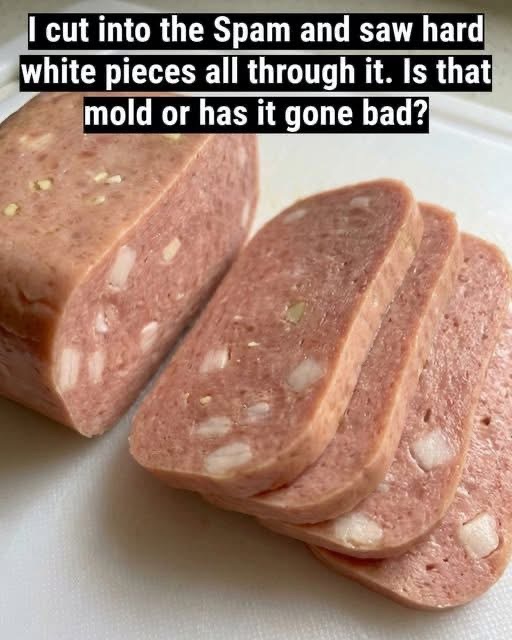
You slice into a can of Spam and pause. Scattered throughout the pink-hued meat are small white lumps—smooth, waxy, unmistakable. For a heartbeat, doubt flickers: Is this mold? Did I just ruin lunch?
If this sounds familiar, take a breath. Those white bits aren’t a warning sign—they’re a signature feature of Spam itself. And understanding what they are transforms uncertainty into confidence.
🔍 What’s Inside Spam?
Spam is a precooked canned meat product made primarily from pork shoulder and ham, blended with salt, water, sugar, modified potato starch, and sodium nitrite (a preservative that maintains color and prevents spoilage). Crucially, it’s crafted from whole-muscle cuts—meaning both lean meat and natural fat are included in the grind.
That fat isn’t filler. It’s functional:
→ Moisture retention – Prevents dryness during cooking and storage
→ Sliceability – Gives Spam its firm-yet-yielding texture
→ Flavor carrier – Fat dissolves seasonings and creates richness
→ Mouthfeel – Without it, Spam would be crumbly and bland
The mixture is sealed in cans and cooked under pressure—a process that sterilizes the contents and enables shelf stability for years.
❓ So What Are Those White Bits?
They’re solidified pork fat—completely normal and intentional.
Here’s why they appear:
- Pork fat is naturally white or ivory when cold
- Refrigeration causes it to firm into visible, smooth lumps
- These specks distribute evenly throughout the can (not just on the surface)
- They melt seamlessly when heated, enriching the meat’s juiciness
Key distinction: Mold behaves differently. It appears fuzzy or powdery, clusters on surfaces (not dispersed evenly), and carries sour or musty odors. Fat is smooth, integrated into the meat’s structure, and smells neutral—just salty, savory Spam.
✅ How to Tell Fat From Mold
Feature
Solidified Fat
Mold
Color
White/ivory
Blue, green, gray, black
Texture
Smooth, firm, waxy
Fuzzy, powdery, slimy
Distribution
Evenly scattered throughout meat
Surface-only, patchy clusters
Smell
Mild, salty, meaty
Sour, musty, “off”
Can condition
Intact, no bulging
Bulging, leaking, or severely dented
Because Spam is heat-processed in a hermetically sealed can, internal mold growth is exceptionally rare. If the can remains undamaged and unopened, the contents are protected from contamination.
⚠️ When to Discard Spam
While white fat specks are harmless, these signs warrant disposal:
When to Discard Spam
While white fat specks are harmless, these signs warrant disposal:
→ Bulging or swollen can (indicates gas-producing bacteria)
→ Leaking or deep rust along seams (compromised seal)
→ Sour, rancid, or ammonia-like odor upon opening
→ Slimy texture or unnatural discoloration (beyond normal fat)
Trust your senses: If the can is intact, the smell is clean, and the texture feels consistent—those white bits are simply fat doing its job.
What Happens When You Cook It
Heat transforms the experience entirely. As Spam sizzles in a skillet:
→ Solid fat softens, then liquefies into translucent oil
→ That oil bastes the meat from within, creating a crispy exterior and juicy interior
→ White specks vanish—absorbed back into the slice where they belong
This isn’t a flaw. It’s physics—and flavor.
The Takeaway
Those white specks aren’t a defect. They’re evidence of a product made with whole cuts of meat—fat included—because fat matters. It’s why Spam slices cleanly, fries to golden perfection, and delivers that unmistakable savory richness.
So the next time you spot them, smile. You’re not seeing contamination. You’re seeing craftsmanship—the quiet presence of an ingredient that’s been keeping Spam moist, sliceable, and satisfying since 1937.
And if doubt lingers?
→ Check the can (intact = safe)
→ Sniff the contents (clean = safe)
→ Cook a slice (fat melts; mold doesn’t)
When all three pass, eat with confidence.
That white speck isn’t a warning.
It’s the reason Spam tastes like home.