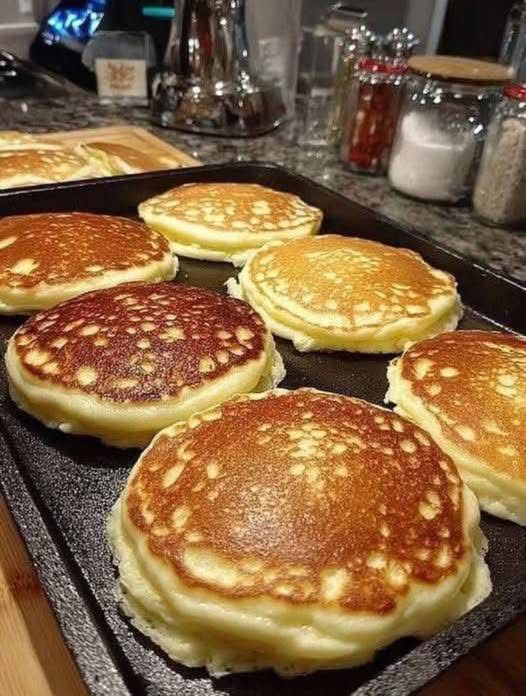
FLUFFY THICK PANCAKES RECIPE
Ingredients (makes 6–8 pancakes)
2 large eggs (separated)
2 tablespoons sugar
¾ cup milk
1 teaspoon vanilla extract
1 cup all-purpose flour
2 teaspoons baking powder
¼ teaspoon salt
Butter or oil for cooking
Optional toppings
Maple syrup, honey, powdered sugar, fruit, whipped cream
Instructions
- Separate the eggs
Put yolks in one bowl and whites in another. - Make the batter base
To the egg yolks add sugar and whisk until pale.
Add milk and vanilla and mix well.
Add flour, baking powder, and salt.
Whisk until smooth and thick. - Whip the egg whites
Beat egg whites until stiff peaks form (they should hold their shape). - Fold gently
Add egg whites to the batter in 3 parts.
Fold gently with a spatula (do not stir) to keep the batter airy. - Cook slowly
Heat a non-stick pan on LOW heat. Lightly butter it.
Scoop thick batter onto the pan (don’t spread).
Cover with a lid and cook 3–4 minutes until golden underneath. - Flip carefully
Flip gently with a wide spatula.
Cover again and cook another 3 minutes until fully cooked inside. - Serve hot
Stack them and add syrup, butter, or fruit.
Tips for extra thickness
Use low heat only
Do not flatten the batter
Keep pan covered while cooking
Add a tablespoon of water to the pan before covering for steam (optional)
History
Pancakes are one of the oldest prepared foods in human history. Evidence of pancake-like foods dates back over 30,000 years, when early humans mixed ground grains with water and cooked the batter on hot stones. In ancient civilizations such as Greece and Rome, pancakes were made with wheat flour, olive oil, honey, and milk, and were often eaten for breakfast or offered during religious celebrations.
During the Middle Ages in Europe, pancakes became popular as a way to use up rich ingredients like eggs, milk, and butter before the fasting season of Lent, which is why traditions like Shrove Tuesday (Pancake Day) still exist today. As baking powder and baking soda were invented in the 19th century, pancakes became lighter and fluffier, leading to the soft, thick styles we know now.
Modern fluffy pancakes, especially the tall, airy versions, gained worldwide popularity through American diners and later through Japanese soufflé-style pancakes. Today, pancakes are enjoyed across cultures in many forms, from thin crêpes to thick breakfast stacks, showing how a simple mixture of flour and eggs evolved into a global comfort food.
Conclusion
Pancakes have traveled through centuries and cultures, changing shape and texture but never losing their appeal. From ancient flat breads to today’s fluffy, cloud-like stacks, they represent warmth, simplicity, and shared meals. Whether served with syrup, fruit, or butter, pancakes remain a timeless dish that connects modern kitchens with the earliest traditions of cooking, proving that even the simplest foods can carry a rich and delicious history.