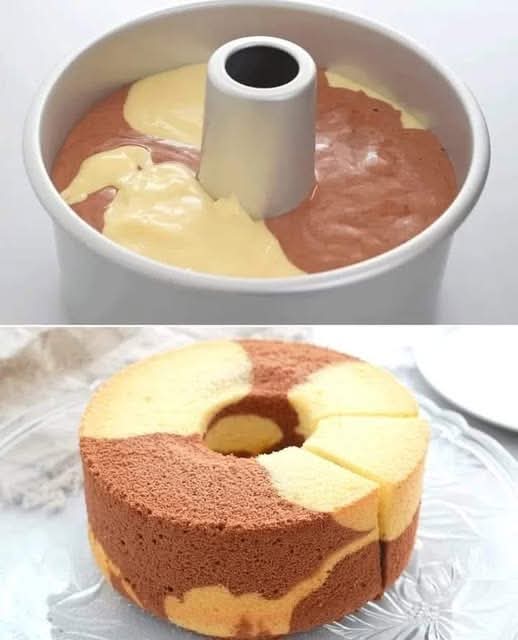
The Ultimate Marble Bundt Cake: Vanilla & Chocolate Swirl Perfection
Few desserts capture nostalgia and elegance quite like a classic marble bundt cake. With its hypnotic swirls of golden vanilla batter intertwining with deep, fudgy chocolate, every slice reveals a unique pattern — no two pieces ever look exactly the same. This cake delivers the dense, buttery crumb of a traditional pound cake while staying remarkably moist thanks to a careful balance of ingredients and technique.
Whether you’re baking for a family gathering, holiday table, coffee break with friends, or simply treating yourself, this marble bundt cake never fails to impress. Best of all? It looks far more complicated than it actually is. With one base batter divided and flavored, plus smart layering and swirling, you create bakery-level beauty without needing artistic skills.
In this ultra-detailed guide, we’ll walk through every step: ingredient science, precise measurements, room-temperature importance, bundt pan preparation secrets, swirling techniques for maximum marbling, baking science, cooling tricks, storage advice, common mistakes with fixes, flavor variations, add-ins, glaze options, and even make-ahead strategies. By the end, you’ll feel confident making this showstopper again and again.
Why This Marble Bundt Cake Works So Well
The magic lies in starting with a single, well-balanced vanilla batter, then dividing part of it to create the chocolate portion. This method ensures both flavors share identical texture and rise perfectly together — no mismatched densities or sinking layers.
We use the classic creaming method (butter + sugar beaten until fluffy) for structure and tenderness. Whole eggs + extra yolks add richness and moisture. Buttermilk brings subtle tang and activates the leavening for a lighter crumb than pure pound cake. A touch of oil (neutral vegetable or canola) guarantees extra moistness that lasts for days.
The result? A cake that’s dense yet tender, buttery without being greasy, and flavorful enough to enjoy plain — though a simple glaze takes it over the top.
Ingredients (for a 10-12 cup bundt pan)
Dry ingredients (for the base batter):
- 3½ cups (440 g) all-purpose flour (spoon & leveled, not scooped)
- 2½ teaspoons baking powder
- ½ teaspoon baking soda
- 1 teaspoon fine sea salt or table salt
Wet & fat ingredients:
- 1½ cups (340 g / 3 sticks) unsalted butter, very soft but not melted (65–68°F ideal)
- 2¾ cups (550 g) granulated white sugar
- 5 large eggs + 2 large egg yolks, room temperature
- 1 tablespoon pure vanilla extract (or vanilla bean paste for deeper flavor)
- ¼ cup (60 ml) neutral oil (canola, vegetable, or light olive oil)
- 1¾ cups (420 ml) buttermilk, room temperature (or 1½ cups whole milk + ¼ cup lemon juice/white vinegar, rested 10 min)
For the chocolate portion:
- ⅔ cup (55 g) unsweetened natural cocoa powder (not Dutch-processed for best rise)
- ⅓ cup (80 ml) very hot water or hot coffee (helps bloom cocoa and deepen flavor)
- Optional: 1–2 teaspoons instant espresso powder (enhances chocolate without tasting like coffee)
Optional glaze (simple powdered sugar version):
- 2 cups (240 g) powdered sugar, sifted
- 4–6 tablespoons heavy cream or milk
- 1 teaspoon vanilla extract
- Pinch of salt
Alternative chocolate ganache glaze:
- 6 oz (170 g) semi-sweet or bittersweet chocolate, chopped
- ¾ cup (180 ml) heavy cream
- 1 tablespoon corn syrup or honey (optional, for shine)
Step-by-Step Instructions
- Prepare your pan and oven (20 minutes ahead)
Preheat oven to 325°F (165°C) conventional — no fan/convection for most even baking in bundt pans.
Generously grease a 10–12 cup bundt pan. Use a pastry brush to apply softened butter or solid vegetable shortening into every crevice, especially around the center tube and detailed patterns. Dust thoroughly with flour, tapping out excess. For foolproof release, use Baker’s Joy spray (flour + oil in one) or homemade pan release paste (equal parts shortening, oil, flour). This step is non-negotiable — bundt pans are notorious for sticking. - Mix dry ingredients
In a large bowl, whisk together flour, baking powder, baking soda, and salt. Set aside. This ensures even leavening distribution. - Cream butter and sugar (8–10 minutes)
In a stand mixer fitted with paddle attachment (or large bowl with hand mixer), beat softened butter on medium speed until creamy (1 minute).
Add granulated sugar gradually while beating on medium-high. Continue 5–8 minutes until very pale, fluffy, and almost doubled in volume. This long creaming incorporates air for lift and creates tender crumb — don’t rush it. - Add eggs slowly
Beat in whole eggs one at a time, waiting until each disappears before adding next (about 20–30 seconds each). Add extra yolks together. Scrape bowl frequently. Mixture may look curdled — that’s normal. - Alternate wet & dry
Reduce speed to low. Add vanilla and oil; mix briefly.
Add dry ingredients in three additions, alternating with buttermilk in two additions (start and end with dry). Mix only until just combined after each addition — overmixing develops gluten and toughens cake. Final batter should be thick, smooth, and satin-like. - Create chocolate batter
Scoop out ~⅓ of vanilla batter (about 4–4½ cups) into a separate large bowl.
Sift cocoa powder over hot water/coffee in a small bowl; whisk until smooth paste forms (no lumps). Add espresso powder if using.
Stir cocoa paste into reserved batter until uniform chocolate color. This smaller portion becomes your chocolate swirl — keeping ratios prevents dense/heavy chocolate sections. - Layer & swirl for marble effect
Dollop large spoonfuls of vanilla batter randomly around bottom of prepared pan.
Add spoonfuls of chocolate batter on top, then more vanilla, continuing until all batter is used. Aim for 3–4 layers total.
Use a long skewer, thin knife, or offset spatula to gently swirl batters in figure-8 or zigzag motion. Do not over-swirl — 8–12 passes maximum. Too much mixing creates muddy brown instead of distinct swirls.
Tap pan firmly on counter 3–4 times to release large air bubbles. - Bake
Place pan in center of oven. Bake 70–85 minutes.
Begin checking at 70 minutes: toothpick inserted near center (avoid center tube) should emerge with few moist crumbs. Internal temperature should reach 200–205°F.
Top will be golden, spring back slowly when pressed, and pull slightly from pan sides. If browning too fast, tent loosely with foil after 50 minutes. - Cool properly
Cool in pan on wire rack exactly 15–20 minutes — no longer, or steam can make cake soggy/stuck.
Place rack over pan, invert quickly and confidently. If it resists, tap pan edges gently or use thin knife around edges/center tube. Cool completely (3–4 hours) before glazing. - Glaze & finish
For powdered sugar glaze: whisk ingredients until pourable. Drizzle over cooled cake.
For ganache: heat cream until simmering, pour over chopped chocolate, rest 2 minutes, stir until smooth. Add corn syrup for shine. Pour over cake, letting it drip naturally.
Tips for Marble Bundt Cake Success
- Room temperature is everything — Cold ingredients cause lumpy batter and uneven rise.
- Accurate flour measurement — Spoon into cup and level; too much flour = dry cake.
- Don’t over-swirl — Preserve distinct veins of color.
- Pan size matters — 10–12 cup capacity prevents overflow.
- Oven calibration — Use oven thermometer; many run 25°F off.
- Test early — Bundts dry out quickly if overbaked.
Troubleshooting Common Problems
- Cake sticks to pan → Insufficient greasing/flouring or cooled too long.
- Dense/heavy texture → Overmixed batter or under-creamed butter/sugar.
- Swirls disappear → Over-swirled or batters too similar in consistency.
- Cracked top → Oven too hot or pan too full.
- Dry edges → Overbaked — tent with foil sooner next time.
- Sinking center → Opened oven door too early or underbaked.
Flavor Variations & Add-Ins
- Orange-chocolate marble: Add 2 Tbsp orange zest to vanilla batter + 1 tsp orange extract.
- Red velvet marble: Use red food coloring + 1 Tbsp cocoa in chocolate portion.
- Mocha marble: Add 3 Tbsp instant coffee to hot water for chocolate batter.
- Add-ins: Fold 1 cup mini chocolate chips, chopped nuts, or dried cherries into batters before layering (avoid overloading to prevent sinking).
Storage & Make-Ahead
- Room temperature: Covered cake dome or airtight container up to 4 days.
- Refrigerator: Up to 7 days; bring to room temp before serving.
- Freezer: Wrap unglazed cake tightly in plastic + foil; freeze up to 2 months. Thaw overnight, then glaze.
Why This Cake Belongs in Your Baking Rotation
This marble bundt cake combines simplicity with wow-factor presentation. It travels well, slices beautifully, and pairs perfectly with coffee, tea, or a scoop of vanilla ice cream. The contrast of flavors and textures keeps every bite interesting.
Next time you want a crowd-pleasing dessert without complicated decorating, reach for this recipe. Once you master the swirl, experiment with colors, extracts, and glazes — the possibilities are endless.
Enjoy baking — and enjoy those mesmerizing slices!