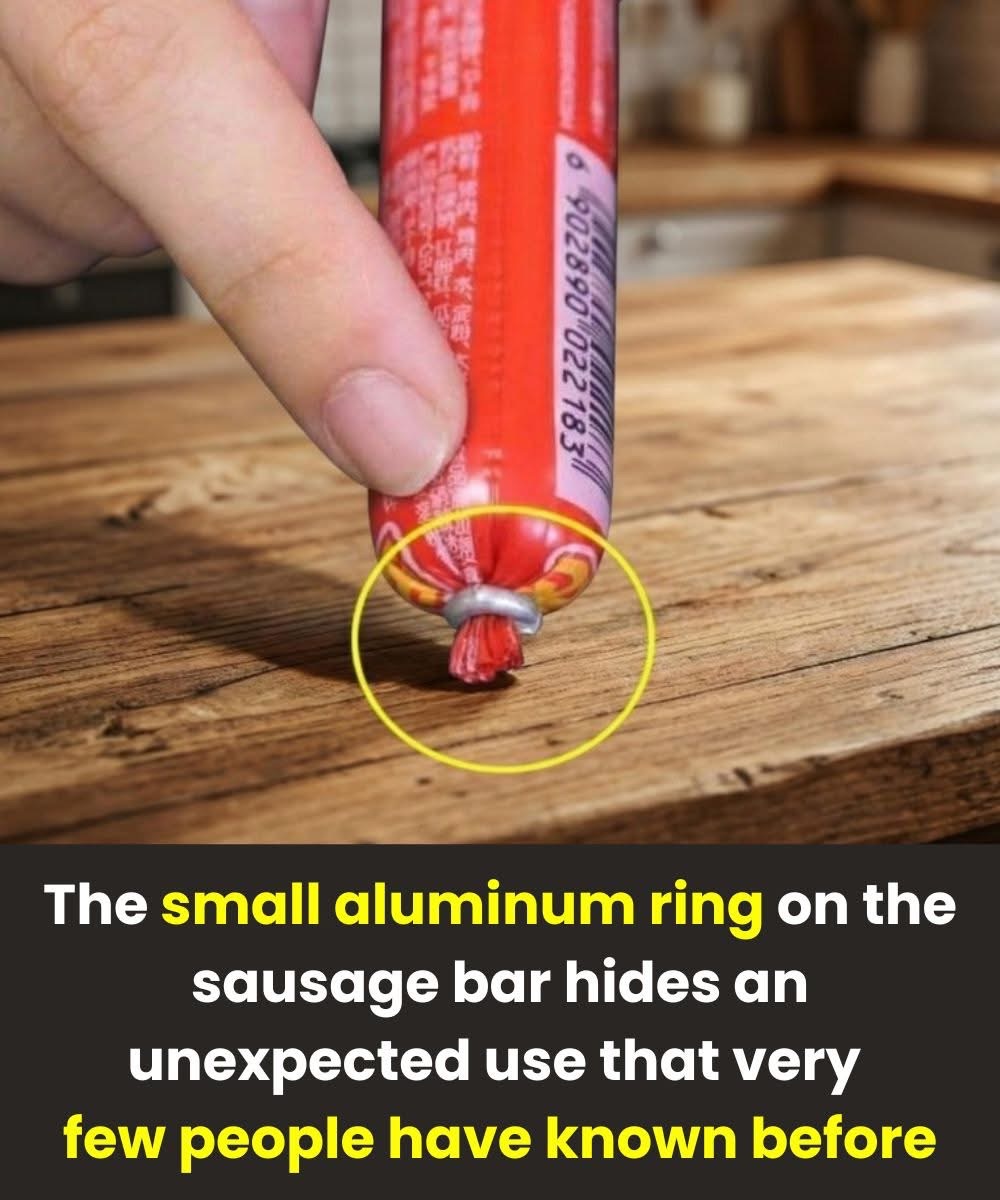
Most of us have seen it a hundred times and never given it a second thought. That small aluminum ring crimped onto the end of a sausage usually gets snipped off, tossed aside, and instantly forgotten. But as it turns out, that little piece of metal has a surprisingly clever purpose—one that very few people ever notice.
And no, it’s not just there to look neat.
More Than Just a Seal
At first glance, the aluminum ring seems simple: it keeps the sausage casing tightly closed. That’s true—but it’s only part of the story. The ring is designed to create a uniform pressure seal that prevents air from entering the casing while the sausage is stored. Less air means less spoilage, better texture, and longer shelf life.
Unlike string or plastic clips, aluminum doesn’t absorb moisture or odors, making it ideal for food preservation.
A Built-In Cooking Helper
A Built-In Cooking Helper
Here’s the part most people don’t know:
That aluminum ring can actually help hang the sausage while cooking or drying.
In traditional kitchens, butchers and home cooks often hook sausages onto rods or racks using that ring. It keeps the sausage suspended, allowing heat or air to circulate evenly around it—perfect for smoking, drying, or slow cooking.
It’s a tiny detail rooted in old-school food craftsmanship.
Why Aluminum?
Aluminum is lightweight, food-safe, rust-resistant, and easy to crimp tightly. It holds its shape under pressure and heat, which is exactly what’s needed when sealing meat products. Once crimped, it stays put—no slipping, no unraveling.
In other words, it does its job quietly and efficiently.
The Beauty of Overlooked Design
The aluminum ring is a great example of how everyday objects often carry hidden intelligence. It wasn’t added for decoration or convenience—it’s the result of practical problem-solving refined over time.
Most people never notice it because it works so well.
So the next time you pick up a sausage and see that tiny ring at the end, take a second look. It’s a reminder that even the smallest details in our daily lives often exist for a very good reason—whether we realize it or not.
Sometimes, the smartest designs are the ones we stop seeing altogether