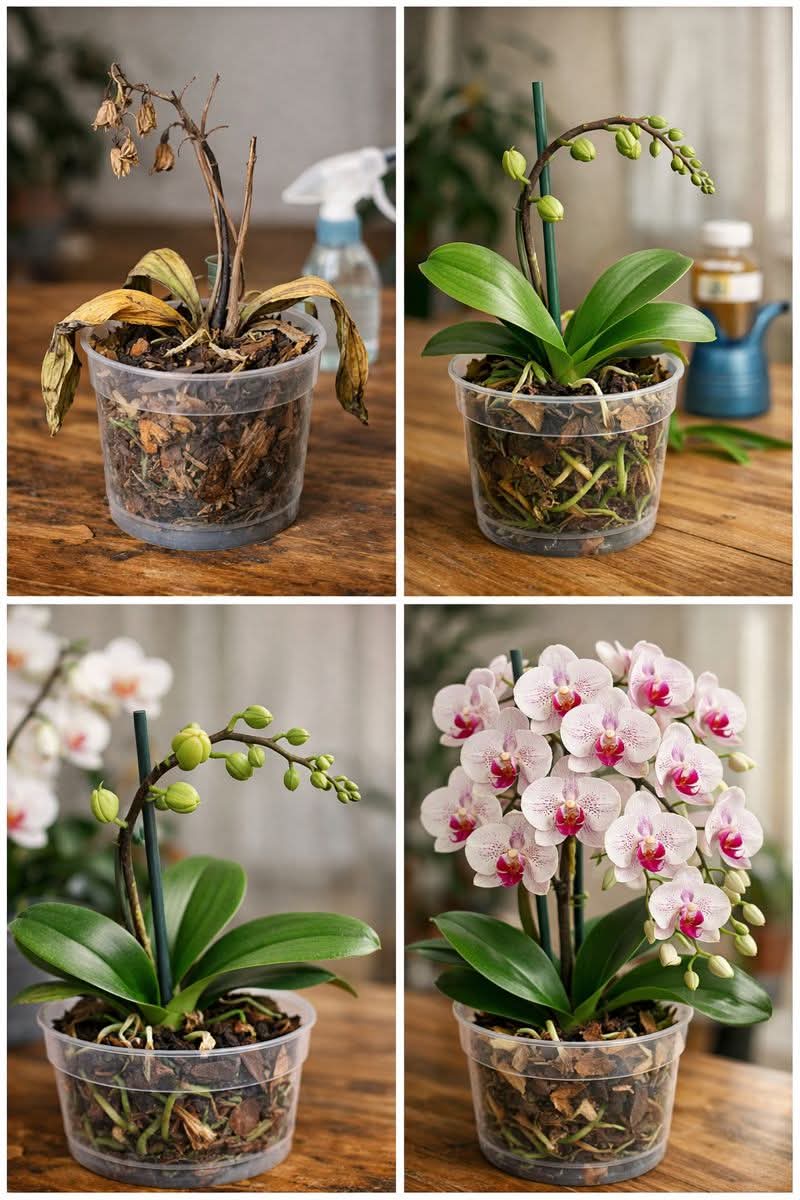
Step 1: Assess the Damage (Diagnosis)
- Leaves wrinkled, leathery, floppy, or yellowing/dried → usually severe dehydration (underwatering or root loss).
- Dried-up flower spike and drooping buds → post-bloom exhaustion or stress.
- Roots (check by gently lifting from pot): Healthy roots are firm, silvery-green when dry, plump and white/green when wet. Dead roots are brown, mushy (rotten from overwatering) or shriveled/dry (underwatering). Many dying orchids have few or no healthy roots left.
- Common causes: Overwatering (root rot), underwatering (most likely here), old compacted bark that doesn’t drain, low humidity, or natural post-bloom decline.
If only 1–2 healthy roots remain, recovery is still possible—Phalaenopsis are resilient and can regrow roots from the base.
Step 2: Emergency Revival – Unpot and Clean
- Gently remove the orchid from its pot.
- Rinse the roots thoroughly under lukewarm running water (room temperature) to remove old bark, debris, or salt buildup. Avoid getting water in the crown (center where leaves meet) to prevent rot.
- Trim dead/damaged roots with clean, sterilized scissors (wipe with alcohol):
- Mushy/brown/black → cut away.
- Completely dry/shriveled → cut if no life left.
- Keep any firm, green/silvery roots—they’re alive!
- If the old spike is completely dry/brown, cut it back to a node (or all the way if no green left), but if it’s still green, you can leave it for possible rebloom.
Step 3: Hydrate and Soak (The Key Revival Trick)
Many rescues succeed with a good soak:
- Submerge the roots (not the leaves/crown) in room-temperature water for 20–60 minutes (or up to a few hours if very dry). Some use lukewarm water (~40–50°C/104–122°F) for a “hot” soak to shock revival, but start mild.
- For extra boost: Add a tiny amount of sugar/honey (1 tsp per liter) or orchid fertilizer at ¼ strength for energy.
- Drain completely—no standing water.
Repeat soaking every 2–3 days initially if roots are minimal, until plumper leaves appear.
Step 4: Repot in Fresh Medium
- Use orchid-specific bark mix (coarse fir bark, perlite, charcoal) or sphagnum moss (great for root regrowth in dehydrated plants).
- Choose a clear plastic pot (helps monitor roots) with drainage holes—same size or slightly larger.
- Position so the base sits just above the medium (no burying the crown).
- Place sphagnum moss around the top if needed to encourage new roots.
- Do not pack tightly—roots need air.
Step 5: Aftercare for Recovery
- Watering: Water thoroughly when the top inch of medium is dry (usually every 7–10 days). Use the “ice cube” method sparingly (3 cubes/week) or soak method. Always let drain fully—root rot from soggy conditions kills more orchids than anything.
- Humidity: 50–70% ideal. Use a humidity tray, pebble tray with water, or mist leaves (avoid crown). A clear plastic bag or greenhouse over the plant for 1–2 weeks creates a mini humidity chamber for fast recovery.
- Light: Bright, indirect light (east/west window). No direct sun—leaves burn easily. Too little light prevents blooming.
- Temperature: 18–25°C (65–77°F) day, slightly cooler at night.
- Fertilizer: Weak orchid fertilizer (e.g., 20-20-20 at ¼ strength) every other watering once recovering. Skip if very weak.
- Placement: Warm, humid spot away from drafts/AC vents.
What to Expect (Timeline)
- 1–3 weeks: Leaves plump up, wrinkles reduce (though old wrinkled leaves may stay somewhat soft and eventually yellow/fall—normal).
- 1–3 months: New roots emerge (silvery tips), possibly new leaves.
- 3–12 months: New spike and blooms, like your right-side photos.
- Patience is key—don’t overwater during regrowth.
Common Mistakes to Avoid
- Watering on a schedule instead of checking dryness → leads to rot or more dehydration.
- Leaving in old, compacted medium → suffocates roots.
- Too much direct sun or fertilizer → burns leaves/roots.
- Ignoring root health → problem continues.
Your orchid’s happy ending shows it’s very salvageable! If your current plant starts declining again, follow these steps early. Many people revive “dead” orchids this way year after year.