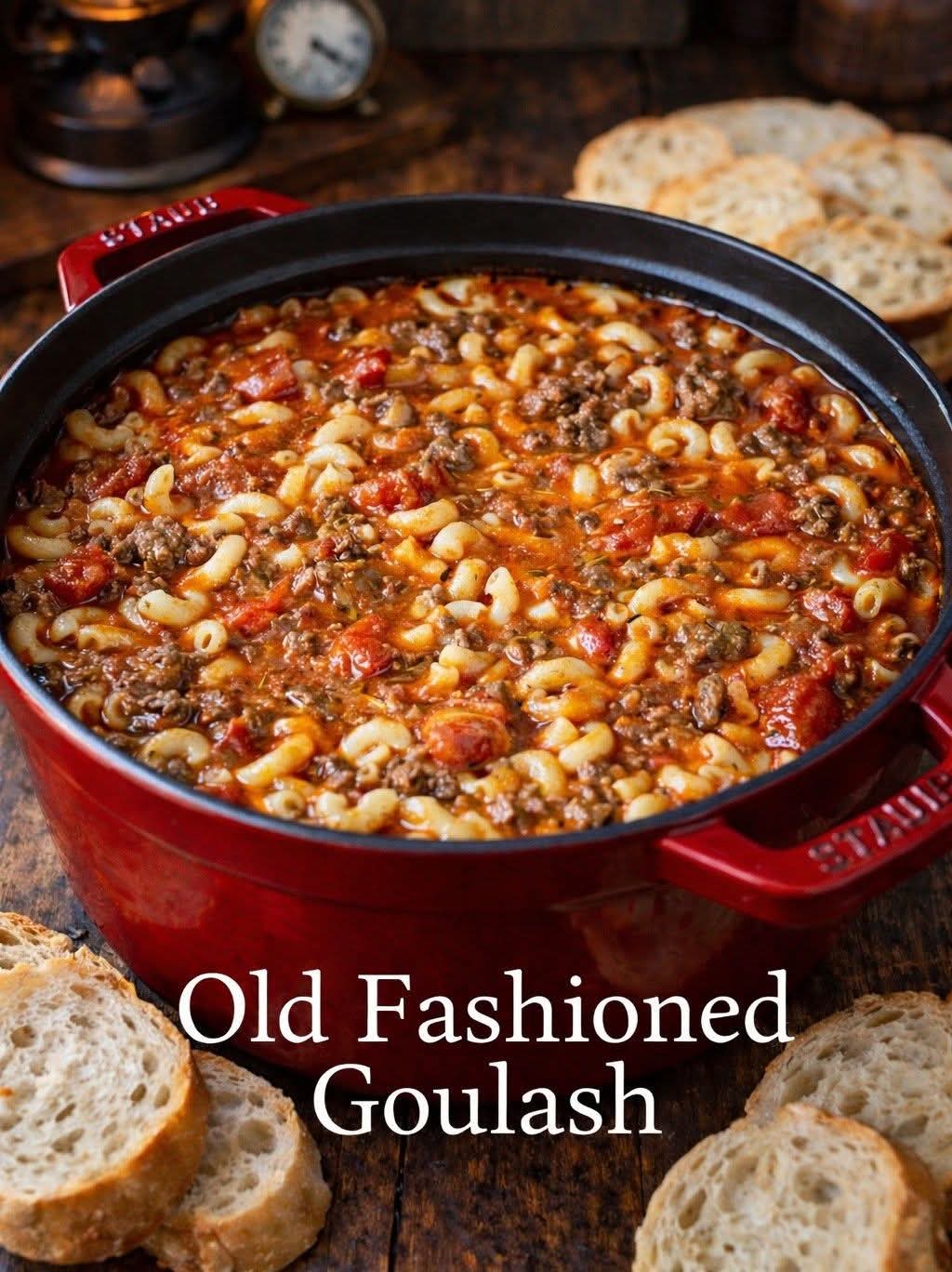
Old Fashioned Goulash is one of my most loved and popular recipes on my blog, for almost 10 years now! It’s requested OFTEN!
If you’ve been following along for any length of time, you know this dish holds a special place in my heart—and apparently in yours too. Week after week, month after month, year after year, emails, comments, and messages pour in asking for this exact recipe, variations on it, or just reassurance that yes, this is the one your grandma made, the one from school lunch trays, the one that feels like home in a bowl. There’s something magical about old fashioned goulash (also known as American goulash) that transcends trends. In a world of fancy plated meals and viral TikTok recipes, this humble one-pot wonder remains a steadfast favorite. It’s affordable, forgiving, scalable, nostalgic, and downright delicious.
Today, I’m giving you the full, deep-dive version—the one I’ve refined over countless pots, family dinners, potlucks, and reader feedback. This isn’t a quick bullet-point post; it’s the comprehensive guide for anyone who wants to master this classic, understand why it works so well, explore its history, customize it endlessly, troubleshoot common issues, and even adapt it for different diets or cooking methods. Grab a cup of coffee (or tea), settle in, and let’s talk goulash.
A Brief History: From Hungarian Roots to American Comfort Classic
To truly appreciate old fashioned goulash, we need to start at the beginning. The word “goulash” comes from the Hungarian “gulyás,” which originally referred to herdsmen (cowboys of the Hungarian plains) who cooked hearty meat stews over open fires in the 9th–10th centuries. Traditional Hungarian goulash is a thick soup or stew featuring chunks of beef (or sometimes pork), lots of onions, carrots, potatoes, and—most importantly—a generous amount of sweet paprika that gives it that signature reddish hue and warm, earthy flavor. It’s slow-simmered for tenderness, often finished with sour cream or served with dumplings like csipetke.
When Hungarian immigrants arrived in the United States in large numbers between the late 1800s and early 1900s, they brought their culinary traditions. But like many immigrant dishes, goulash adapted to new ingredients, budgets, and tastes. By the early 1900s, printed recipes for an “Americanized” version began appearing. Instead of expensive stew meat chunks, home cooks used affordable ground beef. Tomatoes—canned and plentiful—replaced or supplemented paprika as the base. And to stretch the meal further for growing families, elbow macaroni was stirred right in, cooking directly in the sauce so every bite absorbed flavor.
Over the decades, this evolved into the dish we know today: a saucy, tomatoey pasta-and-beef skillet often called American goulash, slumgullion, American chop suey (in New England), or simply “goulash” in the Midwest and South. It became a staple in school cafeterias during the mid-20th century, a go-to for church suppers, and the ultimate weeknight dinner for busy parents. Unlike its Hungarian ancestor, American goulash prioritizes convenience, heartiness, and that perfect balance of savory tomato sauce clinging to tender pasta. Paprika might appear (or not), but the soul is in the simplicity.
Why This Version Has Stood the Test of Time
What makes this particular old fashioned goulash recipe so beloved? A few key elements:
- One-pot magic — No separate boiling of pasta. Everything simmers together, so the macaroni soaks up the seasoned tomato-beef broth, becoming incredibly flavorful.
- Budget hero — Ground beef stretches with pasta, canned tomatoes, and basic pantry spices. It feeds a crowd for pennies per serving.
- Flavor layering — Browning the meat builds depth, aromatics (onion + garlic) add sweetness and punch, tomatoes provide acidity and richness, and seasonings (Italian herbs, soy or Worcestershire, bay leaves) create complexity without fuss.
- Customizable canvas — Mild for kids? Add cheese. Want heat? Chili flakes. Sneak in veggies? Easy. It’s endlessly adaptable.
- Make-ahead perfection — Tastes even better the next day as flavors meld. Freezes beautifully too.
This recipe serves 8–10 generously (or fewer with epic leftovers). It’s scalable—double it for a big gathering or halve for a smaller household.
Ingredients (Detailed Breakdown)
For the base:
- 2 lbs (about 900g) ground beef — Use 80/20 or 85/15 for best flavor and moisture. Leaner works but may need a touch more oil. Ground turkey or chicken for lighter; Italian sausage for bolder taste.
- 1 very large yellow onion (or 2 medium), diced — Yellow onions caramelize beautifully for sweetness.
- 4–6 cloves garlic, minced — Fresh is best, but jarred works in a pinch (about 2–3 teaspoons).
- 3 tablespoons olive oil or neutral oil (if your beef is very lean)
The sauce foundation:
- 2 (15 oz / 425g) cans tomato sauce — Plain, no herbs added.
- 2 (14.5 oz / 411g) cans diced tomatoes, with juice — Petite diced for smoother texture; fire-roasted for smokiness.
- 3–4 cups water or low-sodium beef broth — Start with 3 cups; add more if it thickens too much. Broth elevates flavor.
- 3 tablespoons soy sauce (or Worcestershire sauce) — Adds deep umami and saltiness without tasting “Asian.”
- 3 tablespoons Italian seasoning (or a mix of dried basil, oregano, thyme)
- 1–2 tablespoons seasoned salt (like Lawry’s) or kosher salt + ½ tsp paprika
- 1 teaspoon freshly ground black pepper
- 1–2 teaspoons chili powder or sweet paprika (optional but recommended for subtle warmth)
- 2–3 bay leaves — Remove before serving.
The pasta:
- 3–4 cups (12–16 oz / 340–450g) uncooked elbow macaroni — Classic shape holds sauce well. Adjust quantity: more pasta = thicker, less saucy dish.
Optional enhancements:
- 1–2 cups shredded sharp cheddar, mozzarella, or Colby Jack — Stirred in at end for creamy melt or sprinkled on top.
- 1 green bell pepper, diced — Traditional in many Midwestern versions.
- 1–2 teaspoons brown sugar — To balance tomato acidity if needed.
- Fresh parsley or green onions for garnish.
Step-by-Step Instructions (With Tips at Each Stage)
- Prep your workspace (5 minutes)
Dice the onion, mince garlic, open all cans, measure spices. Having everything ready prevents overcooking the beef. - Brown the beef thoroughly (10–12 minutes)
In a large heavy pot or Dutch oven (6–8 quart minimum), heat oil over medium-high if needed. Add ground beef, breaking it up with a wooden spoon. Cook until deeply browned and no pink remains—don’t rush this! Browning creates fond (those tasty bits) that flavor the whole dish. Drain excess fat if there’s more than a couple tablespoons (leave some for richness). - Build aromatic base (5–7 minutes)
Add diced onion (and bell pepper if using). Cook until softened and translucent, stirring often. Add garlic last 1–2 minutes—stir constantly to avoid burning. This layer is crucial for depth. - Deglaze and season (2 minutes)
Pour in soy sauce/Worcestershire; scrape up browned bits. Stir in all spices, bay leaves, tomato sauce, diced tomatoes (with juice), and 3 cups water/broth. Bring to a gentle boil. Taste now—adjust salt, pepper, or add sugar if too acidic. - Simmer and add pasta (20–25 minutes)
Stir in uncooked macaroni. Reduce to medium-low, cover partially (lid ajar to let steam escape and prevent boil-over). Simmer, stirring every 5 minutes. Pasta absorbs liquid as it cooks. If it gets too thick, add remaining water/broth ½ cup at a time. Cook until pasta is al dente to tender (taste-test!). Total simmer time varies by pasta brand—usually 15–22 minutes. - Finish and rest (5–10 minutes)
Remove bay leaves. Stir in cheese if desired—it melts into creamy richness. Let sit off heat 5–10 minutes; sauce thickens as it cools slightly. Garnish if you like.
Serve hot with crusty bread for sopping, a crisp green salad, or steamed green beans.
Variations and Customizations
- Vegetarian — Swap beef for lentils, plant-based crumbles, or extra beans (kidney/white). Use vegetable broth.
- Spicy — Add red pepper flakes, hot sauce, or diced jalapeños.
- Cheesy baked — Transfer to casserole dish, top with more cheese, bake at 375°F (190°C) until bubbly.
- Slow cooker — Brown beef/onions first, then combine everything except pasta on low 4–6 hours. Add pasta last 30–45 minutes.
- Instant Pot — Sauté mode for beef/onions/garlic, then pressure cook 4 minutes with pasta, quick release.
- Gluten-free — Use GF pasta; add earlier as it can break down faster.
Troubleshooting Common Issues
- Too soupy? Simmer uncovered longer or add more pasta next time.
- Too thick? Splash in broth/water when reheating.
- Bland? More salt, acid (vinegar/lemon), or herbs usually fixes it.
- Pasta mushy? Add later or cook less.
Storage, Freezing, and Reheating
Fridge: 4–5 days in airtight container.
Freezer: Up to 3 months. Portion for easy thawing.
Reheat: Stovetop with splash of water/broth; microwave covered.
This old fashioned goulash isn’t fancy—it’s honest, warming, and reliable. It’s the dish that says “I’m home” without saying a word. Over the years, you’ve told me how it brought back memories, fed growing kids, saved tight budgets, and became new family traditions. Thank you for that.
Make it soon. Share your photos, tweaks, or stories in the comments—I read every one. Here’s to many more pots of goulash in the years ahead. 🍲