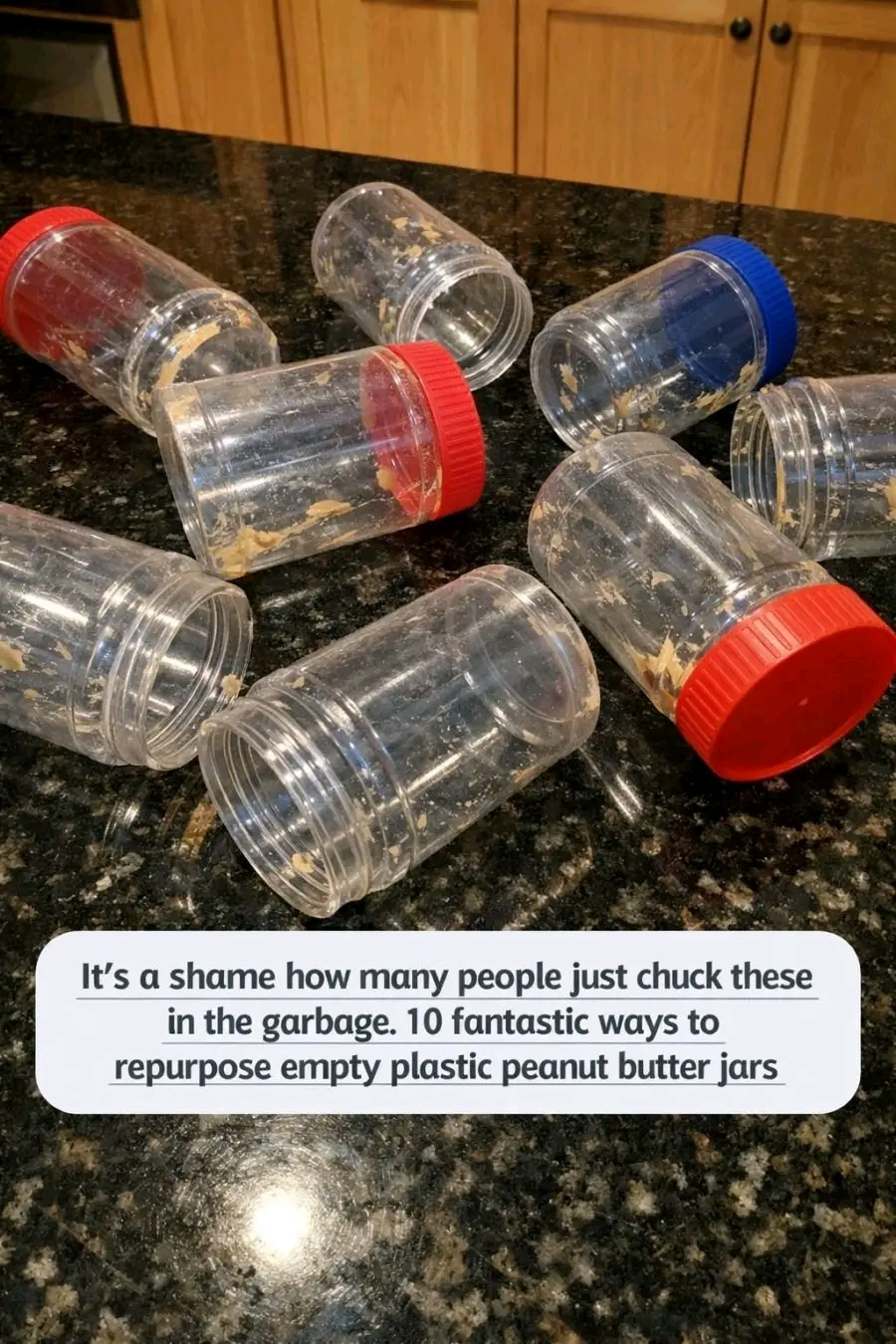
It’s a shame how many people just chuck these in the garbage. 10 fantastic ways to repurpose empty plastic peanut butter jars
In a world increasingly aware of environmental impact, every small habit counts toward reducing waste. Those clear plastic peanut butter jars—sturdy, airtight, and surprisingly versatile—often end up in landfills after a single use. But with a little creativity and minimal effort, they can transform into useful household items, kitchen tools, craft projects, and even educational toys. Repurposing them not only diverts plastic from the waste stream but also saves money on buying new containers, organizers, or decor.
Peanut butter jars typically come in various sizes, from small single-serve to large family-sized ones holding up to 40 ounces or more. Their transparent bodies make contents visible at a glance, while screw-on lids (often red or blue) provide a reliable seal. Plastic versions are lightweight and shatter-resistant compared to glass, making them ideal for kids’ activities, outdoor use, or storage in active households. Before diving into repurposing ideas, always clean them thoroughly: soak in warm soapy water, use a bottle brush to remove residue, and let them air dry completely to prevent odors or mold.
This comprehensive guide explores 10 practical, creative, and eco-friendly ways to give these jars a second (or third) life. Each idea includes step-by-step instructions, materials needed, and tips for best results. Whether you’re a busy parent, a DIY enthusiast, a gardener, or someone committed to zero-waste living, you’ll find inspiration here. Let’s turn “trash” into treasure.
1. Kitchen Storage for Dry Goods and Pantry Organization
One of the simplest yet most impactful ways to repurpose peanut butter jars is as airtight storage containers for dry pantry staples. Their clear design lets you see exactly what’s inside without opening them, reducing food waste from forgotten items.
How to do it:
- Wash and dry the jar completely.
- Remove any labels by soaking in warm water with dish soap or using a mixture of baking soda and oil for stubborn adhesive.
- Fill with items like rice, quinoa, oats, lentils, nuts, seeds, spices, baking powder, or trail mix.
- Label the lid or side with a permanent marker, chalk label, or printable sticker for easy identification.
Why it works: The screw-top lid creates a good seal against moisture and pests. Larger jars hold bulk items efficiently, freeing up shelf space in cabinets. For smaller quantities, use them for herbs, tea bags, or coffee beans.
Pro tip: Stack them or arrange on a lazy Susan for a neat, uniform look. In households with kids or frequent cooking, this system encourages better organization and portion control. Over time, collecting a set of uniform jars creates a cohesive pantry aesthetic without spending on expensive organizers.
This method alone can keep dozens of jars out of the recycling bin each year, contributing to a more sustainable kitchen.
2. Meal Prep and Leftover Storage Solutions
Peanut butter jars excel as portable, reusable containers for meal prepping, snacks, or leftovers. Their durability makes them perfect for lunches, fridge storage, or even freezing small portions.
How to do it:
- Ensure the jar is spotless and odor-free.
- Portion out salads, chopped veggies, fruit, yogurt parfaits, or overnight oats directly into the jar.
- For almost-empty jars, add ingredients straight in to create no-mess recipes (more on that below).
- Use for smoothies: blend ingredients inside, screw on the lid, and take it on the go.
Variations: Layer ingredients for mason-jar-style salads—dressing at the bottom, then proteins, veggies, and greens on top. The wide mouth allows easy eating with a fork.
Benefits: Unlike flimsy plastic bags or single-use containers, these jars are sturdy and leak-resistant. They’re dishwasher-safe (top rack usually) for repeated use. In offices or schools, they reduce reliance on disposable packaging, cutting down on plastic pollution.
For families, assign colored lids (if you have different brands) to personalize lunches. This repurposing promotes mindful eating and reduces kitchen clutter from mismatched containers.
3. Creative No-Mess Recipes Using Almost-Empty Jars
Don’t wait until the jar is completely clean—use the residual peanut butter for quick, flavorful recipes right inside the container. This “scrappy cooking” approach minimizes waste and cleanup.
Popular ideas:
- Peanut Sauce for Noodles or Dips: Add soy sauce, rice vinegar, lime juice, maple syrup, ginger, garlic, and a splash of water or hot sauce. Shake vigorously until emulsified. Use on stir-fries, satay, or as a veggie dip.
- Overnight Oats: Pour in milk (dairy or plant-based), oats, chia seeds, and toppings like banana or chocolate chips. Shake and refrigerate overnight. The leftover butter adds creaminess and protein.
- Shaken Espresso or Peanut Butter Coffee: Add espresso, oat milk, vanilla, and honey. Shake with ice for a nutty twist on iced coffee.
- Peanut Butter Hot Chocolate: Mix in hot milk and chocolate syrup or cocoa powder. Stir or shake for a comforting drink.
- Salad Dressings or Marinades: Combine with oil, vinegar, herbs, and spices for a quick vinaigrette with subtle peanut notes.
Tips: Start with warm liquids to loosen stubborn residue. Use an immersion blender for smoother results if needed. These one-jar wonders save time on busy weeknights and teach kids about resourcefulness.
Experiment with flavors—add coconut milk for Thai-inspired sauces or cocoa for dessert versions. This method turns a near-empty jar from a chore into a culinary shortcut.
4. DIY Craft Supplies and Kids’ Activity Organizers
Peanut butter jars make excellent organizers for small craft items, keeping art supplies tidy and accessible.
Ideas include:
- Store buttons, beads, pom-poms, googly eyes, ribbons, or pipe cleaners.
- Create a “sensory jar” by filling with water, glitter, and small objects for calming play.
- Use as pencil or crayon holders: cut a viewing window with a craft knife (adult supervision required) and decorate the exterior.
- Make a movie night jar: write movie titles on slips of paper, fold them, and draw one weekly for family fun.
Decoration tips: Spray-paint lids in bright colors, wrap with fabric and Mod Podge for a decoupaged look, or add stickers and washi tape. For transparency, leave the body clear or etch designs.
Why great for kids: The jars are lightweight and safe (no sharp edges when unmodified). They encourage organization skills while fostering creativity. Turn several into a “craft station” sorted by color or type.
In classrooms or homeschool settings, these provide cheap, abundant storage that can be labeled with pictures for younger children.
5. Gardening and Plant-Related Projects
From seed starting to small planters, peanut butter jars support green thumbs without buying specialized pots.
How to repurpose:
- Mini Terrariums or Succulent Planters: Cut a large opening in the side (using a hot knife or rotary tool—adult only), add soil, small plants, and moss. Spray-paint the lid or base for aesthetics. Poke drainage holes if needed.
- Seed Starters: Fill with soil, plant seeds, and use the clear body to monitor growth. The lid can act as a mini greenhouse.
- Watering Cans or Sprayers (Small Scale): For tiny plants, use as scoops or mix fertilizer solutions inside.
- Hummingbird Feeder Hack: Cut the bottom third, invert, poke holes in the lid section, fill with sugar water, and hang outdoors (modify carefully for safety).
Considerations: Plastic jars aren’t ideal for long-term large plants due to limited breathability, but they’re perfect for propagation or temporary use. Place in indirect light to avoid overheating.
This approach brings nature indoors affordably and teaches kids about plant life cycles.
6. Bathroom and Personal Care Organizers
The moisture-resistant plastic and secure lids make these jars suitable for bathroom storage.
Uses:
- Hold cotton balls, swabs, Q-tips, or hair ties.
- Store small toiletries like travel-sized shampoo, toothpaste tubes, or makeup brushes.
- Create a “first aid mini kit” with bandages, ointment, and tweezers.
- Use as a toothbrush holder or rinse cup for kids.
Enhancements: Decoupage with waterproof fabric or paint the exterior with chalkboard paint for labeling. For a spa-like feel, add decorative elements like beads or ribbons on the lid.
In small bathrooms or RVs, stacking or lining them up maximizes vertical space. Their transparency helps track inventory, preventing last-minute runs to the store.
7. Outdoor and Travel Accessories
Durability shines in outdoor or on-the-go scenarios.
Ideas:
- Snack or Treat Containers: Fill with dog treats, birdseed, or trail mix for hikes or picnics.
- Emergency Kits: Pack matches (in a smaller jar inside), first aid items, or survival gear for camping or car gloveboxes.
- Toilet Paper Holder or Dispenser: Decorate a large jar, cut an opening, and insert a roll for bathroom or camper use.
- Portable Drink Shaker: Use for protein shakes or mixed drinks during travel.
Safety note: For food use outdoors, ensure thorough cleaning to avoid attracting wildlife.
These jars’ lightweight nature makes them backpack-friendly, reducing the need for disposable alternatives.
8. Home Decor and Lighting Projects
With a bit of crafting, peanut butter jars become charming decor pieces.
Projects:
- Candle Holders: For safety, use LED tea lights or battery-operated candles inside (avoid real flames with plastic). Decorate the outside with paint, twine, or etched designs.
- Vases for Flowers or Faux Greenery: Fill with water for fresh stems or use dry for artificial arrangements. Paint or wrap for custom colors.
- Lanterns or Night Lights: Insert string lights or glow sticks for ambient lighting.
- Keepsake or Memory Jars: Fill with notes, photos, ticket stubs, or small mementos. Decorate the lid with a decorative knob.
Techniques: Remove labels completely for a clean base. Use hot glue, spray paint, or fabric scraps. For a rustic look, wrap with burlap or lace.
These add personalized touches to shelves, mantels, or entryways without high costs.
9. Educational Tools and Science Experiments
Clear jars are fantastic for hands-on learning.
Examples:
- Simple Science Kits: Layer liquids of different densities (oil, water, honey) or grow crystals inside.
- Insect or Bug Observatories: Punch small air holes in the lid for temporary viewing of safe critters (release afterward).
- Sensory Bottles: Fill with colored water, beads, or oil for visual stimulation, especially for young children or those with sensory needs.
- Time Capsules: Seal small items or letters inside for future discovery.
Educational value: They demonstrate recycling principles, volume measurement, or basic physics. Teachers and parents appreciate the low cost and reusability.
Combine with books or apps on sustainability to tie into broader lessons about the environment.
10. Gift Giving and Holiday Crafting
Peanut butter jars make thoughtful, eco-friendly gift containers.
Inspiration:
- Treat Jars: Fill with homemade cookies, candy, or snack mix. Tie with ribbon and add a tag.
- Bath Salts or Scrubs: Layer colored salts or sugar scrubs for spa gifts.
- Emergency Chocolate or “Open When” Jars: Include motivational notes or small surprises.
- Holiday Ornaments or Decor: Fill with fairy lights, ornaments, or themed items; hang or display.
Finishing touches: Personalize with paint, stamps, or custom labels. For weddings or parties, use as favor containers.
This repurposing adds a personal, sustainable story to gifts, impressing recipients while reducing waste.
Conclusion: Embracing a Repurposing Mindset
Repurposing empty plastic peanut butter jars is more than a collection of clever hacks—it’s a mindset shift toward conscious consumption. By giving these containers new purposes, we reduce landfill contributions, save resources, and spark creativity in daily life. Start small: clean and save a few jars this week, then try one or two ideas that fit your lifestyle.
Over time, you’ll build a collection of uniform, functional items tailored to your needs. Share your successes with friends or on social media to inspire others. Remember, sustainability doesn’t require perfection; every jar kept out of the trash makes a difference.
If you’re just beginning, focus on cleaning techniques (like using oil and baking soda for labels) and safety (adult supervision for cutting or heat tools). Experiment, adapt, and enjoy the satisfaction of turning something ordinary into something useful.
In the end, those humble peanut butter jars remind us that innovation often starts with what’s already in our hands. What will you create first?