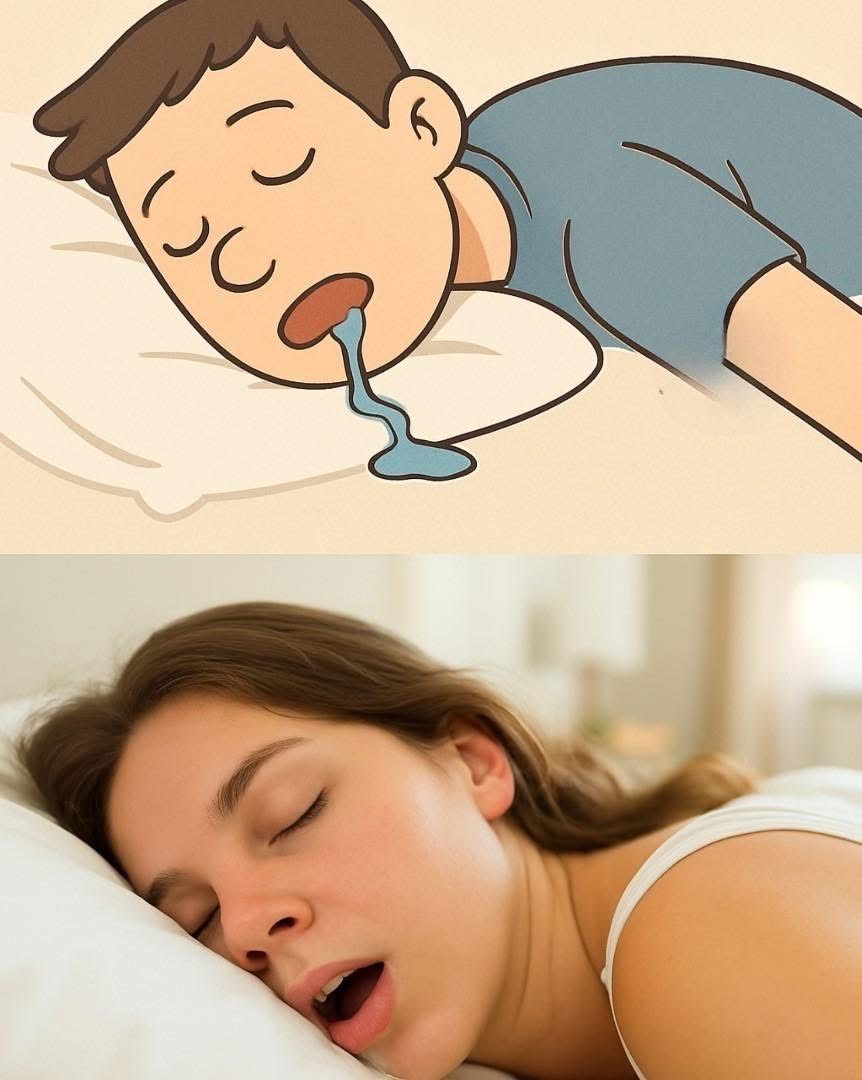
If You Drool While Sleeping Often, It Could Be a Sign of These 6 Health Conditions
Waking up to a damp pillow once in a while? Totally normal. Especially if you sleep on your side or stomach, gravity simply does its thing.
But frequent, heavy, or sudden drooling during sleep — medically known as sialorrhea — can sometimes signal that something deeper is going on. While many cases are harmless, persistent nighttime drooling (especially if it’s new or worsening) may be worth paying attention to.
Let’s break down six health conditions doctors often consider when drooling becomes excessive.
1. Obstructive sleep apnea
Why it happens
Obstructive sleep apnea (OSA) occurs when the airway repeatedly collapses or becomes blocked during sleep. When this happens, people often breathe through their mouths. An open mouth + relaxed facial muscles = saliva escaping more easily.
Other signs to watch for
- Loud, chronic snoring
- Gasping or choking during sleep
- Waking up feeling unrefreshed
- Morning headaches
- Daytime sleepiness or brain fog
What to do
A sleep study can confirm the diagnosis. Treatment often includes CPAP therapy, weight management, or dental devices that keep the airway open.
If drooling is paired with heavy snoring and exhaustion, this is one of the most common underlying causes.
2. Gastroesophageal reflux disease (GERD)
Why it happens
When stomach acid flows back into the esophagus, your body may produce extra saliva as a protective response — a reflex sometimes called “water brash.” Lying flat at night can make reflux worse, increasing saliva production and drooling.
Other symptoms
- Heartburn
- Sour or bitter taste in the mouth
- Chronic throat clearing
- Persistent cough
- Hoarseness
What to do
- Avoid late-night meals
- Elevate the head of your bed
- Limit spicy, fatty, or acidic foods
- See a doctor if symptoms persist
Nighttime reflux is extremely common and often overlooked as a drooling trigger.
3. Neurological Conditions
Certain neurological disorders can interfere with the body’s ability to swallow saliva efficiently.
Examples include:
- Parkinson’s disease
- Amyotrophic lateral sclerosis (ALS)
- Stroke
Why it happens
These conditions may impair:
- Swallowing reflex
- Facial muscle control
- Coordination
The problem isn’t always producing too much saliva — it’s difficulty clearing it.
Other warning signs
- Tremors
- Slurred speech
- Difficulty swallowing
- Muscle weakness
- Facial drooping
What to do
If drooling appears alongside neurological symptoms, seek medical evaluation promptly. Early diagnosis can make a significant difference in management.
4. Sinus Infections or Chronic Nasal Congestion
Why it happens
Blocked nasal passages force you to breathe through your mouth at night. Mouth breathing increases the chance of drooling.
Possible causes
- Sinus infection
- Allergies
- Deviated septum
- Chronic rhinitis
Other symptoms
- Stuffy or runny nose
- Facial pressure
- Postnasal drip
- Headaches
What to do
Treat the underlying nasal issue — antihistamines, saline rinses, or medical evaluation for structural issues may help.
When nasal airflow improves, drooling often decreases.
5. Medication Side Effects
Some medications can increase saliva production or relax facial muscles during sleep.
Common culprits
- Certain antipsychotics
- Sedatives
- Some medications used in neurological conditions
If drooling begins after starting a new medication, this could be the reason.
What to do
Never stop medication on your own. Instead, speak to your healthcare provider about possible dosage adjustments or alternatives.
6. Oral or Dental Issues
Why it happens
Problems inside the mouth can interfere with proper swallowing or mouth closure.
Possible contributors
- Poorly fitting dental appliances
- Gum disease
- Oral infections
- Jaw alignment issues
Other signs
- Mouth pain
- Swelling
- Bad breath
- Difficulty chewing
A dental checkup can rule this out quickly.
When Should You Be Concerned?
Occasional drooling? Normal.
Persistent, heavy drooling — especially if it’s new or paired with other symptoms? That’s when it deserves attention.
Seek medical advice if drooling is accompanied by:
- Difficulty swallowing
- Sudden muscle weakness
- Severe snoring and choking at night
- Speech changes
- Unexplained fatigue
The Bottom Line
Nighttime drooling is often harmless — especially if you’re a deep sleeper or prefer sleeping on your side.
But when it becomes frequent, excessive, or connected to other symptoms, it can sometimes point to:
- Breathing problems
- Reflux
- Neurological disorders
- Nasal obstruction
- Medication effects
- Oral health issues
If something feels different or concerning, it’s always better to get it checked. Your body often sends subtle signals — drooling might just be one of them.