There is a quiet poetry in old homes—the sigh of floorboards, the weight of cast-iron details forged by hand, the gentle warmth rising through a decorative floor grate. For many, that grate is more than metal. It is memory made tangible: the spot where cold toes found comfort on winter mornings, where the scent of simmering soup drifted upward, where generations gathered without ever speaking a word of its significance.
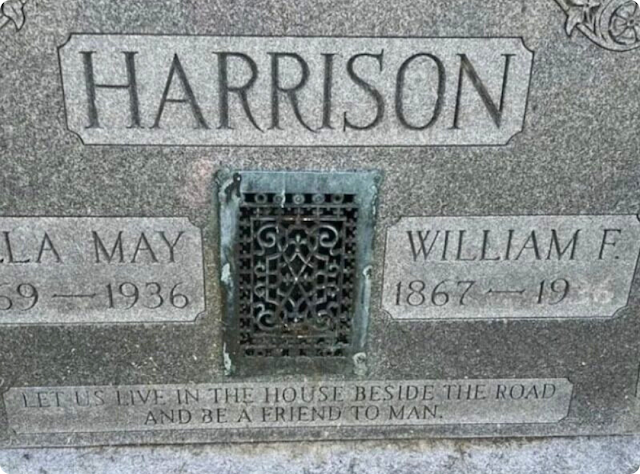
So when a cast-iron grate appears not in a hallway, but etched into a gravestone, it does not feel misplaced. It feels like a homecoming.
This particular marker bears a line from Sam Walter Foss’s beloved poem, “The House by the Side of the Road”—a tribute to kindness offered freely to all who pass by. And there, beneath those words, rests a delicate iron grate. Not ornamental whimsy. Not accidental design. A deliberate echo of the very hearth the departed called home. A silent promise: My door remains open. My warmth endures.
In the late 19th and early 20th centuries, these grates were quiet architects of comfort. Before central heating became commonplace, they channeled warmth from basement furnaces through living spaces—functional, yes, but never merely utilitarian. Artisans scrolled them with vines, stars, or geometric grace. They were placed where feet would pause, where light would catch their patterns. They embodied a belief once woven into daily life: Even the humblest object deserves beauty.
To place this symbol on a grave is to speak without words. It honors a life defined not by grand gestures, but by steady presence—a person whose home was a sanctuary, whose table welcomed neighbors, whose kindness flowed as naturally as heat through iron. The grate becomes metaphor: just as it carried warmth room to room, so did their spirit nurture all who entered their circle.
Standing before such a stone, time softens. The cool iron beneath your fingertips carries the weight of legacy. It whispers of kitchens filled with laughter, of doors left unlocked for friends, of a love that required no announcement—only action. This is not mourning. It is remembrance with intention. A declaration that hospitality is not confined to life; it becomes legacy.
In a world of fleeting trends, some truths remain unshaken:
Home is where we are known.
Warmth is a language without words.
And love, once given, continues to radiate—long after the fire has dimmed.
So the next time you stand upon an old cast-iron grate in a creaking hallway, pause.
Feel the history in its curves.
Honor the hands that warmed themselves there.
And carry forward what it represents:
Open your door. Share your warmth. Make space for others.
For in the end, the most enduring monuments are not carved in stone alone—but in the quiet, lasting warmth we leave behind.