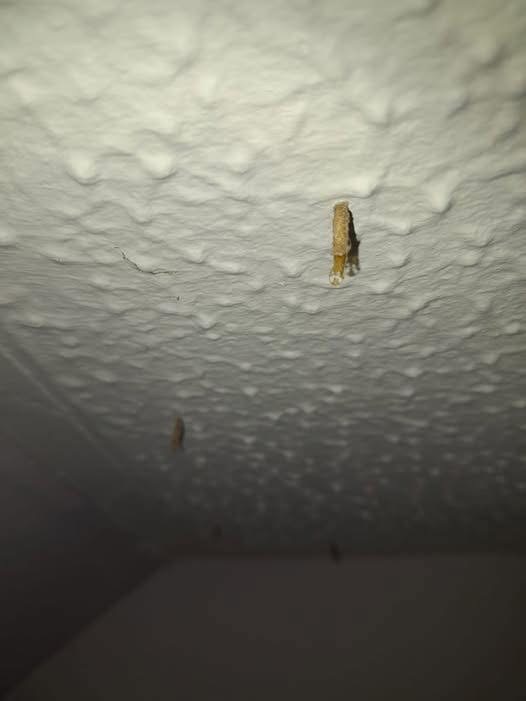
The term “ceiling creepers” isn’t a scientific one, but it’s commonly used by homeowners to describe insects or small pests that crawl across ceilings, often at night. These unwelcome guests can be unsettling, but most are harmless (if annoying). The key is identifying what they are so you can remove them safely and prevent their return.
Step 1: Identify the “Creeper”
Here are the most common ceiling-dwelling pests and how to tell them apart:
Silverfish
Appearance: Silvery-gray, teardrop-shaped, ½–1 inch long, three tail-like bristles
Behavior: Fast, erratic movement; avoid light
Why they’re on your ceiling: Drawn to humidity (bathrooms, attics); eat starches (glue, paper, fabric)
Booklice (Psocids)
Appearance: Tiny (1–2 mm), pale, soft-bodied
Behavior: Slow-moving; cluster in damp areas
Why they’re on your ceiling: Feed on mold and indicate high humidity or water leaks
Spiders
Appearance: Eight legs, varied colors and sizes
Behavior: Hang in webs or roam freely
Why they’re on your ceiling: Hunting other insects; not harmful and often beneficial
Centipedes
Appearance: Long, segmented body with many legs, brown or gray
Behavior: Fast, nocturnal
Why they’re on your ceiling: Hunting insects; need moisture to survive
Clothes moths
Appearance: Small beige or tan wings, about ½ inch
Behavior: Weak flyers, rest on walls and ceilings
Why they’re on your ceiling: Attracted to natural fibers such as wool and silk
Step 2: General Control Measures
Reduce humidity: Use dehumidifiers and keep indoor relative humidity below 50 percent.
Fix leaks: Repair roof, plumbing, or window seal leaks.
Declutter: Remove cardboard boxes, old books, or fabric piles near ceilings.
Vacuum thoroughly: Especially corners, light fixtures, and baseboards.
Use sticky traps: To monitor and catch remaining insects.
For spiders or centipedes:
Leave them alone if harmless, as they eat other pests.
If unwanted, gently capture and release them outside.
Seal cracks in walls, windows, and attic vents to prevent entry.
Never use foggers or bug bombs. They are ineffective for ceiling pests and can worsen indoor air quality.
Step 3: Prevention Is Key
Seal entry points: Caulk gaps around pipes, vents, and eaves.
Install insect screens: On attic vents and soffits.
Store items properly: Use plastic bins instead of cardboard in attics and basements.
Clean regularly: Dust and vacuum ceilings using an extendable duster.
When to Call a Professional
Contact a pest control expert if you notice:
Large numbers of pests indicating an infestation
Signs of damage such as chewed wires or holes in fabrics
Pests appearing in multiple rooms despite cleaning
Stinging insects such as wasps or hornets nesting in eaves
Bottom Line
Most “ceiling creepers” are nuisance pests rather than dangerous ones. By reducing moisture, sealing entry points, and keeping your home clean, you can prevent them effectively. A clean, dry home is the best defense, not pesticides. Taking simple, safe steps can restore comfort and peace of mind.