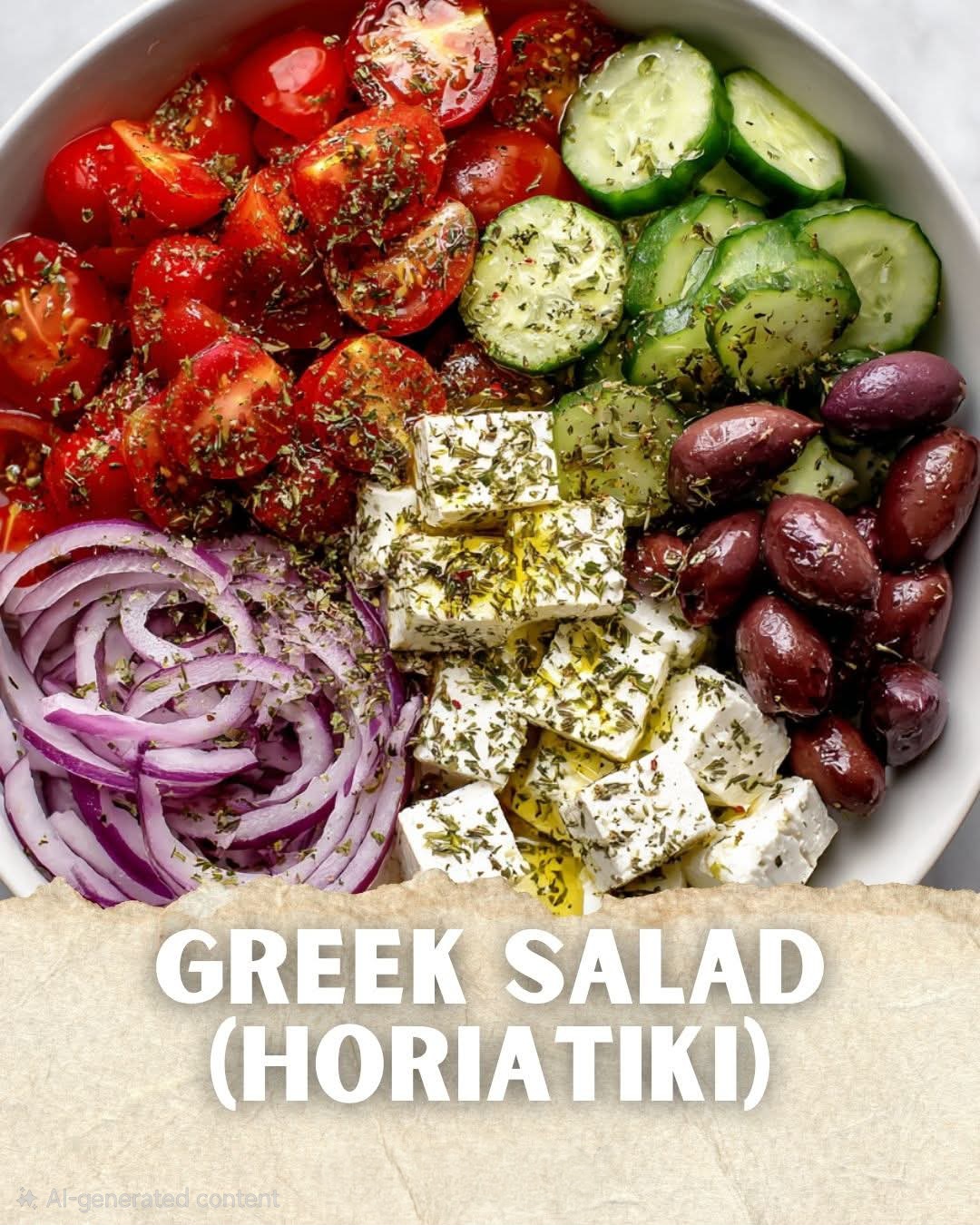
Greek Salad (Horiatiki or Horiatiki Salata) is the epitome of Mediterranean simplicity, freshness, and flavor. Known in Greece as Horiatiki—which translates to “village salad” or “peasant salad”—this iconic dish celebrates the bounty of summer produce with no cooking required. It’s a celebration of ripe, sun-kissed tomatoes, crisp cucumbers, tangy red onions, briny Kalamata olives, and creamy blocks of authentic Greek feta cheese, all brought together with a generous drizzle of extra virgin olive oil and a sprinkle of dried oregano. No lettuce, no elaborate dressing, just pure, vibrant ingredients that shine on their own.
Unlike the Americanized versions often served in restaurants—loaded with lettuce, bell peppers in every color, and crumbled feta—this traditional Horiatiki keeps things rustic and authentic. The salad originated in Greek villages, where farmers and villagers would gather whatever was fresh from the garden: juicy tomatoes at their peak ripeness, crunchy cucumbers straight from the vine, onions pulled that morning, and olives cured from local groves. A slab of feta from nearby shepherds added richness, and a glug of home-pressed olive oil tied it all together. The result is a dish that’s refreshing, satisfying, and incredibly healthy—packed with vitamins, antioxidants, healthy fats, and minimal processing.
What makes Horiatiki so beloved worldwide is its versatility and forgiving nature. It’s perfect as a light lunch, a side to grilled meats or fish, part of a meze spread, or even a standalone vegetarian main when served with crusty bread to soak up the glorious tomato-olive oil juices at the bottom of the bowl. In Greece, it’s eaten year-round but peaks in summer when tomatoes are at their sweetest and most flavorful. The key to an outstanding Horiatiki is quality: use the ripest tomatoes you can find, real Greek feta (preferably sheep’s or sheep/goat milk), robust extra virgin olive oil, and pungent dried Greek oregano.
This comprehensive recipe serves 4-6 as a side or 2-3 as a main dish. Preparation time is about 10-15 minutes—no cooking involved—making it ideal for hot days when you want something nourishing without turning on the stove. The detailed instructions, tips, variations, history, and serving ideas below will help you create an authentic version that transports you to a sunny Greek taverna.
Ingredients
- 4-5 large ripe tomatoes (about 2 pounds; heirloom, vine-ripened, or garden-fresh preferred—cherry or grape tomatoes halved work too for a sweeter bite)
- 1 large cucumber (English/Persian preferred for thin skin and fewer seeds; about 12-14 ounces)
- 1 medium red onion (or sweet white onion for milder flavor)
- 1 green bell pepper (traditional; optional red or yellow for sweetness, but green is classic for slight bitterness)
- 1 cup Kalamata olives (pitted or whole with pits for authenticity; about 20-25 olives)
- 8-10 ounces block of authentic Greek feta cheese (in brine; sheep’s milk or sheep/goat blend for superior tang and creaminess—avoid pre-crumbled if possible)
- ⅓ to ½ cup extra virgin olive oil (Greek if available; fruity and peppery varieties shine here—be generous!)
- 1-2 tablespoons red wine vinegar or fresh lemon juice (for brightness; many purists use only oil, but a splash adds tang)
- 2-3 teaspoons dried Greek oregano (rub between palms to release oils; fresh oregano if available, but dried is traditional)
- Sea salt or kosher salt, to taste (start light—feta and olives are salty)
- Freshly ground black pepper, to taste
- Optional traditional add-ins: 1-2 teaspoons capers or caper berries for briny pop, a pinch of dried thyme or mint, or purslane if you can find it (a classic village green)
Step-by-Step Instructions
- Prepare the tomatoes — Wash and core the tomatoes if needed. Cut into large wedges or chunky bite-sized pieces—irregular chunks are traditional for rustic appeal. Place them in a large, wide salad bowl. Sprinkle lightly with a pinch of salt to draw out juices—this creates the natural “dressing” base. Let sit for 5-10 minutes while prepping other ingredients.
- Slice the cucumber — If using English or Persian cucumber, no peeling needed (the skin adds color and nutrients). Quarter lengthwise, then slice into thick half-moons or chunks. Add to the bowl with tomatoes. For regular cucumbers, partially peel to remove bitterness and scoop out seeds if watery.
- Prep the onion — Peel and thinly slice the red onion into half-moons or rings. For milder flavor (especially if serving to onion-sensitive eaters), soak slices in ice water with a splash of vinegar for 10 minutes, then drain and pat dry. Scatter over the tomatoes and cucumbers.
- Add the bell pepper — Remove seeds and core from the green bell pepper. Slice into thin rings or strips. Add to the bowl—this provides crunch and a subtle bitter note that balances the sweetness of tomatoes.
- Incorporate the olives — Add the Kalamata olives whole or halved. If whole with pits, warn diners or pit them for ease. Their brininess is essential for authentic flavor.
- Top with feta — Place the block of feta on top—either as one large slab in the center or cut into thick slices/cubes. Traditional Horiatiki features big pieces of feta rather than crumbles, allowing it to soften slightly from the oil and tomato juices.
- Season and dress — Sprinkle generously with dried oregano (rub it first to awaken the aroma). Drizzle the extra virgin olive oil over everything—aim for a good pool at the bottom. Add red wine vinegar or lemon juice if using, then a grind of black pepper. No need to whisk a dressing; the tomato juices, oil, and feta create a natural emulsion as you serve.
- Toss gently and serve — Give a very light toss just before serving to combine without breaking down the feta too much. Serve immediately at room temperature—never chilled, as cold dulls the flavors. Provide crusty bread for dipping into the juices.
Serving Suggestions and Pairings
Horiatiki pairs beautifully with grilled souvlaki, lamb chops, seafood, or simply fresh pita or sourdough bread. It’s a staple in Greek tavernas alongside tzatziki, dolmades, and grilled octopus. For a full meal, serve with spanakopita or moussaka. Wine pairings include crisp Assyrtiko, rosé, or light red like Agiorgitiko. For non-alcoholic, try chilled water with lemon or herbal iced tea.
Tips for the Best Horiatiki
- Use peak-season produce — Tomatoes should be deeply colored and fragrant; underripe ones make a bland salad.
- Quality feta matters — Authentic Greek feta in brine is creamier and tangier than cow’s milk versions.
- Olive oil is key — Use your best extra virgin; it’s the “sauce.”
- No lettuce — Traditional versions skip greens to highlight summer veggies.
- Salt carefully — Taste before adding more—olives and feta provide plenty.
- Make ahead — Prep veggies up to an hour ahead; add feta and oil just before serving.
- Portion control — It’s filling yet light—perfect for hot weather.
Variations
While purists stick to basics, regional tweaks exist:
- Add capers or caper leaves for extra brine.
- Include green peppers always, but some add red for sweetness.
- Use lemon juice instead of vinegar for brighter notes.
- Modern twists: Add fresh mint, purslane, or artichoke hearts.
- For heartier: Serve over quinoa or with chickpeas.
- Low-fat: Reduce oil, but it sacrifices richness.
History and Cultural Significance
Horiatiki emerged from rural Greek villages as a simple summer meal using garden bounty. The name “horiatiki” evokes countryside simplicity. It gained global fame post-WWII with tourism, but true versions remain lettuce-free with feta slabs. It’s a symbol of the Mediterranean diet—fresh, seasonal, olive oil-based.
This salad is more than food—it’s a reminder to use the best ingredients simply. Enjoy every fresh, flavorful bite!