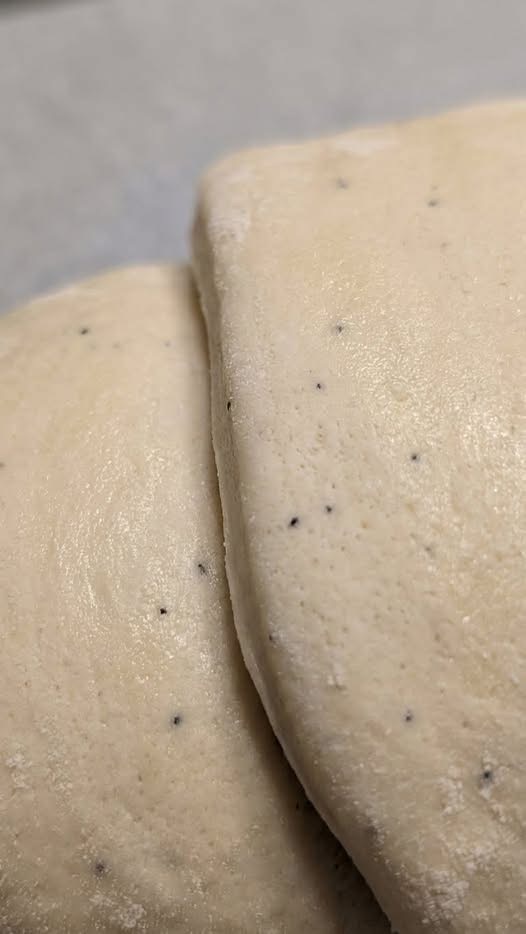
You unwrap a pristine sheet of puff pastry, dreaming of golden, flaky layers. Then you see them: tiny black or charcoal-gray dots dotting the surface—or lurking between folds. Your stomach drops. Mold?
Take a breath. You’re not alone—and you’re almost certainly fine. Those specks are far more likely to be harmless kitchen quirks than kitchen catastrophes. Let’s decode what they are, why they appear, and exactly when (if ever) to hit the panic button.
First, What Don’t They Look Like?
Before we name the culprits, rule out the real threat: mold. True mold on pastry appears fuzzy, raised, or moist—often in blues, greens, or whites—and spreads unevenly. It smells musty or sour.
Harmless specks? They’re flat, dry, and uniform—like tiny freckles baked into the dough. They don’t smear, grow, or change texture. They simply are. And nine times out of ten, they’re nothing to fear.
The Four Usual Suspects (All Mostly Harmless)
- Bran specks: The mark of real flour
The most common cause—and often a good sign. Not all flour is ultra-refined. Stone-ground, organic, or artisanal flours retain tiny particles of wheat bran or germ. During baking, these darken into subtle specks. Think of them as proof you’re working with minimally processed ingredients—not a flaw, but a fingerprint of authenticity. - Caramelized butter solids: Flavor in disguise
Puff pastry is 50% butter—and butter isn’t just fat. It contains milk proteins and solids that, during lamination (the folding process), can cluster and gently caramelize when baked. The result? Delicate brown or black freckles—especially near edges—reminiscent of the golden crust on a grilled cheese sandwich. This isn’t burning; it’s browning. And it tastes like richness. - Oxidation: Pastry’s quiet aging process
Puff pastry left thawed too long, refrozen, or stored past its prime can oxidize. Fats slowly degrade, causing mottled coloring or faint speckling—like an apple turning brown after slicing. While usually safe if frozen properly, oxidized pastry may lose its lift and taste slightly stale. Best used quickly or discarded if freezer-burned. - Surface ghosts: The tray’s leftover tattoo
Sometimes the specks aren’t in the pastry—they’re on it. Residual burnt flour, caramelized sugar, or grease spots from a previous bake can transfer onto your dough during cooking. A quick wipe of your baking sheet or fresh parchment solves this instantly. The pastry? Still perfect.
Bake with confidence if:
✓ Specks are flat, dry, and match the dough’s texture
✓ Pastry smells buttery or neutral (no sour/musty notes)
✓ No fuzzy growth, slime, or colorful patches appear
Toss without guilt if:
✗ Specks are fuzzy, raised, or moist
✗ You detect mold in blues, greens, or whites
✗ It smells off—sharp, sour, or musty
✗ Pastry is severely freezer-burned or past its safe storage window
Pro tip: Frozen puff pastry rarely molds—it’s the thawed, room-temperature version that risks spoilage. When in doubt? Your nose knows. Trust it.
🛡️ Prevention Made Simple
Keep pastry tightly sealed in the freezer—never thaw and refreeze
Use fresh, high-quality butter when making from scratch
Wipe baking sheets clean before use—no “ghost” transfers
For ultra-smooth results, choose highly refined flour (but know: you may sacrifice subtle nuttiness for perfection)
Those black specks? They’re usually just flour doing its thing, butter browning with purpose, or time leaving its gentle mark. They’re not a defect—they’re evidence of real ingredients meeting real heat.
So next time you spot them, don’t panic. Pause. Inspect. Sniff. And if all signs point to harmless? Roll, fold, and bake with confidence. Because the best pastries aren’t sterile—they’re alive with the quiet poetry of simple ingredients, transformed by fire.
And if it is mold? Toss it without regret. Joyful baking starts with trust—in your ingredients, your instincts, and the knowledge that tomorrow’s croissants will be speck-free and sublime.