The Comprehensive History and Legacy of Spam: From Canned Meat to Cultural Icon
Spam, the iconic canned pork product, has transcended its humble origins to become a global phenomenon. Introduced in 1937 by Hormel Foods Corporation, this shelf-stable meat has fed armies, inspired festivals, and even sparked linguistic evolution—giving rise to the term “spam” for unwanted emails. Despite its divisive reputation, with some viewing it as “mystery meat” and others as a culinary staple, Spam’s story is one of innovation, resilience, and cultural adaptation. Over eight billion cans have been sold worldwide, making it a fixture in pantries from Minnesota to Manila. This article delves into Spam’s rich history, production secrets, nutritional profile, varieties, cultural impact, recipes, controversies, and enduring legacy, including its dedicated museum. Whether you’re a fan or a skeptic, Spam’s journey offers fascinating insights into food history and human ingenuity.
Origins and Invention
The tale of Spam begins in the heart of America’s Midwest during the Great Depression. In 1926, Hormel Foods, founded by George A. Hormel in 1891 in Austin, Minnesota, introduced “Flavor-Sealed Ham,” a precursor to Spam. Jay Hormel, George’s son and the company’s president from 1929, sought to utilize underappreciated pork shoulder—a cut often discarded due to low demand. By grinding it with ham, adding preservatives, and canning it, Hormel created an affordable, non-perishable protein source. 0 1
Launched on July 5, 1937, Spam was marketed as a convenient meal option for cash-strapped families. The name “Spam,” coined by actor Ken Daigneau (brother of a Hormel executive) in a contest, is a portmanteau of “spiced ham,” though some speculate it means “shoulder of pork and ham.” 3 6 Daigneau won $100 for his suggestion. Initially hesitant consumers were won over by its ease—no refrigeration needed—and versatility in baking or frying. 5
By 1941, 40 million cans had been sold, but Spam’s true ascent came with global events. Its long shelf life and nutritional value positioned it perfectly for wartime needs, cementing its place in history. 12 Today, Spam remains a testament to Depression-era resourcefulness, evolving from a necessity to a beloved (or reviled) brand.
Spam in World War II
World War II transformed Spam from a domestic product into an international staple. With fresh meat scarce on battlefields, the U.S. military purchased over 150 million pounds of Spam, dubbing it “Special Army Meat.” 97 99 Troops consumed it daily, often three times a day, leading to nicknames like “ham that didn’t pass its physical.” 99
Under the Lend-Lease Act of 1941, Spam was shipped to Allies, including 100 million pounds to Britain and the Soviet Union. 97 Soviet Premier Nikita Khrushchev credited Spam with sustaining his army, stating, “Without Spam, we wouldn’t have been able to feed our army.” 6 21 In Britain, young Margaret Thatcher called it a “wartime delicacy.” 97
However, American GIs grew weary of the repetitive meals, sending “scurrilous” hate mail to Jay Hormel, who kept a file of complaints. 104 102 Despite this, Spam’s utility shone: Soldiers used its grease to lubricate guns and cans for scrap metal. 99 106
Post-war, Spam’s legacy endured in occupied regions like Hawaii, Guam, and the Philippines, where it integrated into local cuisines. 99 In the Pacific, it became a symbol of American influence, leading to enduring popularity. 100 By war’s end, Spam had fed millions and shaped global eating habits. 2 “LARGE”
Ingredients and Production Process
Spam’s simplicity belies its cultural impact. It contains just six ingredients: pork with ham (primarily shoulder and ham), salt, water, potato starch (added in 2009 to absorb gelatin), sugar, and sodium nitrite. 19 26 Sodium nitrite preserves color, prevents botulism, and extends shelf life. 25
Production occurs in facilities like Austin, Minnesota, and Fremont, Nebraska. Pork arrives, is deboned, ground in 8,000-pound batches, flash-cooled, and mixed with ingredients in airtight mixers. 20 21 The mixture is piped into cans, vacuum-sealed, and cooked inside them. 30 This process ensures sterility and flavor. 25
Automation keeps operations efficient, requiring only 13 workers per line. 25 From farm to can, Spam emphasizes quality pork, debunking “mystery meat” myths. 1 “LARGE”
The Mystery of the Jelly
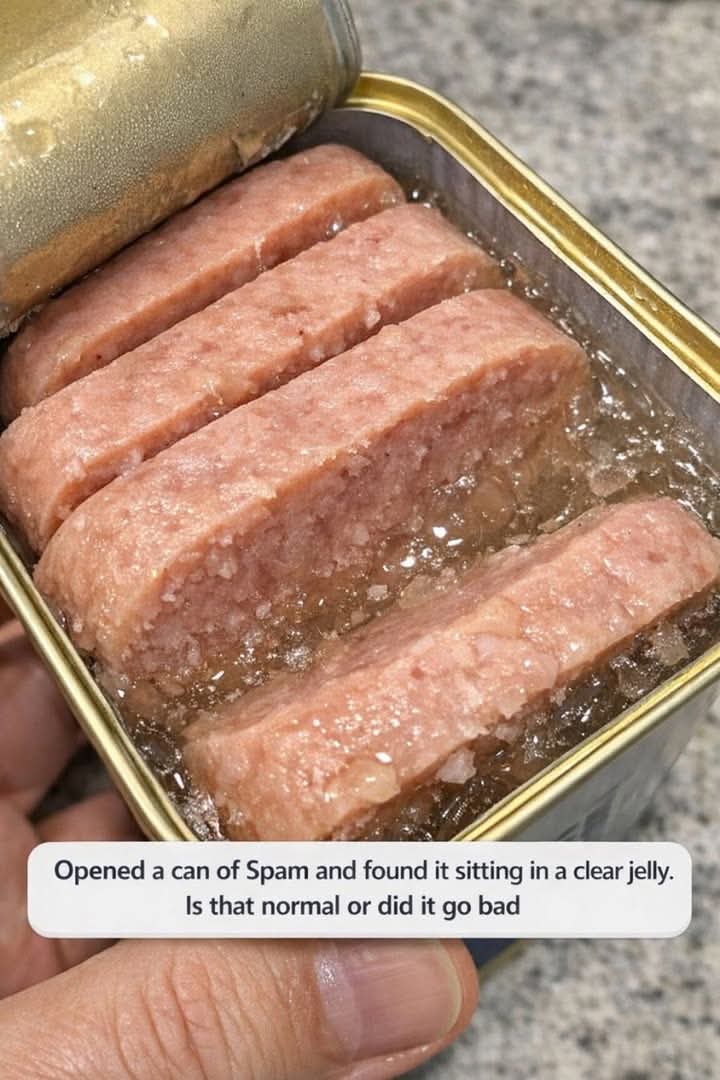
Opening a can of Spam often reveals a clear, jelly-like substance—aspic or gelatin formed from pork juices during cooking. 32 40 This natural byproduct of collagen breakdown is safe and preservative-free. 37
It’s not fat or spoilage but solidified broth, enhancing moisture. 32 Rinse it off or fry it for added flavor. 38 Potato starch absorbs excess, but the jelly remains a signature trait. 0 “LARGE”
Nutritional Information
A 2-ounce serving of classic Spam provides 174 calories, 7 grams protein, 15 grams fat (6 saturated), 2 grams carbs, and 32% daily sodium (790 mg). 43 46 It offers zinc, potassium, iron, and copper. 43
High sodium and fat make moderation key, but varieties like Lite (110 calories, 9g protein, 8g fat, 570mg sodium) cater to health-conscious consumers. 45 50 Spam’s protein density suits active lifestyles, though processed nature warrants balance.
Varieties Available Today
Spam boasts 15 varieties, from Classic to exotic flavors. 107 111 Health options include Lite (50% less fat/sodium) and 25% Less Sodium. 107 Global influences yield Teriyaki, Korean BBQ, Gochujang, and Tocino. 109
Flavors like Hickory Smoke, Hot & Spicy, Jalapeño, Maple, and Bacon add variety. 110 Turkey Spam offers a poultry alternative. 111 These expansions reflect Spam’s adaptability to diverse tastes. 5 “LARGE”
Cultural Significance and Popularity
Spam’s cultural footprint is vast. In Hawaii, it consumes 7 million cans yearly, inspiring Spam Musubi and the Waikiki Spam Jam. 53 57 WWII introductions embedded it in Pacific cuisines, like Korean budae jjigae. 56
In the Philippines, it’s a breakfast staple; in Guam, per capita consumption is highest globally. 65 Monty Python’s 1970 sketch popularized “spam” for junk email. 52 From economic hardship symbol to gourmet gift in China, Spam bridges cultures. 52 66 3 “LARGE”
Recipes and Cooking Ideas
Spam’s versatility shines in recipes. Classic Spam Musubi: Fry slices, glaze with teriyaki, wrap in rice and nori. 67 71 Spam Fried Rice: Dice, sauté with veggies, eggs, and soy sauce. 79
Try Spam Tacos or Burgers for fusion; Kimchi Jjigae for Korean flair. 73 Air Fryer Spam Fries: Cut, coat, fry with dipping sauce. 68 From breakfast hashes to casseroles, Spam elevates everyday meals.
Controversies and Fun Facts
Spam faces myths: It’s not “mystery meat”—just six ingredients. 82 95 High sodium draws health criticism, but varieties address this. 96
Fun facts: Over 9 billion cans sold; Hawaii eats most per capita. 84 Spam inspired a Broadway musical, Spamalot. 8 Five billion cans could circle Earth 12.5 times. 91
The Spam Museum and Brand Legacy
In Austin, Minnesota, the Spam Museum celebrates this legacy since 1991, relocating in 2016. 117 123 Free exhibits trace Hormel’s history, Spam’s origins, and global impact, with interactive displays and “SPAMbassadors.” 121
The museum draws thousands, embodying Spam’s enduring brand—innovative, resilient, and culturally embedded. 122 4 “LARGE”
Conclusion
Spam’s evolution from Depression-era innovation to wartime hero and cultural icon underscores its remarkable legacy. Despite controversies, its simplicity, versatility, and global appeal ensure its place in history. Whether frying a slice or visiting the museum, Spam invites exploration of food’s role in society. As Hormel continues innovating, Spam remains a delicious reminder of human adaptability.