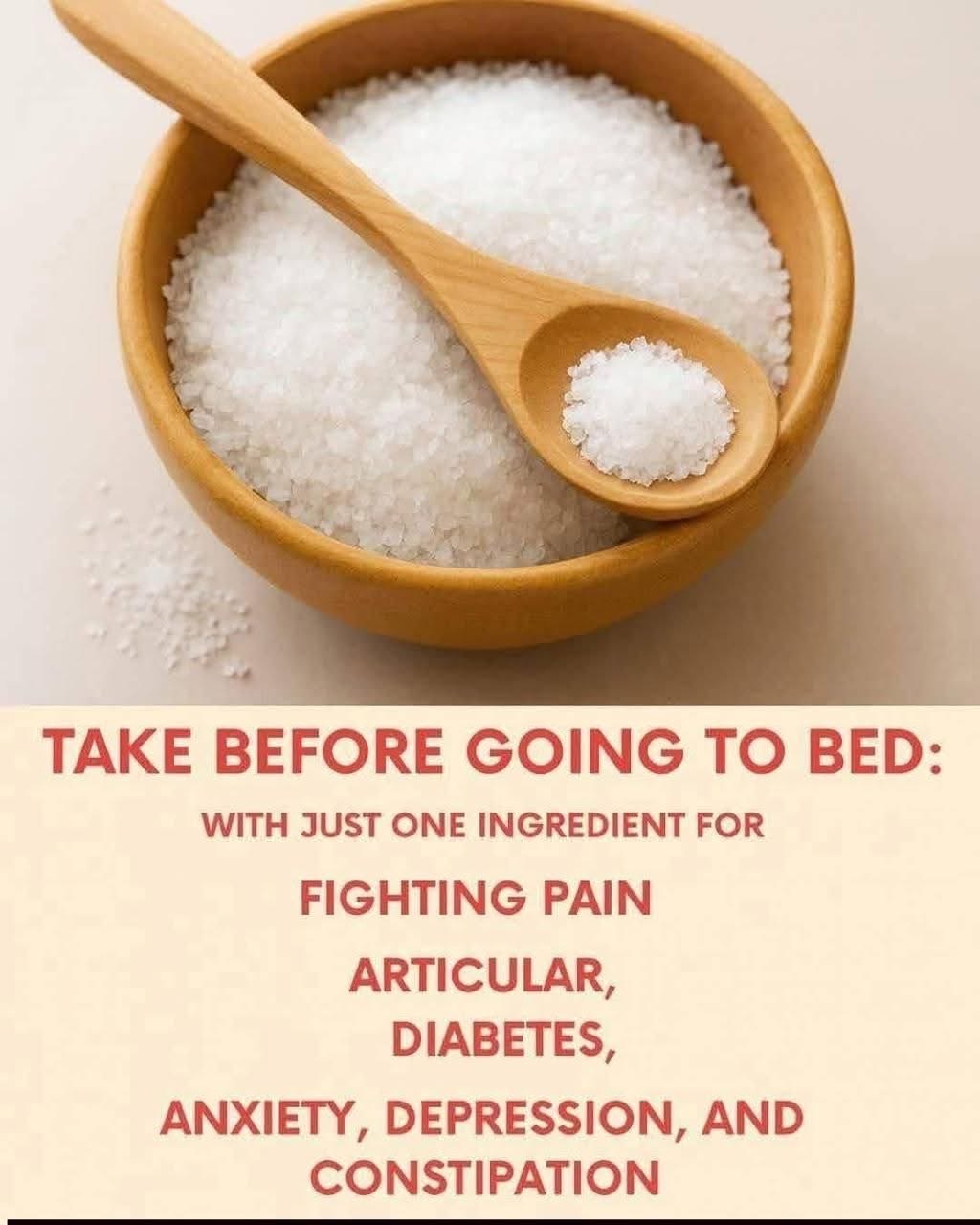
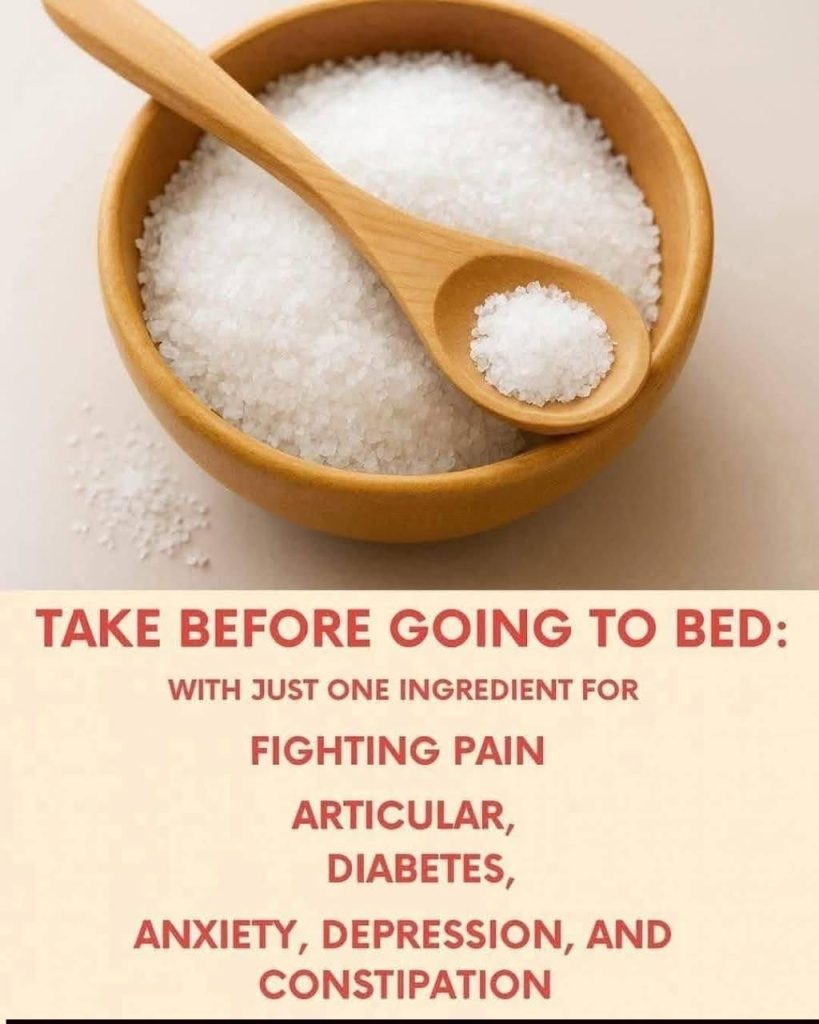
What the Claims Are Based On
Proponents (often from wellness influencers, natural health pages, or anecdotal posts) suggest benefits like:
- Better sleep and reduced anxiety/depression — Sodium may help regulate cortisol (a stress hormone that can spike at night and disrupt sleep). Some claim it calms nerves, supports electrolyte balance, and indirectly lowers stress or improves mood via better hydration or mineral intake.
- Pain relief (e.g., joint/muscle pain) — Electrolytes like sodium and trace minerals in unrefined salts (Himalayan or sea salt) might reduce cramps, inflammation, or support adrenal function, indirectly easing pain.
- Diabetes/blood sugar — Sodium plays a role in glucose transport into cells, and stable electrolytes might prevent overnight blood sugar dips that wake people up (especially relevant for those on low-sodium diets or with certain conditions).
- Constipation — A higher dose of salt in warm water acts as a laxative (like a saltwater flush), drawing water into the intestines to promote bowel movements.
These ideas appear in sources promoting “sole water” (e.g., dissolving Himalayan salt in water overnight for a mineral-rich drink) or a simple pinch of salt in water before bed.
The Reality and Evidence
While sodium is essential for fluid balance, nerve function, and overall health, the broad claims in the post are overstated and not strongly supported by solid scientific evidence:
- Small amounts of salt (e.g., a pinch ~1/8 to 1/4 teaspoon in water) may aid hydration, electrolyte balance, and sleep in people who are low on sodium (e.g., those on very low-salt diets, athletes, or with certain deficiencies). Some studies link adequate sodium to better sleep regulation and lower stress responses.
- For constipation, a saltwater flush (higher dose, like 1–2 teaspoons in warm water) can work as a quick laxative, but it’s not gentle or recommended daily.
- No reliable studies show this habit reliably treats or prevents diabetes, chronic joint pain, clinical anxiety, or depression. These conditions need proper medical management (diet, exercise, medication, therapy).
- Excess sodium is risky — it can raise blood pressure, strain kidneys, cause fluid retention, or worsen heart issues. People with hypertension, kidney problems, diabetes, or heart conditions should be especially cautious or avoid extra salt.
Reputable sources (like Healthline, WebMD, Cleveland Clinic) note that while sole water or salted water might help with hydration or minor electrolyte support, claims for major disease-fighting effects lack proof and can be misleading.
If You’re Considering Trying It
- Use unrefined salt like Himalayan pink or sea salt for trace minerals (though benefits are minimal compared to a balanced diet).
- Start small: Dissolve a tiny pinch (1/8–1/4 tsp) in a glass of water 30–60 minutes before bed.
- Drink plain water throughout the day for better results.
- Do not try high doses without guidance, especially if you have health conditions.
- Always consult a doctor first, particularly for diabetes, pain, mental health, or digestive issues — this isn’t a substitute for professional treatment.
In short, a pinch of quality salt before bed might help some people feel more relaxed or hydrated, but it’s not a miracle cure for the long list of problems in the post. It’s more of a trendy wellness tip than proven medicine. Stay skeptical of viral “one-ingredient” fixes! If this relates to specific symptoms you’re experiencing, a healthcare professional can give personalized advice.