You Can Root Almost Any Plant Using These 4 Homemade Rooting Solutions
Plant propagation through cuttings is one of the most rewarding and cost-effective ways to expand your garden or indoor plant collection. Whether you’re cloning a favorite rose bush, multiplying succulents, creating new houseplants from a trailing pothos, or experimenting with woody shrubs, the key to success often lies in encouraging strong, healthy root development. Commercial rooting hormones containing synthetic auxins like IBA (indole-3-butyric acid) are effective, but many gardeners prefer natural, homemade alternatives that are inexpensive, chemical-free, and readily available in most kitchens or backyards.
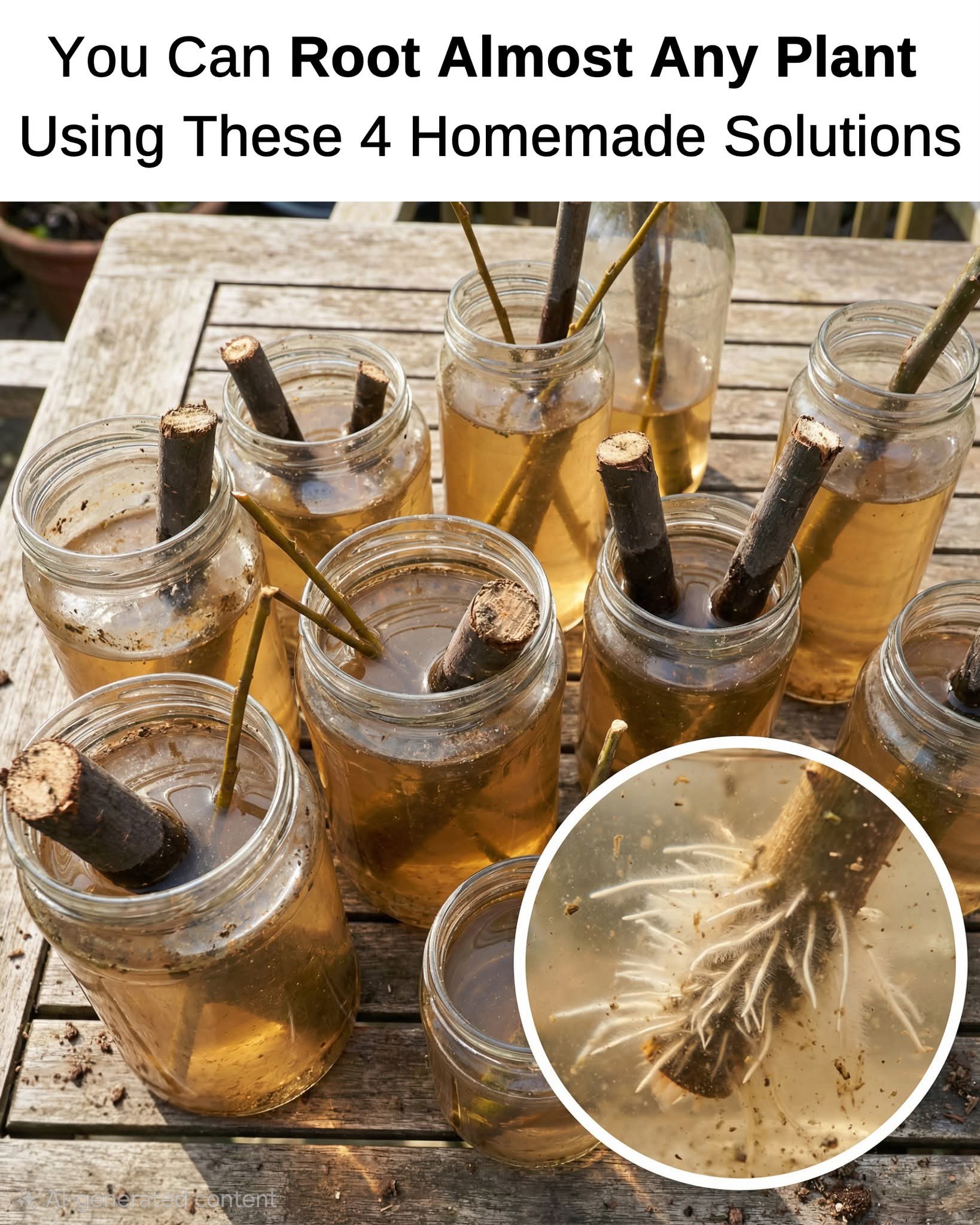
The viral image of jars filled with cuttings soaking in amber liquids highlights a timeless technique: using natural solutions to boost rooting success. These homemade options work primarily by providing natural plant hormones (like auxins), offering antifungal and antibacterial protection, or creating an optimal environment for root initiation.
In this comprehensive guide, we’ll explore four of the most popular and widely recommended homemade rooting solutions: willow water, honey-based dips, cinnamon powder treatments, and aloe vera gel applications. We’ll cover their science-backed mechanisms (where evidence exists), step-by-step preparation and usage instructions, suitable plant types, success tips, common pitfalls, and comparisons to help you choose the best method for your needs.
Understanding Rooting Hormones and Why Homemade Works
When you take a cutting from a plant, it loses its root system and must regenerate new roots to survive. Plants naturally produce auxins — growth hormones that promote cell division and root formation, especially at wound sites. Commercial powders or gels supply concentrated synthetic auxins, but many plants root readily without them, especially softwood or semi-hardwood cuttings from easy-to-root species like pothos, philodendron, mint, or willow itself.
Homemade solutions enhance this process in complementary ways:
- Some provide trace natural auxins (e.g., from willow).
- Others prevent rot and infection (antifungal/antibacterial properties).
- Many create a moist, protected environment for callus formation and root emergence.
Scientific evidence varies. Willow water has the strongest backing due to its natural IBA and salicylic acid content, which mimic commercial hormones. Honey and cinnamon primarily act as protectants rather than true hormones, while aloe vera offers mild hormonal and healing benefits. Apple cider vinegar appears occasionally but is riskier due to acidity.
Success rates depend on factors like cutting type (softwood vs. hardwood), season, humidity, light, temperature (ideally 70-80°F/21-27°C), and plant species. Easy rooters (e.g., coleus, begonias) often succeed 80-90% without aid, while challenging ones (e.g., woody ornamentals) benefit more from treatment.
Water propagation is popular for monitoring progress — roots often form faster in water (higher oxygen initially, visible growth) — but soil or soilless mixes produce stronger, more adaptable roots long-term. Many gardeners start in water then transfer.
1. Willow Water – The Most Powerful Natural Rooting Stimulant
Willow (Salix spp.) branches contain high levels of indolebutyric acid (IBA) — the same compound in many commercial rooting products — plus salicylic acid, which reduces stress and fights pathogens. This makes willow water one of the most effective homemade options, with anecdotal success rates up to 90% on moderately easy-to-root plants.
How to Prepare Willow Water
- Collect young, flexible willow twigs or branches (new growth in spring is best; any willow species works).
- Cut into 2-4 inch pieces (about 2 cups worth).
- Place in a jar or pot, cover with boiling water (kills bacteria), or use room-temperature water for cold extraction.
- Steep 24-48 hours (hot method) or up to 1-4 weeks (cold method) in a dark place.
- Strain out solids. Store in fridge or freeze for later use (lasts months).
How to Use
- Soak cuttings in full-strength willow water for several hours to overnight (or dilute 50/50 with plain water for water propagation).
- Plant directly in soil or continue in the solution.
- Use to water established plants for stronger roots.
Best For
Softwood/semi-hardwood cuttings: roses, hydrangeas, willows, figs, tomatoes, herbs. Less effective on very hard-to-root hardwoods like conifers.
Pros
Natural auxin source; antifungal; free if you have access to willows.
Cons
Seasonal availability; variable concentration.
2. Honey – Antifungal Protector and Energy Booster
Raw honey contains natural enzymes, sugars, and antibacterial compounds (e.g., hydrogen peroxide from glucose oxidase). It prevents rot on cuttings while providing a mild energy source for the healing process.
Preparation and Use
- Mix 1-2 tablespoons raw, organic honey in 1-2 cups warm (not boiling) water.
- Let cool.
- Dip the cut end of the cutting in the solution for a few seconds to hours (longer soaks for tougher stems).
- Some gardeners dip in honey, let dry slightly, then dust with cinnamon for double protection.
- Plant in moist soil or water.
Best For
Most cuttings, especially prone to rot: succulents, roses, lavender, woody herbs.
Pros
Excellent antifungal; widely available; combines well with other methods.
Cons
Not a true hormone; pure honey can be too concentrated and harm tissues — always dilute.
3. Cinnamon – Natural Antifungal Powder
Cinnamon (especially true Ceylon) has strong antifungal properties from compounds like cinnamaldehyde. It doesn’t contain rooting hormones but prevents damping-off and rot, allowing the cutting’s natural auxins to work.
Preparation and Use
- Use ground cinnamon (organic if possible).
- Dip the moist cut end directly into powder, or sprinkle into the planting hole.
- For extra boost: Dip in honey/water first, then cinnamon.
- Plant immediately in soil (preferred over water for this method).
Best For
Fungus-prone cuttings: orchids, succulents, houseplants like monstera or philodendron.
Pros
Simple, cheap, immediate protection.
Cons
No direct hormone stimulation; grocery cinnamon may vary in potency.
4. Aloe Vera Gel – Healing Gel with Mild Hormones
Fresh aloe vera gel contains salicylic acid, gibberellins, and other compounds that promote healing and mild root stimulation, plus moisturizing properties.
Preparation and Use
- Cut a fresh aloe leaf, scoop out the clear gel.
- Mash or blend into a smooth consistency (add a little water if thick).
- Dip the cutting end directly in the gel.
- Plant in soil or water.
Best For
Tender or succulent cuttings: begonias, African violets, herbs.
Pros
Soothing, moisturizing; natural healing.
Cons
Milder effect; gel spoils quickly (use fresh).
Combining Methods and Best Practices for Maximum Success
For stubborn cuttings, layer approaches: Soak in willow water, dip in honey, dust with cinnamon. Maintain high humidity (plastic bag dome), indirect light, and consistent moisture without sogginess. Take cuttings in morning from healthy plants, cut at 45° angle below a node, remove lower leaves.
Water vs. Soil: Water is faster and more visual (great for beginners), but transition roots to soil before they get too long to avoid shock. Soil roots are typically stronger.
Patience is key — roots can take 2-8 weeks. Track experiments with controls (untreated cuttings) to see what works best in your conditions.
With these four solutions, you’ll propagate more plants successfully and sustainably. Happy gardening — turn one plant into dozens!