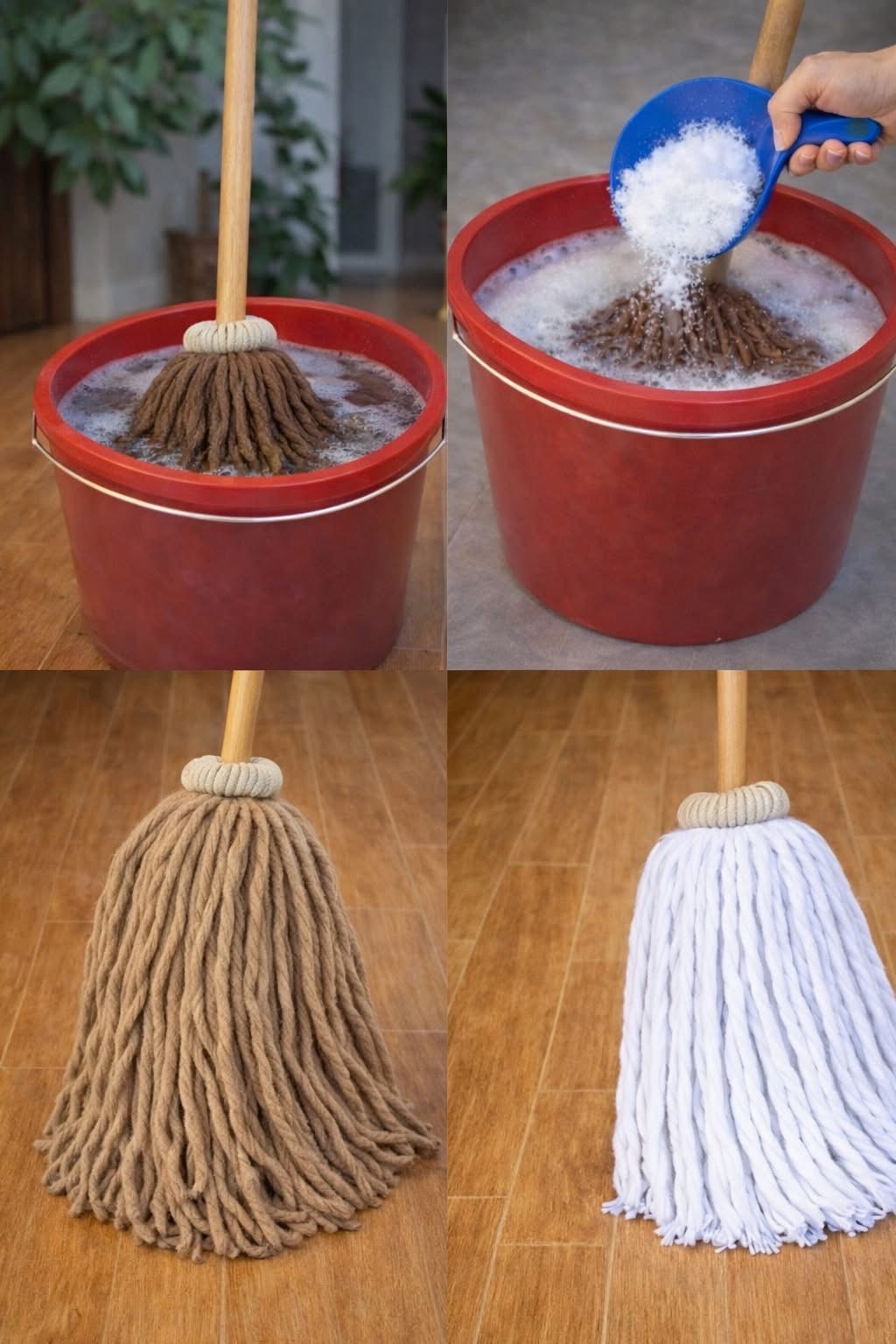
A dirty, smelly mop is one of the most frustrating cleaning problems at home. Over time, mop fibers absorb grease, bacteria, detergent residue, and bad odors. Many people think the solution is to throw the mop away and buy a new one. But the truth is, with just one powerful household ingredient, you can restore your mop to a fresh, clean, almost-new condition.
The image above clearly shows the transformation: a dark, heavily soiled mop becoming bright and clean again after a simple soak. Let’s break down exactly how this works and why it’s so effective.
The Secret Ingredient: Baking Soda
The key ingredient that brings a dirty mop back to life is baking soda.
Baking soda is well known for its:
- Deep cleaning power
- Odor-neutralizing ability
- Gentle abrasive action
- Natural disinfecting properties
It penetrates deep into the mop fibers, loosening trapped dirt, grease, and bacteria without damaging the material.
Why Mops Get So Dirty So Fast
Mops don’t just clean floors—they collect:
- Grease from kitchens
- Bacteria from bathrooms
- Soap residue and detergents
- Dust and hair
When not cleaned properly, this buildup causes:
- Bad smells
- Sticky residue on floors
- Spreading bacteria instead of cleaning
- Dark, stained mop strands
How Baking Soda Restores a Mop
When mixed with hot water, baking soda:
- Breaks down grease and grime
- Lifts dirt from deep inside fibers
- Neutralizes unpleasant odors
- Softens hardened mop strands
- Helps return the mop’s original color
That’s why the mop in the image changes from brown and dirty to clean and bright.
Step-by-Step Method to Clean Your Mop
What You Need
- 1 bucket of very hot water
- 2–3 tablespoons of baking soda
- (Optional) 1 cup white vinegar for extra disinfection
Instructions
- Fill a bucket with hot water
- Add baking soda and stir until dissolved
- Place the dirty mop into the solution
- Let it soak for 30–60 minutes
- Swirl and squeeze the mop several times
- Rinse thoroughly with clean water
- Hang the mop to air-dry completely
For extremely dirty mops, repeat the process once more.
Extra Power: Baking Soda + Vinegar
If your mop smells very bad or hasn’t been cleaned in a long time:
- First soak with baking soda
- Then rinse and soak again with vinegar and warm water
This combination:
- Kills odor-causing bacteria
- Removes stubborn residue
- Leaves the mop fresh and hygienic
Benefits of This Method
- Saves money (no need to buy a new mop)
- Eco-friendly and chemical-free
- Safe for cotton and microfiber mops
- Restores softness and flexibility
- Improves floor cleanliness
- Eliminates bad odors completely
Common Mistakes to Avoid
- Using bleach too often (damages fibers)
- Storing the mop wet (causes mold)
- Never cleaning the mop after use
- Using cold water only
How Often Should You Clean Your Mop?
- After heavy cleaning: every use
- Regular home cleaning: once a week
- Deep baking soda soak: once every 2–3 weeks
Final Thoughts
Before you throw away a dirty mop and spend money on a new one, remember this simple trick. A single ingredient—baking soda—can completely revive your mop, making it clean, fresh, and effective again. This easy method not only saves money but also keeps your home cleaner and healthier.
A dirty mop doesn’t mean it’s useless. Sometimes, all it needs is the right care.
Clean smarter, not harder.