A Festive Moment That Became a Lesson
I had pictured that evening so clearly—the kind you replay in your mind long after it’s over. I’d planned carefully, set money aside, even practiced what I might say. The restaurant I chose was known for its understated charm: soft lighting, pristine table settings, polished glassware. Everything about it suggested warmth and closeness. When my girlfriend arrived, glowing and happy, I was certain the night would unfold just as I’d imagined.
At first, it did. We shared appetizers, laughed easily, reminisced, and raised a glass to the journey we’d taken together. For a while, nothing else seemed to exist beyond the two of us.
Then, slowly, something shifted.
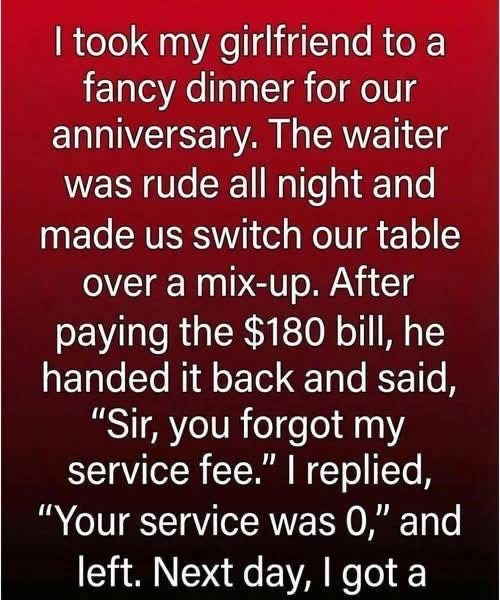
The waiter had been brusque from the beginning—short answers, an edge in his tone. Simple questions felt like inconveniences. Halfway through the meal, we were asked to change tables because of an unexplained “error.” The interruption broke the flow, replacing intimacy with discomfort, as though we were intruding rather than dining guests
flawless. Still, each impatient gesture and dismissive look chipped away at the mood. My girlfriend sensed it too. She reached for my hand beneath the table, a quiet signal that what mattered was us, not the surroundings.
I tried to let it go. No evening is
When the bill arrived—$180—I paid without comment, ready to leave the experience behind. As we stood to go, the waiter returned, receipt in hand
“You didn’t include the service charge,” he said, flat and unapologetic.
It wasn’t about the cost. It was the assumption—the lack of respect for everything that had already been diminished. I didn’t argue or raise my voice. I simply replied that the service hadn’t warranted one, then we left.
On the drive home, I questioned myself. Had I been too firm? Too sensitive? But instead of focusing on the restaurant, my girlfriend and I talked about respect—how often it’s overlooked, how quietly it defines moments. We realized situations like this reveal character not through conflict, but through the limits we choose to uphold
The following afternoon, the restaurant manager called. He’d reviewed the incident and asked for my side. I explained calmly, without resentment. He apologized sincerely, acknowledged the waiter’s conduct was unacceptable, and thanked me for sharing my experience.
It didn’t feel like winning.
The night hadn’t gone according to plan, but it left me with something more enduring than a perfect dinner: the understanding that dignity doesn’t demand confrontation—only clarity—and that respect, once diminished, costs far more than any check ever could.