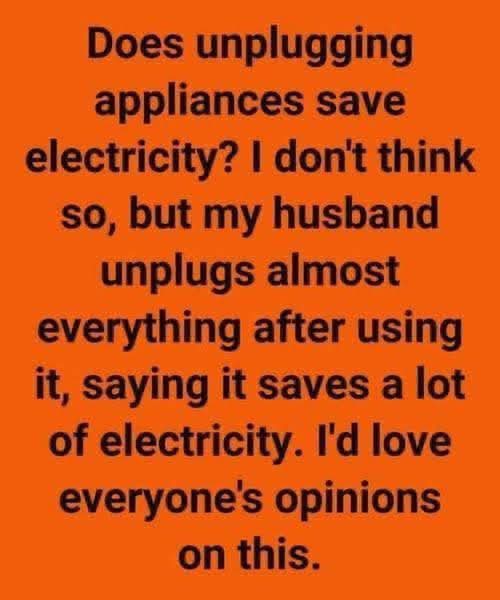
Does Unplugging Appliances Really Save Electricity? The Truth About Vampire Power in 2025
In an era of rising energy costs and growing environmental concerns, many homeowners are looking for simple ways to cut their electricity bills. One common debate centers on whether unplugging appliances and electronics when they’re not in use actually saves money—or if it’s just an old wives’ tale. The short answer: yes, it does save electricity, and the savings can be substantial thanks to a phenomenon known as “vampire power,” “standby power,” or “phantom load.”
As of late 2025, with average U.S. residential electricity rates hovering around $0.16–$0.20 per kilowatt-hour (kWh), standby power continues to drain billions from households nationwide. This comprehensive guide dives deep into what vampire power is, how much it costs, which devices are the biggest offenders, common myths, practical ways to combat it, and the broader environmental impact. By the end, you’ll have actionable strategies to reclaim those wasted dollars and reduce your carbon footprint.
What Is Vampire Power, and Why Does It Happen?
Vampire power refers to the electricity consumed by devices even when they’re turned “off” or in standby mode. Modern appliances and electronics don’t fully shut down; instead, they remain in a low-power state to support convenient features like:
- Instant-on functionality (e.g., TVs waking up quickly from a remote signal)
- Digital clocks and displays (common in microwaves, ovens, and coffee makers)
- Network connectivity (smart devices staying online for updates or voice commands)
- Remote sensors (ready to respond to infrared signals)
- Battery charging circuits (even when no device is attached)
This standby mode might seem harmless—after all, a single device uses just 0.5–10 watts—but in a typical home with 20–50 such devices, it adds up quickly.
The term “vampire power” was popularized in the early 2000s by researchers at the Lawrence Berkeley National Laboratory, who highlighted how these “energy vampires” suck power 24/7. Regulations like ENERGY STAR standards and international limits (e.g., the EU’s 2025 rule capping standby at 0.5 watts for many devices) have reduced per-device draw, but the explosion of smart gadgets has offset much of that progress.
How Much Electricity Does Standby Power Really Waste?
Standby power isn’t negligible. According to the U.S. Department of Energy (DOE) and ENERGY STAR data updated through 2025:
- It accounts for 5–10% of residential electricity use in the average U.S. home.
- This translates to 500–1,000 kWh per year per household, depending on lifestyle and device count.
Cost-wise, estimates vary but paint a clear picture of waste:
- The DOE suggests unplugging unused devices could save the average household $100–$200 annually.
- A 2025 analysis by Payless Power pegged the average loss at $217 per year.
- Other sources, like the Natural Resources Defense Council (NRDC), cite figures around $165–$440, with national totals exceeding $19 billion yearly.
Why the range? It depends on factors like:
- Electricity rates (higher in states like Connecticut or Hawaii, where losses exceed $300/year)
- Number of devices (homes with smart tech or multiple TVs see higher drains)
- Device age (pre-2010 models often use 3–6 times more standby power than modern ones)
Nationwide, standby power wastes enough electricity to power millions of homes outright, contributing to unnecessary fossil fuel burning and emissions.
Breakdown of Common Vampire Devices
Here’s a table of typical standby power draws and annual costs (based on 2025 averages at ~$0.18/kWh):
| Device | Standby Power (Watts) | Annual Cost (Approx.) | Notes |
|---|---|---|---|
| Television (LED/smart) | 1–5 | $5–$25 | Higher for larger or older sets |
| Gaming Console | 1.5–10 | $10–$50 | PlayStation/Xbox in standby |
| Cable Box/DVR | 10–30 | $50–$150 | Notorious high-draw offenders |
| Microwave (with clock) | 2–5 | $10–$25 | Digital display is the culprit |
| Coffee Maker | 1–70 (if always-ready) | $5–$300 | Heated models are worst |
| Desktop Computer | 2–6 | $10–$30 | Plus monitor/printer |
| Phone Charger (idle) | 0.5–2 | $2–$10 each | Multiplies with several chargers |
| Smart Speaker | 2–5 | $10–$25 | Always listening/connecting |
In a gadget-heavy home, these can easily total $200+ yearly. Use a plug-in energy meter (available for $20–$50) to measure your own devices for precise figures.
Common Myths About Unplugging Appliances
Despite the evidence, skepticism persists. Let’s debunk some popular myths:
Myth 1: Modern devices use so little standby power that unplugging isn’t worth it.
Fact: While individual new devices often draw under 1 watt (thanks to regulations), the cumulative effect from dozens of gadgets remains significant. ENERGY STAR-certified products help, but proliferation of IoT devices has kept total household standby flat or rising.
Myth 2: Unplugging everything saves huge amounts—up to 20–30% of your bill.
Fact: Realistic savings are 5–10%, or $100–$300/year. Exaggerated claims overlook that major uses (HVAC, lighting, refrigeration) dominate bills.
Myth 3: It’s safe and necessary to unplug refrigerators or essential devices.
Fact: Never unplug fridges/freezers (risks food spoilage and higher restart energy). Also avoid medical devices, security systems, or routers if you need constant connectivity.
Myth 4: Standby power is a complete myth invented to sell smart plugs.
Fact: Backed by DOE, NRDC, and independent labs. Measurements show real draws, and unplugging tests confirm savings.
Myth 5: Unplugging wears out cords or outlets faster.
Fact: Minimal wear for occasional unplugging; power strips reduce this issue.
The truth lies in balance: targeted unplugging yields real, measurable savings without extreme effort.
The Biggest Offenders: Where to Focus Your Efforts
Not all devices are equal vampires. Prioritize these high-impact areas:
- Entertainment Systems: TVs, streaming devices, soundbars, and consoles often cluster together, drawing 20–50 watts collectively in standby.
- Kitchen Appliances: Microwaves, coffee makers (especially “always-hot” models), and ovens with clocks/displays.
- Home Office: Computers, monitors, printers, and chargers left plugged in.
- Chargers and Adapters: “Wall warts” for phones, laptops, and tools draw power even empty.
- Smart Home Devices: Speakers, plugs, and hubs that stay connected.
Guest rooms or rarely used spaces (e.g., basement TVs) are prime for full unplugging.
Practical Ways to Reduce Vampire Power
You don’t need to unplug everything manually. Here are proven, convenient strategies:
1. Use Power Strips
The easiest win: Group devices (e.g., TV setup) on a switched power strip. One flip cuts power to all. Advanced “smart” strips detect when primary devices (like TVs) are off and shut down peripherals automatically.
2. Invest in Smart Plugs
App-controlled plugs (e.g., from TP-Link or Amazon) let you schedule shutoffs, monitor usage, and remote-control via phone. Ideal for hard-to-reach outlets.
3. Unplug Strategically
For infrequent items (toasters, blenders, chargers), make unplugging a habit. Use timers for lamps or seasonal devices.
4. Enable Energy-Saving Modes
Many devices have low-power settings—activate them. For computers, set aggressive sleep timers.
5. Buy Efficient Replacements
When upgrading, choose ENERGY STAR models with <1 watt standby. Avoid “instant-on” features if possible.
6. Conduct a Home Audit
Borrow or buy a kill-a-watt meter to identify your home’s specific vampires. Track bills before/after changes.
Combining these can cut standby waste by 50–80%, saving $50–$200/year effortlessly.
Environmental Impact: Beyond Your Bill
Vampire power isn’t just a wallet drain—it’s an ecological one. The NRDC estimates U.S. standby waste equals the annual output of dozens of power plants, emitting millions of tons of CO2.
By reducing it, you:
- Lower demand on the grid, reducing fossil fuel reliance.
- Contribute to national goals for efficiency and emissions cuts.
- Set an example in a world where data centers and AI are exploding energy use.
In 2025, with renewables growing but grids strained, individual actions like slaying vampires add up meaningfully.
Real-Life Examples and Case Studies
Consider these anonymized scenarios:
- A family with two TVs, gaming consoles, and smart kitchen appliances unplugged via power strips and saved $180/year (verified by meter readings).
- An office worker using smart plugs for chargers and printers cut $40/month off remote work bills.
- ZDNET reports from 2025 highlight users saving $200+ by targeting just seven common devices (TVs, consoles, coffee makers, etc.).
Your results will vary, but even modest changes compound.
Conclusion: Your Husband Was Right—Start Unplugging Today
Back to the original debate: if your spouse unplugs “almost everything,” they’re likely saving a noticeable chunk—potentially $100–$300/year in 2025 dollars. Vampire power is real, backed by decades of research from the DOE, ENERGY STAR, and independent studies.
It’s not about extreme minimalism; it’s about smart habits. Start small: audit your home, invest in a few power strips or smart plugs, and target high-draw clusters. Over time, you’ll see lower bills, a lighter environmental load, and the satisfaction of outsmarting those sneaky energy vampires.
In a world of escalating energy demands, these simple steps empower you to take control. Unplug, save, and enjoy the extra money for what matters most.