The Truth About Drinking 8 Glasses of Water a Day: Myths, Science, and Practical Hydration Strategies
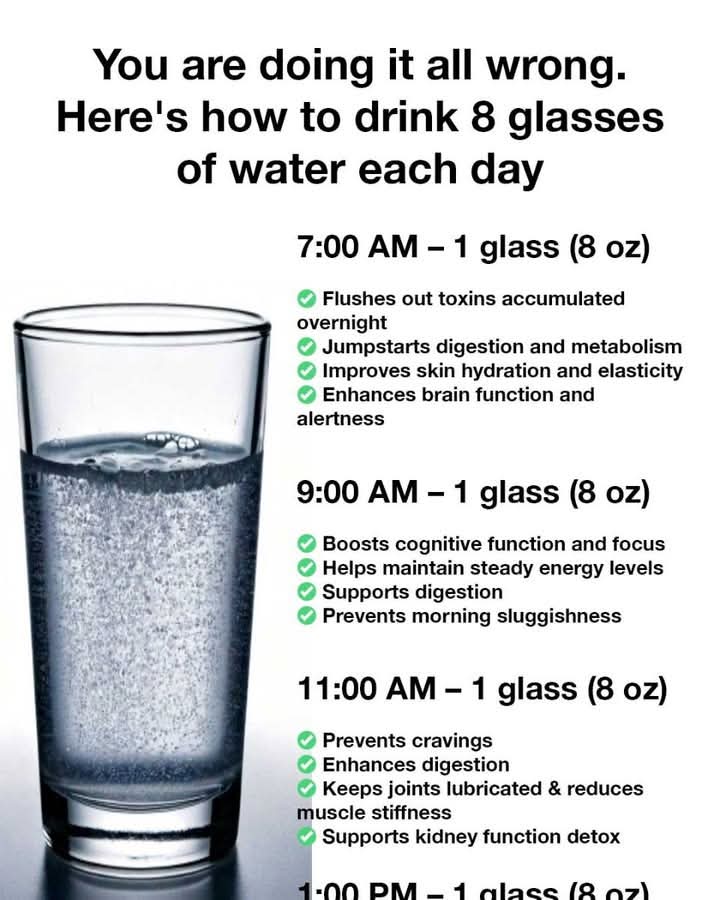
In a world flooded with health advice, few tips have persisted as stubbornly as the recommendation to drink eight 8-ounce glasses of water each day. You’ve likely seen viral infographics claiming that a precisely timed water schedule—starting at 7:00 AM and continuing through the afternoon—can flush overnight toxins, boost metabolism, improve skin elasticity, enhance brain function, prevent cravings, lubricate joints, and even support kidney detox. These posts promise transformative benefits from simply spacing out your hydration.
While staying hydrated is undeniably crucial for health, many of these specific claims are overstated or lack strong scientific backing. The iconic “8×8” rule itself is more myth than mandate, and timed drinking schedules draw more from traditional practices than rigorous evidence. In this comprehensive guide, we’ll separate fact from fiction, explore the real science of hydration, and provide practical, evidence-based strategies to keep your body optimally hydrated throughout the day.
Hydration plays a vital role in nearly every bodily function: regulating temperature, transporting nutrients, cushioning joints, aiding digestion, and supporting cognitive performance. Dehydration, even mild, can lead to fatigue, headaches, and reduced focus. But overcomplicating it with rigid schedules or exaggerated promises isn’t necessary—or always helpful.
The Origins and Reality of the “8 Glasses a Day” Rule
The “drink eight glasses of water a day” advice has been repeated so often that it feels like undeniable truth. But where did it come from, and is it accurate?
This guideline traces back to a 1945 recommendation from the U.S. Food and Nutrition Board, suggesting about 2.5 liters (roughly 84 ounces) of water daily. Critically, the report noted that “most of this quantity is contained in prepared foods”—a detail often overlooked. Fruits, vegetables, soups, and even coffee contribute significantly to fluid intake.
Extensive reviews, including a 2002 analysis by Heinz Valtin published in the American Journal of Physiology and echoed in sources like The New York Times and PubMed, found no scientific evidence supporting the exact “8×8” rule for everyone. Surveys of healthy adults show that many thrive on less plain water because they get fluids from food and other beverages.
Modern experts, including the National Academies of Sciences, Engineering, and Medicine (updated through 2025 guidelines), recommend:
- About 3.7 liters (125 ounces or ~15.5 cups) total fluids daily for men
- About 2.7 liters (91 ounces or ~11.5 cups) for women
These totals include all sources: water, tea, coffee, milk, juice, and water-rich foods (which can account for 20-30% of intake). Caffeine in moderation doesn’t dehydrate you significantly, and mild alcoholic drinks like beer can contribute when consumed responsibly.
The bottom line? The “8 glasses” rule is a convenient approximation, not a universal requirement. Your needs vary based on age, activity level, climate, diet, and health conditions. Listen to your body—thirst is a reliable guide for most healthy people.
Debunking Timed Water Schedules: What Does the Science Say?
Viral infographics often prescribe exact times for drinking water, claiming unique benefits like:
- 7:00 AM: Flushes overnight toxins, jumpstarts metabolism, improves skin, enhances alertness
- 9:00 AM: Boosts focus, sustains energy, prevents sluggishness
- 11:00 AM: Prevents cravings, aids digestion, lubricates joints, supports kidney detox
- 1:00 PM and beyond: Similar escalating benefits
These ideas blend partial truths with exaggeration. Let’s examine the evidence.
Morning Water: Rehydration, Yes—Toxin Flush, No
Drinking water upon waking makes sense—you’ve gone 7-9 hours without fluids, leading to mild overnight dehydration. Studies from WebMD, Everyday Health, and Real Simple confirm that morning hydration can restore balance, support cognition, and kickstart metabolism slightly (especially with cold water).
However, claims of “flushing toxins accumulated overnight” are misleading. Your liver and kidneys continuously detoxify the body 24/7. No evidence shows morning water uniquely supercharges this process. “Toxins” is a vague term often misused in wellness marketing—true detoxification happens naturally, and extra water doesn’t dramatically accelerate it unless you’re dehydrated.
Mid-Morning and Pre-Lunch: Energy and Craving Control
Water around 9-11 AM may help sustain energy and curb cravings, but this stems from general hydration, not magic timing. Research shows pre-meal water (30 minutes before eating) can reduce calorie intake by promoting fullness—a useful weight management tool—but benefits aren’t confined to specific hours.
Afternoon and Joint/Kidney Claims
Ideas like lubricating joints or reducing stiffness have some basis: Hydration supports synovial fluid production. Kidney support is real—adequate water helps filter waste—but again, consistent intake matters more than timed gulps.
Overall, reviews from PMC (National Library of Medicine) and fact-checks (e.g., AFP) conclude there’s limited evidence for special benefits from rigid timed schedules. Patterns in large studies (like NHANES data) show people naturally drink more in mornings, but no proof that forcing a schedule yields superior outcomes.
Traditional systems like Ayurveda suggest timed or temperature-specific water (e.g., warm morning water for digestion), but these are cultural practices, not universally proven by modern science.
The Real Benefits of Proper Hydration
While timed schedules may not deliver miraculous results, consistent hydration offers proven advantages:
- Cognitive Function: Even 1-2% dehydration impairs focus, mood, and alertness. Hydration supports steady energy.
- Physical Performance: Water aids temperature regulation and muscle function—critical for exercise.
- Digestion and Weight Management: Fluids help fiber move through the gut and can promote satiety.
- Skin and Joint Health: Hydration maintains elasticity and lubrication, though topical factors matter more for skin.
- Kidney and Heart Support: Adequate fluids prevent stones and ease cardiovascular strain.
Severe dehydration is dangerous, but mild chronic under-hydration is common and subtly impacts well-being.
How Much Water Do You Really Need?
Individual needs vary. Factors influencing requirements:
- Body Size and Composition: Larger people need more.
- Activity Level: Exercise increases losses via sweat.
- Climate: Hot/humid environments demand extra.
- Diet: High-protein or salty foods require more fluids.
- Health Conditions: Pregnancy, breastfeeding, fever, or diarrhea raise needs.
- Age: Older adults may have reduced thirst sensation.
A practical estimate: Aim for half your body weight in ounces (e.g., 150 lbs = 75 ounces), adjusting up for activity/heat.
Check hydration via urine color: Pale yellow = good; dark = drink more.
Evidence-Based Strategies to Stay Hydrated All Day
Forget rigid timetables—focus on sustainable habits:
- Start Your Day Hydrated: Drink 1-2 glasses upon waking to rebalance after sleep.
- Sip Consistently: Spread intake evenly. Carry a reusable bottle; aim for small sips hourly.
- Hydrate Around Meals: A glass before meals aids fullness; during/after supports digestion.
- Incorporate Food Sources: Watermelon, cucumbers, oranges, soups—20-30% of fluids can come from food.
- Flavor Naturally: Add lemon, cucumber, mint, or berries for variety without sugar.
- Monitor and Adjust: Use apps for reminders if needed. Increase during exercise (16-20 oz pre-workout, sip during).
- Include Other Beverages: Tea, coffee (moderate), milk, herbal infusions count.
- Avoid Overhydration: Rare but possible—symptoms include nausea, confusion.
For athletes or hot climates: Consider electrolyte options sparingly.
Common Hydration Myths Debunked
- Myth: Coffee Dehydrates You → Moderate intake is fine; it contributes to fluids.
- Myth: Only Plain Water Counts → No—most beverages and foods do.
- Myth: Clear Urine Means Perfect Hydration → Pale yellow is ideal; constantly clear may indicate overhydration.
- Myth: Thirst Isn’t Reliable → For most healthy adults, it is—drink when thirsty.
- Myth: More Water = Better Skin/Detox → Hydration helps, but no evidence for dramatic “flushing.”
Special Considerations
- Pregnancy/Breastfeeding: Increase by 24-32 ounces.
- Older Adults: Thirst diminishes—proactive sipping essential.
- Medical Conditions: Kidney issues, heart failure—consult doctors for limits.
- Exercise: Preload, sip during, rehydrate after.
Making Hydration a Lifelong Habit
Hydration isn’t about perfection or viral hacks—it’s about consistency. Track for a week, adjust based on how you feel, and build routines that fit your life.
By focusing on real needs over myths, you’ll support energy, focus, digestion, and overall vitality without unnecessary stress.
Stay hydrated, stay informed, and enjoy the genuine benefits water provides—anytime you drink it.