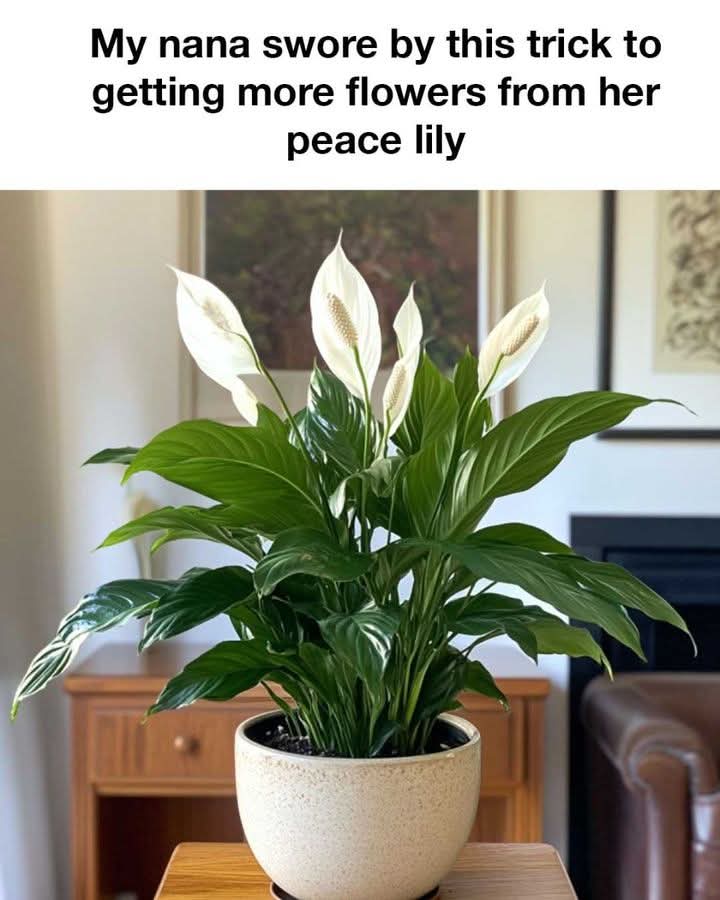
My Nana Swore By This Simple Trick to Get Her Peace Lily Bursting with Flowers
Peace lilies (Spathiphyllum) are one of the most popular houseplants thanks to their glossy dark green leaves and elegant white blooms (technically spathes). They’re also known for being relatively low-maintenance and excellent air purifiers. However, many plant owners are disappointed when their peace lily refuses to flower again after the initial nursery-forced blooms fade away.
If your peace lily is healthy but stubbornly staying green, you’re not alone. A viral meme has been making the rounds on social media: “My nana swore by this trick to getting more flowers from her peace lily,” usually accompanied by a photo of a spectacularly blooming plant. These posts often feel like clickbait, but the most commonly shared “grandma secret” is actually backed by solid plant science: using banana peels as a natural potassium boost.
Why Banana Peels Help Peace Lilies Bloom
Banana peels are packed with potassium, one of the three major nutrients (N-P-K) that plants need. Potassium plays a key role in flower production. While commercial growers use gibberellic acid to force those abundant initial blooms, home growers can encourage repeat flowering by ensuring the plant gets enough potassium—especially when combined with good overall care.
This kitchen-scrap method is free, sustainable, and a great way to reduce food waste.
How to Make and Use Banana Peel Fertilizer
Follow these easy steps for the classic “nana trick”:
- Save 2–3 banana peels (preferably organic).
- Cut them into small pieces.
- Place the pieces in a large jar and cover with 1–2 liters of water.
- Let it steep for 2–7 days in a warm spot, stirring occasionally.
- Strain out the peels (add them to your compost) and dilute the liquid 1:1 with fresh water.
- Water your peace lily with this banana tea once a week during spring and summer.
Quick alternative: Boil the chopped peels in water for 15 minutes, let it cool, strain, dilute, and use immediately.
Many peace lily owners report seeing new flower buds within a few weeks of regular applications.
Additional Proven Tips for More Peace Lily Flowers
The banana peel trick gives a nice potassium boost, but blooming success depends on several factors. Combine it with these expert recommendations:
- Bright Indirect Light – Peace lilies tolerate low light but rarely flower without medium to bright indirect light (think near an east- or west-facing window, or a few feet back from a south-facing one). Insufficient light is the #1 reason they stay flowerless.
- Slightly Root-Bound Conditions – They bloom best when a bit snug in their pot. Only repot every 2–3 years or when roots are circling heavily.
- Consistent Watering & Humidity – Water thoroughly when the top inch of soil feels dry, or wait for the classic dramatic droop (they recover quickly). Increase humidity with misting, a pebble tray, or a humidifier.
- Balanced or Bloom-Boosting Fertilizer – During the growing season, feed every 4–6 weeks with a diluted balanced houseplant fertilizer or one higher in phosphorus (the middle number in N-P-K).
- Cooler Night Temperatures – A slight drop to 60–70°F (15–21°C) at night can help trigger bud formation.
With the right conditions and a little patience, your peace lily can produce multiple rounds of flowers throughout the year—just like nana’s legendary plant!
Have you tried the banana peel method or any other tricks? Drop your experience in the comments below—I’d love to hear what worked for you! 🌿✨
Categories: Houseplants, Plant Care Tips, Natural Fertilizers
Tags: peace lily, spathiphyllum, blooming houseplants, banana peel fertilizer, houseplant care