How Eggshells and Banana Peels Can Transform Your Soil Naturally
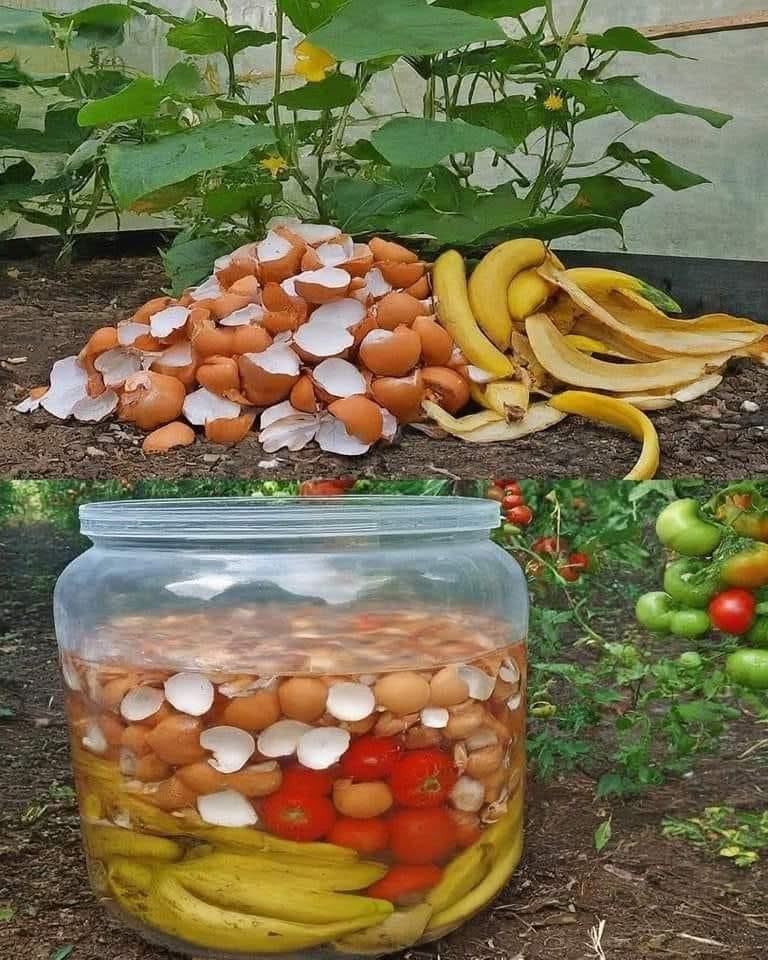
In a world where food waste is becoming a serious environmental issue, simple kitchen scraps like eggshells and banana peels can become powerful tools for gardeners. The image above perfectly illustrates a natural, low-cost method of recycling organic waste and turning it into nutrient-rich fertilizer for plants. This practice not only reduces waste but also boosts soil health and plant productivity in an eco-friendly way.
Understanding What’s in the Image
The image shows:
- Crushed eggshells
- Banana peels
- A jar filled with water, eggshells, banana peels, and small tomatoes
- A garden bed with growing plants
This setup represents two popular natural gardening techniques:
- Direct composting into soil
- Liquid organic fertilizer (fermented plant tea)
Both methods are simple, effective, and suitable for home gardeners.
Why Eggshells Are Great for the Garden
Eggshells are often thrown away, but they are packed with benefits:
Nutritional Benefits
- High in calcium, essential for strong plant cell walls
- Helps prevent blossom end rot in tomatoes, peppers, and eggplants
- Contains small amounts of magnesium and phosphorus
Soil Benefits
- Improves soil structure
- Helps balance soil acidity
- Encourages healthy root development
How to Use Eggshells
- Rinse and crush them
- Sprinkle directly into soil
- Add to compost
- Soak in water to make calcium-rich liquid fertilizer
Banana Peels: A Natural Plant Booster
Banana peels are rich in nutrients that plants love.
Nutritional Benefits
- High in potassium (supports flowering and fruiting)
- Contains phosphorus for root growth
- Adds organic matter to soil
Garden Benefits
- Improves soil fertility
- Encourages beneficial microorganisms
- Helps plants resist disease
How to Use Banana Peels
- Chop and bury near plants
- Dry and grind into powder
- Ferment in water for liquid fertilizer
Liquid Fertilizer (Compost Tea) Explained
The jar in the image demonstrates a natural fermented fertilizer made by soaking kitchen scraps in water.
How It Works
- Organic matter breaks down
- Nutrients dissolve into the water
- The liquid becomes a fast-absorbing fertilizer
How to Use It
- Dilute the liquid before applying
- Water plants at the base
- Use once every 1–2 weeks Tip: Keep the container loosely covered and away from direct sun.
Benefits of This Natural Method
Environmental Benefits
- Reduces kitchen waste
- Lowers landfill impact
- No chemical runoff
Gardening Benefits
- Improves plant health naturally
- Saves money on fertilizers
- Safe for vegetables and soil life
Educational Value
- Great for teaching sustainability
- Encourages eco-friendly habits
- Easy for beginners and families
Best Plants for This Fertilizer
- Tomatoes
- Peppers
- Cucumbers
- Zucchini
- Roses
- Flowering plants
These plants especially benefit from calcium and potassium.
Common Mistakes to Avoid
- Using large, uncrushed eggshells
- Applying undiluted liquid fertilizer
- Overusing (more is not better)
- Letting the mixture rot too long
Conclusion
The image highlights a powerful yet simple gardening technique: transforming everyday kitchen waste into nutrient-rich plant food. Eggshells and banana peels, when used correctly, can dramatically improve soil health, plant strength, and harvest quality—all without chemicals or extra cost.