Introduction to Spaghetti and Meatballs
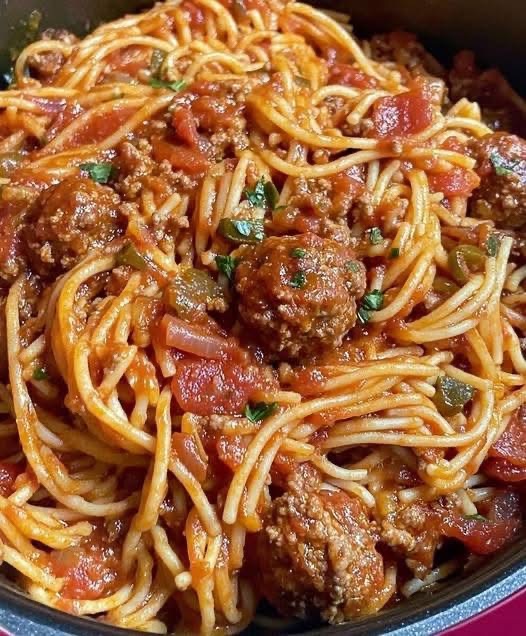
Spaghetti and meatballs is a timeless comfort food that brings warmth and joy to dinner tables around the world. This hearty dish consists of tender, juicy meatballs simmered in a rich tomato sauce, served over perfectly cooked spaghetti noodles, often garnished with fresh herbs and grated Parmesan cheese. The provided image beautifully captures the essence: al dente spaghetti strands tangled in a vibrant, chunky red sauce with visible bits of tomato, onions, and green herbs, alongside plump meatballs—some whole, some slightly broken to reveal their savory interior—all presented in a pan, evoking the aroma of a homemade Italian-American feast.
Though often perceived as purely Italian, this dish is a beloved symbol of family gatherings, evoking nostalgia for many. It’s versatile, customizable, and satisfying, making it ideal for weeknight dinners or special occasions. In this comprehensive guide, we’ll dive into a generous recipe serving 6-8 people, explore its fascinating history, nutritional aspects, various cooking methods, and more. Whether you’re a pasta enthusiast or cooking for loved ones, spaghetti and meatballs never fails to delight.
Ingredients (Serves 6-8)
For the Meatballs:
- 1.5 lbs ground beef (80/20 for juiciness)
- 0.5 lb ground pork (adds tenderness and flavor)
- 1 cup fresh breadcrumbs (soaked in 1/2 cup milk)
- 1/2 cup grated Parmesan cheese
- 1/4 cup finely chopped fresh parsley
- 2 large eggs
- 4 cloves garlic, minced
- 1 teaspoon salt
- 1/2 teaspoon black pepper
- 1/2 teaspoon dried oregano
- Optional: 1/4 teaspoon red pepper flakes for a kick
For the Tomato Sauce:
- 2 tablespoons olive oil
- 1 large onion, finely chopped
- 4 cloves garlic, minced
- 2 (28 oz) cans crushed tomatoes
- 1 (15 oz) can tomato sauce
- 1 (6 oz) can tomato paste
- 1 cup beef or chicken broth (or water)
- 1 teaspoon dried basil
- 1 teaspoon dried oregano
- 1/2 teaspoon sugar (to balance acidity)
- Salt and pepper to taste
- Optional: 1/2 cup red wine for depth
For the Pasta and Serving:
- 1.5 lbs spaghetti
- Fresh basil or parsley for garnish
- Extra grated Parmesan cheese
These ingredients yield flavorful, authentic results using pantry staples and fresh elements.
Instructions
- Prepare the Meatballs: In a large bowl, combine ground beef, pork, soaked breadcrumbs, Parmesan, parsley, eggs, garlic, salt, pepper, oregano, and red pepper flakes. Mix gently with hands until just combined—avoid overmixing to keep them tender. Roll into 1.5-2 inch balls (about 24-30 meatballs).
- Brown the Meatballs: Heat 2 tablespoons olive oil in a large Dutch oven or skillet over medium-high heat. Brown meatballs in batches, turning for even color (5-7 minutes per batch). They don’t need to cook fully. Remove and set aside.
- Make the Sauce: In the same pot, sauté onion until soft (5 minutes). Add garlic and cook 1 minute. Stir in tomato paste and cook 2 minutes. Add crushed tomatoes, tomato sauce, broth, basil, oregano, sugar, salt, pepper, and wine if using. Bring to a simmer.
- Simmer: Return meatballs to the sauce. Cover and simmer on low for 30-45 minutes, stirring occasionally, until meatballs are cooked through and flavors meld.
- Cook the Pasta: While sauce simmers, boil a large pot of salted water. Cook spaghetti until al dente (8-10 minutes). Drain, reserving 1 cup pasta water.
- Combine and Serve: Toss pasta with some sauce to coat. Plate pasta, top with meatballs and more sauce. Garnish with Parmesan and fresh herbs.
Methods
Spaghetti and meatballs can be prepared using various techniques for different textures and convenience:
- Classic Stovetop Method: Brown meatballs for a crispy exterior, then simmer in sauce for deep flavor infusion—as in the main instructions.
- Baked Meatballs: Preheat oven to 425°F. Place formed meatballs on a lined baking sheet and bake 15-20 minutes, turning halfway. Add to simmering sauce for 10-15 minutes.
- Slow Cooker Method: Brown meatballs first (optional for flavor). Add to slow cooker with sauce ingredients. Cook on low 6-8 hours or high 3-4 hours. Perfect for hands-off preparation.
- One-Pot Method: Form meatballs and drop raw into simmering sauce. Cover and cook 30-40 minutes. Simpler cleanup but less browning.
- Air Fryer Meatballs: For a healthier twist, air fry at 400°F for 10-12 minutes, then finish in sauce.
History
Contrary to popular belief, spaghetti and meatballs is not a traditional Italian dish but an Italian-American innovation. Italian immigrants arriving in the United States between 1880 and 1920, primarily from southern Italy, brought pasta and small meatballs (polpette or pallottine) served separately. In Italy, meat was scarce and expensive, so portions were modest.
In America, abundant affordable meat allowed larger meatballs and heartier portions. Combined with inexpensive canned tomatoes and dried pasta, immigrants created generous meals. Early recipes appeared in American cookbooks around 1909, and by the 1930s, canned “spaghetti with meatballs” was sold commercially.
While some regional Italian dishes like Abruzzo’s spaghetti alla chitarra with tiny pallottine exist, the oversized meatballs atop pasta is distinctly American. Today, it’s an iconic symbol of immigrant ingenuity and remains rare in Italy.
Benefits
Spaghetti and meatballs offers several nutritional and emotional benefits:
- High Protein: Meatballs provide substantial protein (about 30-40g per serving from beef/pork), supporting muscle repair and satiety.
- Energy from Carbs: Spaghetti delivers complex carbohydrates for sustained energy, ideal post-workout.
- Vitamins and Minerals: Tomato sauce is rich in lycopene (antioxidant linked to heart health), vitamin C, and potassium. Herbs add anti-inflammatory properties.
- Comfort and Satisfaction: As a balanced meal with protein, carbs, and fats, it promotes fullness. Customizable for healthier versions (e.g., turkey meatballs, whole-wheat pasta).
Moderation is key due to potential high calories and sodium.
Formation (How to Form Perfect Meatballs)
Forming meatballs is crucial for texture:
- Use cold ingredients and hands to prevent sticking.
- Soak breadcrumbs in milk for a panade, keeping meatballs moist.
- Mix gently—overworking develops gluten-like toughness.
- Wet hands and roll into uniform balls for even cooking.
- Size matters: 1.5-2 inches for juicy interiors without drying.
This ensures tender, non-dense results.
Nutrition (Per Serving, Approximate for 1/8 Recipe)
- Calories: 650-800
- Protein: 35g
- Carbohydrates: 70g (from pasta)
- Fat: 30g (varies with meat)
- Fiber: 6g
- Key Nutrients: Iron (from beef), Vitamin C (tomatoes), Calcium (Parmesan)
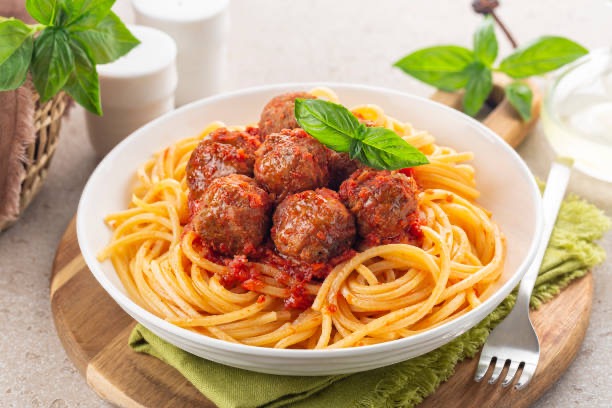
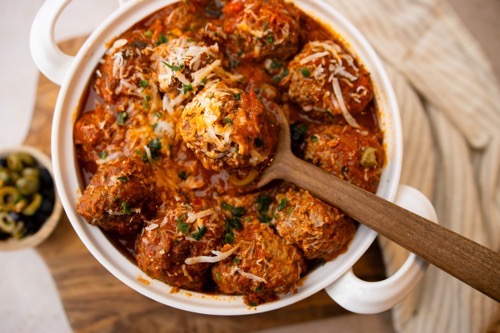
Using leaner meats or veggie additions boosts healthiness. 8 “Plated spaghetti and meatballs topped with Parmesan cheese.” “LARGE” 9 “Elegant serving of spaghetti with meatballs and fresh herbs.” “LARGE”
Conclusion
Spaghetti and meatballs transcends its simple ingredients to become a dish of cultural fusion, nourishment, and joy. From its immigrant roots to modern variations, it embodies resourcefulness and comfort.
For Lovers of This Dish
Pasta lovers and comfort food enthusiasts adore spaghetti and meatballs for its versatility—add veggies, spice it up, or pair with garlic bread. It’s a crowd-pleaser for families, date nights, or potlucks, evoking warmth and satisfaction with every twirl.