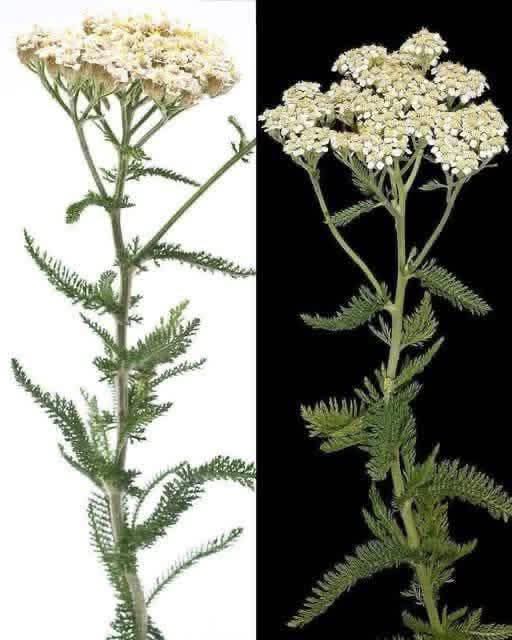
Achillea millefolium – better known as common yarrow – looks harmless enough: delicate white flower clusters waving above feathery foliage on roadsides and meadows. Yet for more than three thousand years this plant has started wars’ worth of arguments among farmers, doctors, gardeners, and ecologists.
A Plant Named After a Demigod
The genus name Achillea comes from the Greek hero Achilles, who, according to legend, was taught by the centaur Chiron to use yarrow to staunch his soldiers’ wounds. Roman legions carried dried yarrow into battle for the same reason. Medieval European knights tucked it into their armor; Civil War surgeons on both sides of the American conflict used it when morphine and bandages ran out. Even today, many combat medics and wilderness first-aid kits include yarrow leaf powder as a hemostatic agent.
What It Actually Does in the Body
Modern analysis shows why it earned its battlefield reputation:
- Achilleine and other alkaloids promote blood clotting
- Volatile oils (cineole, borneol, thujone) act as antiseptics and anti-inflammatories
- Flavonoids relax smooth muscle (helpful for menstrual cramps and digestive spasms)
- Bitter principles stimulate bile flow and appetite
Result: a rare herb that can both stop bleeding and, taken as tea, move stagnant blood in bruises or heavy periods.
Love It or Hate It: The Garden Debate
Gardeners are split into two passionate camps.
Team Yarrow
- Attracts more beneficial insects per square meter than almost any other perennial
- Drought-tolerant once established
- Self-sows politely in poor soil where lawns fail
- Edible young leaves (bitter but good in salads or soup)
- Beautiful in dried arrangements (flowers keep their shape and color)
Team “Get It Out of My Pasture”
- Considered a noxious weed in parts of North America, Australia, and New Zealand
- Reduces carrying capacity in cattle pastures (cattle avoid it; horses can develop liver photosensitivity from eating large amounts)
- Hybrid swarms of native and introduced genotypes are invading grasslands
- One of the top ten contact-dermatitis plants in Europe
How to Know It’s Really Yarrow (and Not Something That Will Kill You)
Fatal look-alikes exist, so identification matters.
Safe yarrow checklist:
- Strongly aromatic, pleasant medicinal or camphor-like smell when crushed
- Leaves finely divided, almost fern-like, soft to the touch
- Flower clusters flat or slightly domed, never umbrella-shaped
- Stem hairy, never purple-spotted or hollow with chambers
If it smells like carrots → wild carrot
If it smells like a wet mouse and has purple blotches → poison hemlock
If it grows in wetlands and has thick, chambered roots → water hemlock (avoid at all costs)
Today and Tomorrow
You can still buy yarrow tea in any natural-food store, see it woven into “bee-friendly” wildflower mixes, and find it listed on invasive-species alerts in the same week. Few plants manage to be simultaneously ancient medicine, modern ecological villain, and pollinator superstar.
Next time you see those modest white flowerheads along a highway or poking through a crack in the sidewalk, you’re looking at a plant that has stopped bleeding on Trojan battlefields, flavored medieval beer, prophesied marriages with I Ching stalks, and is currently engaged in a quiet global takeover of disturbed ground.
Yarrow doesn’t ask permission. It just keeps healing, spreading, and reminding us that the line between medicine and weed is thinner than we like to admit.